
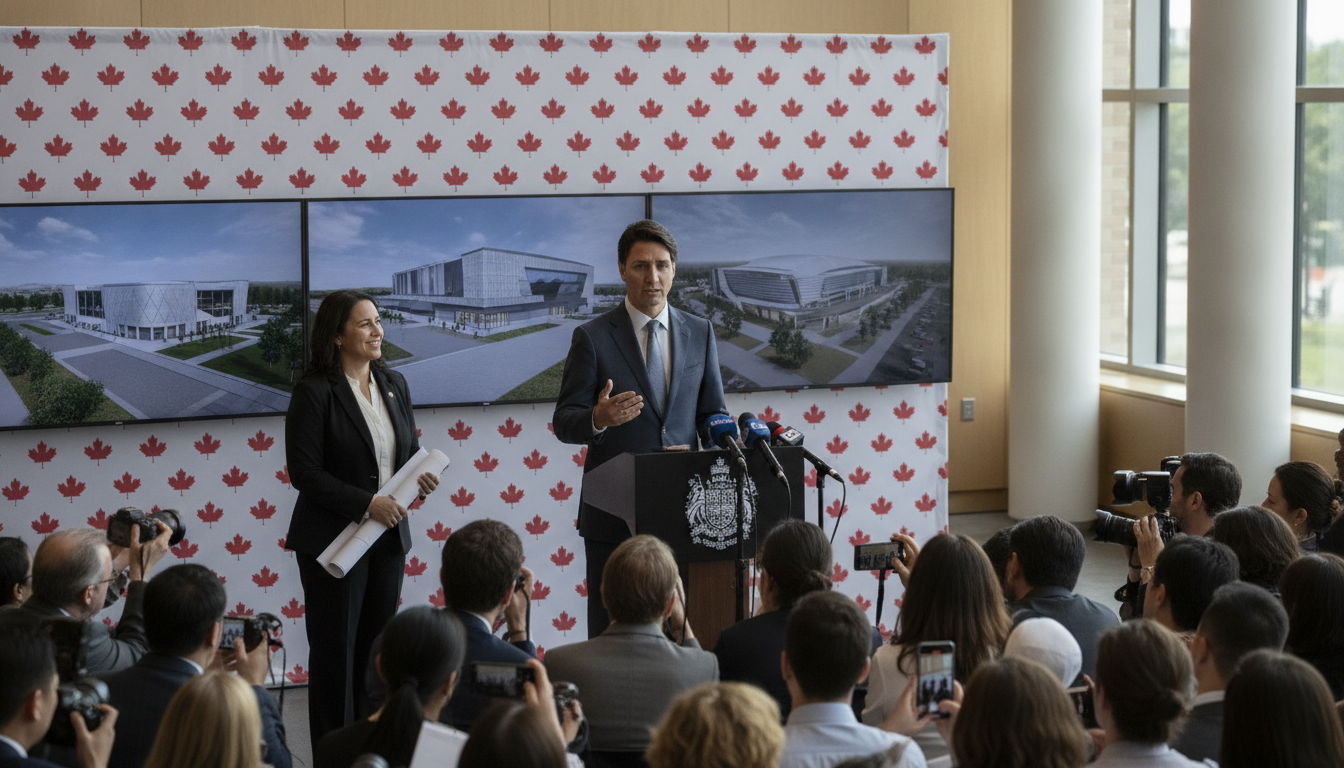
Canada’s $1-Billion Sports Investment Aims to Upgrade Stadiums and Community Facilities
Canada’s $1-billion sports investment will upgrade stadiums and community facilities to boost athlete development and attract world-class events across Canada.
The federal pledge described as the largest investment in sport in the nation’s history was framed by van Koeverden as a sweeping effort to upgrade stadiums, fields and community recreation sites. He said the $1 billion program is intended to help athletes succeed, increase youth participation and bring more international competitions to Canadian venues such as the Calgary Olympic Oval. The announcement underscores a strategic push to link community-level infrastructure with elite sport performance and event hosting.
Investment Called ‘Largest in Nation’s History’
van Koeverden characterized the initiative as unprecedented in scale, saying it “is not even up for comparison” with past funding. His remarks positioned the package as a milestone meant to change the way sport infrastructure is funded and used across the country.
Observers and stakeholders have noted the rhetorical emphasis on scale and legacy, viewing the declaration as an attempt to signal long-term commitment to both high-performance sport and community recreation. The language also sets expectations that the money will be spread across multiple facility types and regions.
Funding Focus: Stadiums, Fields and Community Hubs
According to the outline provided by van Koeverden, the investment targets upgrades to stadiums, sports fields and community recreation facilities. The focus on a mix of venues suggests funds will be directed at both elite facilities and grassroots infrastructure.
By explicitly naming different facility types, the plan aims to address gaps in capacity and condition that can limit participation and the ability to host larger events. Municipalities and local sport organizations are likely to be key applicants and partners for projects that renovate or expand existing sites.
Athlete Development and Grassroots Participation
One stated objective of the $1-billion sports investment is to “help athletes succeed” while simultaneously encouraging young people to participate. Officials emphasized the dual mandate of supporting elite pathways and broadening access to sport at the community level.
Improved training venues and better-maintained local fields can shorten travel times for athletes and create safer, more reliable environments for year-round development. For recreational users, upgrades are expected to increase opportunities for participation and reduce barriers for families and youth.
Hosting World-Class Events and Economic Returns
A central aim of the funding is to attract more international competitions to Canadian facilities, an outcome van Koeverden linked directly to the upgrade program. Hosting world-class events can generate tourism, create temporary local jobs and showcase regional facilities to a global audience.
Economists and sport planners typically point to event-driven spending and longer-term legacy benefits, such as increased sport participation and enhanced municipal branding. The scale of the investment suggests a deliberate strategy to make more communities competitive candidates for mid- and large-scale events.
Calgary Olympic Oval Highlighted as Model Facility
van Koeverden singled out the Calgary Olympic Oval as an example of the type of venue that could benefit from and host major events under the program. The Oval’s history as a high-performance and community-accessible facility illustrates the dual-purpose vision behind the investment.
By referencing an established venue, the remarks tie the new funding to tangible examples of how upgraded infrastructure can serve athletes, local users and international competitions in the same space. This model of multiuse legacy venues has been a recurring theme in recent facility planning.
Implementation, Timing and Municipal Role
While the announcement sets out the broad intent, details on allocation criteria, application processes and timelines were not included in the quoted remarks. Municipalities, provincial bodies and local sport organizations will likely seek clarity on eligibility, matching requirements and project prioritization.
Observers expect federal, provincial and municipal authorities to define roles and responsibilities in the months ahead, and to establish competitive or formula-based funding mechanisms. Clear guidance will be necessary to ensure projects align with the program’s stated goals of athlete development, increased participation and event attraction.
The $1-billion commitment signals a significant federal interest in sports infrastructure, aiming to bridge community needs with elite sport ambitions and to position Canadian venues for international competitions. The impact will depend on how funds are allocated, how quickly projects are delivered and whether upgrades translate into sustained increases in participation and higher-calibre event hosting at sites across the country.
