
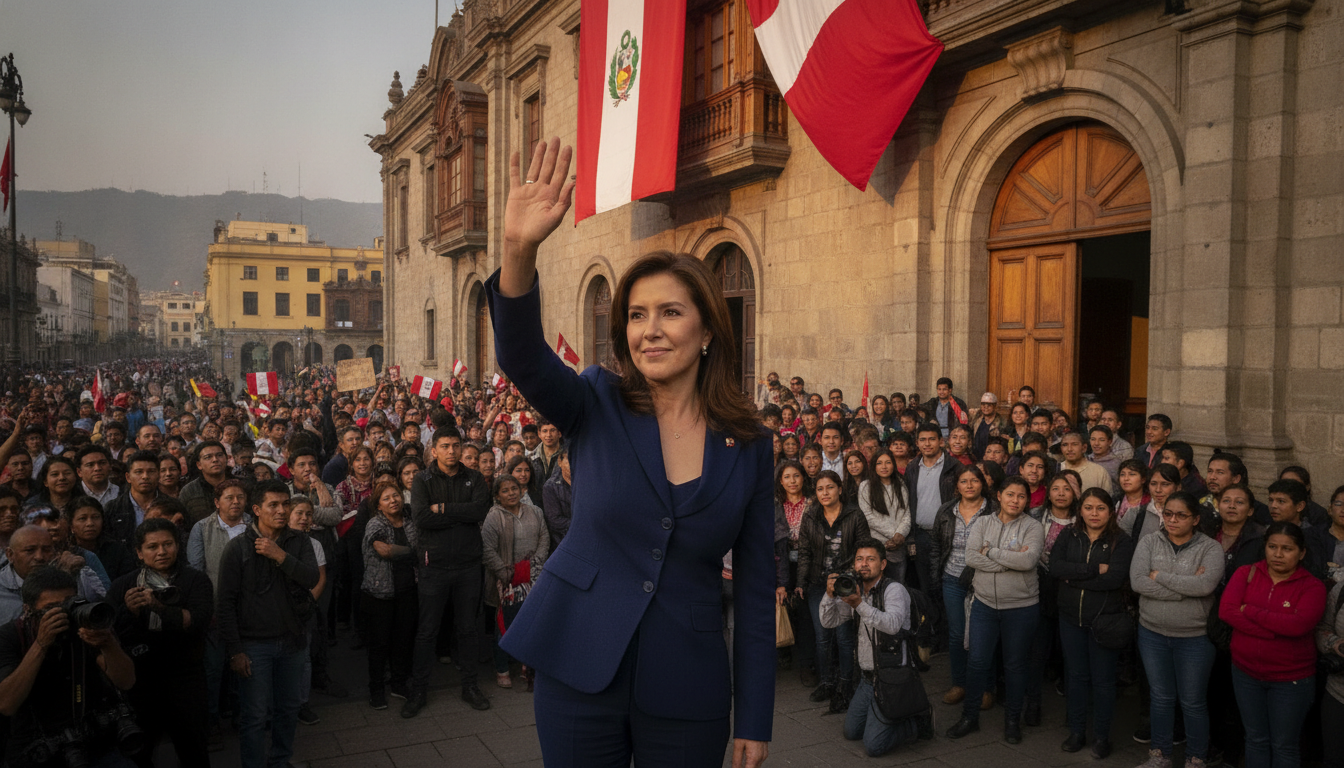
Keiko Fujimori elected Peru’s president after narrow victory
Keiko Fujimori wins Peru’s presidency in a narrow race, becoming the country’s first elected woman while facing divisions and concerns about her father’s legacy.
Keiko Fujimori secured the presidency after a tightly contested election, ending a 15-year effort that included four presidential bids. Her victory on 27 July 2026 makes her the first woman to hold Peru’s highest office, but it also places her at the centre of intense public scrutiny. Supporters applauded a promise to restore stability, while critics warned that deep political fractures and memories of past abuses complicate any push for national unity.
Fujimori clinches presidency in tight count
It took four campaigns over a decade and a half for Keiko Fujimori to reach the presidency, a rare political persistence that culminated in a slim margin of victory. She defeated a left-wing rival in a contest that observers described as one of the most polarizing in recent Peruvian history. Election officials declared the result after vote tallies showed a narrow lead, leaving opposition forces and allies to brace for a contested transition.
Deep political polarisation across Peru
Peru enters the new administration profoundly divided, with urban and rural voters reflecting sharply different political priorities. Many Peruvians voiced scepticism that the president-elect can heal those rifts quickly, citing years of volatile coalition-building and street-level protests. Analysts say that achieving consensus on basic governance issues will be a steep challenge given the acute mistrust between political camps.
Legacy of Alberto Fujimori looms over mandate
Keiko Fujimori’s ascent reopens old wounds linked to her father, Alberto Fujimori, who was convicted of human rights abuses and corruption during his presidency. That legacy fuels fears among survivors and rights groups that past patterns of governance could re-emerge under the new administration. Observers warn the filial connection will shape both domestic perceptions and international scrutiny, complicating efforts to normalize relations with foreign partners.
Governing challenges and coalition prospects
With a fragmented political landscape, the administration will need to negotiate alliances in Congress and beyond to pass legislation and govern effectively. Political scientists say that without a clear majority or stable coalition partners, Fujimori’s agenda may face frequent roadblocks and the risk of early instability. The question of whether she will complete her full term is now central to debates in Lima and among regional analysts.
Policy priorities signalled and unanswered questions
The president-elect has spoken of unity and practical governance, but she has offered relatively few specifics on how she will reconcile competing demands from business, grassroots movements and civil society. Economic policy, public security and judicial reform are likely to top the agenda, yet each area carries contentious trade-offs that could intensify opposition. Experts stress that early cabinet appointments and legislative strategy will be critical indicators of whether Fujimori leans toward conciliation or confrontation.
Regional tilt to the right and international response
Fujimori’s victory places Peru among a list of Latin American countries that have recently shifted rightward, a trend foreign policy analysts say will affect regional diplomacy and economic cooperation. International reaction has been measured, with governments and markets watching for signals about human rights commitments and rule-of-law assurances. Commentators note that how Lima manages these relationships will influence investor confidence and diplomatic ties across the hemisphere.
Commentators, including Jose Ragas of the Catholic University of Chile, Renata Segura of the International Crisis Group and Christopher Sabatini of Chatham House, emphasised the fragility of the new mandate and the need for clear, credible steps to build trust. Their assessments underline the complexity facing a president who must simultaneously address historic grievances and deliver practical governance.
Peru’s next weeks will test Keiko Fujimori’s promise of unity as she shapes a government and sets policy priorities, with both domestic actors and international observers ready to judge whether her administration will mark a turn toward stability or a continuation of political turmoil.
