
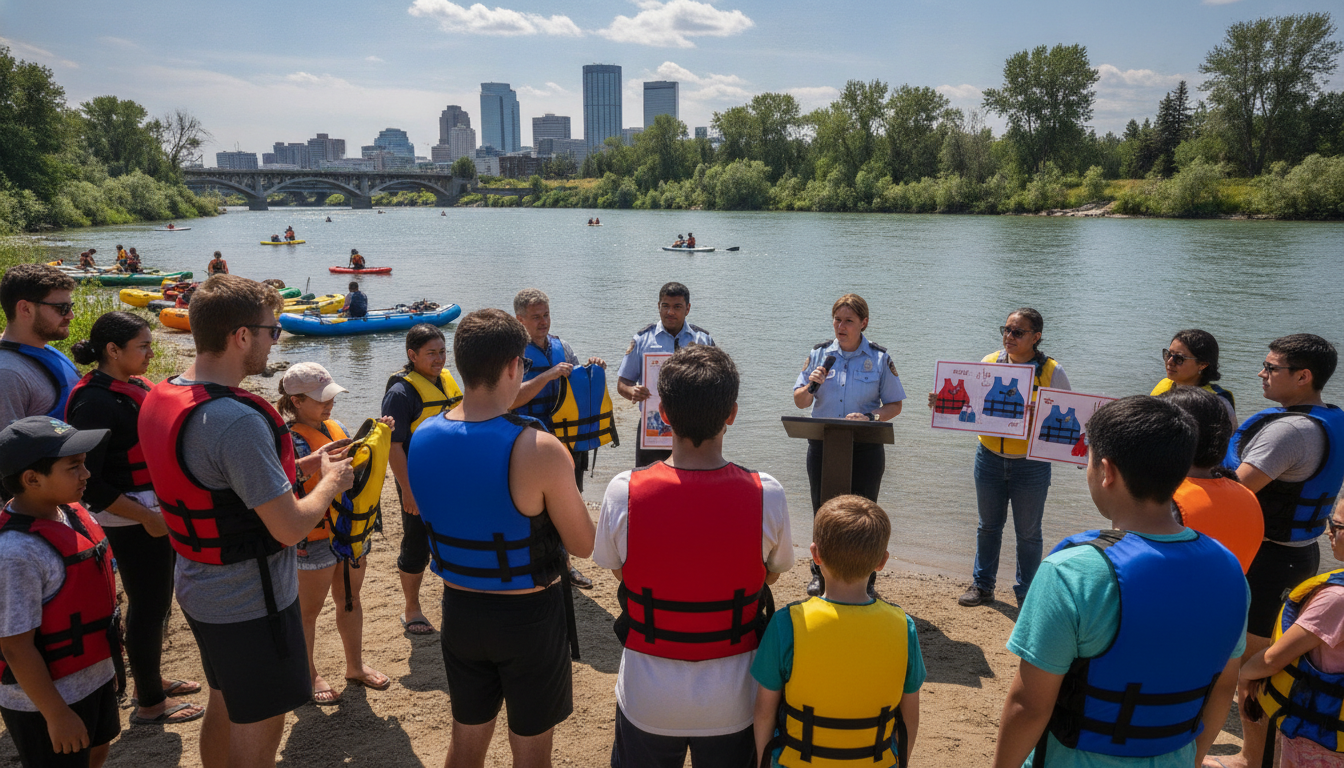
Calgary water safety warning as Bow and Elbow river rescues rise ahead of summer
Calgary water safety alert: city and police warn residents Bow and Elbow river rescues rise in July; wear life jackets, learn to swim and avoid impairment.
Calgary authorities are issuing a renewed water safety warning as warmer weather draws more people to the Bow and Elbow rivers.
City officials and the Partners in Aquatic Safety say the risk of water incidents increases with summer activity, and they urge residents to take precautions before entering river waters.
The advisory highlights a predictable rise in rescues during July, with officials reminding Calgarians that simple actions can prevent tragedies.
Calgary warns swimmers as river rescues peak in July
Calgary Fire and partner agencies confirm that incidents on the Bow and Elbow rivers climb as temperatures rise and more people seek relief.
Officials say July historically records the highest number of water rescues, prompting targeted messaging and safety outreach ahead of the busiest weeks.
The city’s safety partners emphasize that proximity to water increases risk quickly and unexpectedly, especially on river currents and drop-offs.
City spokespeople noted that even experienced swimmers can be caught off guard by river conditions that change over short distances.
Strong currents, submerged hazards and sudden drop-offs are common on both rivers and can turn a leisurely swim into a life-threatening situation within minutes.
Authorities say awareness of local conditions and personal limits is essential when planning river activities.
Police cite three main factors in water fatalities
Calgary Police Service officials identified three recurring causes in recent water-related deaths and serious incidents.
The factors — not wearing a life jacket, exposure to cold water, and impairment — are singled out as the most influential contributors to fatal outcomes.
Sgt. Andy Woodward of the Calgary Police Service warned that these risks often coincide, increasing the likelihood of a fatal outcome.
Police and bylaw units will maintain heightened monitoring of popular river access points throughout the summer months.
Officials said enforcement is intended to protect residents and ensure that basic safety rules — including flotation device requirements where applicable — are followed.
Community members are being asked to report unsafe behaviour and to check conditions before descending to riverbanks.
City enforcement and partner monitoring this summer
The City of Calgary and its Partners in Aquatic Safety plan a coordinated approach combining public education with visible enforcement.
Fire services, police and bylaw officers will rotate patrols at known hotspots and will work with community groups to spread prevention messages.
Officials stressed the priority is prevention; enforcement actions are framed as a necessary backstop when voluntary compliance is not observed.
Public messaging will include reminders about seasonal hazards and pointers for safer river use, distributed through social and community channels.
Partners include municipal departments and advocacy organizations that provide training and resources for safe recreational water use.
This joint approach aims to reduce avoidable rescues and to lower the number of serious incidents that require emergency response.
Life jackets and skills urged by safety partners
Safety partners recommended that residents wear properly fitted life jackets whenever they are near or on river water.
Wearing a Coast Guard-approved personal flotation device significantly increases survival chances in the event of sudden immersion.
Officials emphasized that flotation does not replace swimming ability but provides critical time for rescue or self-recovery.
Learning fundamental water skills and practicing them under supervised conditions were also put forward as key preventive measures.
Swim lessons, confidence-building exercises and basic rescue awareness help people make safer choices and respond more effectively in emergencies.
Partners encouraged families to enroll children in age-appropriate lessons and to model safe behaviour near water at all times.
Cold-water exposure and impairment: medical risks explained
Cold-water immersion presents a series of rapid physiological threats, according to emergency responders.
Even in warm weather, river temperatures can be low enough to trigger cold-water shock, which impairs breathing and mobility within seconds.
Hypothermia can set in quickly in flowing water, reducing muscular control and increasing drowning risk long before rescuers can arrive.
Impairment from alcohol or drugs compounds these dangers by lowering coordination, judgment and the ability to respond to sudden hazards.
Officials noted that impaired swimmers are less likely to wear flotation or to recognize changing river conditions, which leads to a higher incidence of serious outcomes.
Combining cold water and impairment is a frequent pattern in fatal river events, underscoring the dual importance of sobriety and protective equipment.
How residents can prepare before heading to the Bow and Elbow
Before visiting riverbanks, Calgarians are advised to check local conditions, including flow rates and weather forecasts.
Understanding posted signage and municipal bylaws for specific access points will help visitors choose safer locations and avoid restricted areas.
Planning includes wearing appropriate footwear, packing life jackets, and bringing a charged phone in a waterproof case for emergency calls.
Groups should designate a sober supervisor who is familiar with basic rescue and first-aid techniques and who will enforce safety practices.
Children and weaker swimmers should remain within arm’s reach of a competent adult and should never be left unattended near water.
Observers on shore can assist by watching for changing conditions and by calling 9-1-1 immediately if someone is in trouble.
Community programs, training and public resources
Local organizations and recreational providers are expanding access to swim lessons and water-safety courses this season.
Municipal programs and non-profit partners continue to offer affordable training options designed for all ages and skill levels.
These initiatives focus on building competence, confidence and a community culture that prioritizes safety over risk-taking.
Information sessions on life jacket selection, cold-water response and bystander rescues are being scheduled at community centres.
Such workshops aim to equip residents with practical skills like safe toss-and-reach techniques and procedures for assisting without endangering themselves.
Organizers say that empowering bystanders to act safely can dramatically improve outcomes during the crucial minutes before emergency crews arrive.
Calgary Fire representatives reiterated the importance of calling emergency services at the earliest sign of distress.
Rapid reporting and accurate location details significantly increase the speed and effectiveness of rescue operations.
Officials requested that witnesses provide clear descriptions of the incident, including the number of people involved and observable hazards.
Public messaging and seasonal outreach plans
The city’s summer outreach includes signage improvements at high-use river access points and information campaigns in popular neighbourhoods.
Messages will stress the same core guidance: wear a life jacket, avoid alcohol and drugs near water, and respect river conditions.
Efforts also target recreational boaters and anglers who may underestimate the hazards present in moving water.
Community leaders and safety partners are working to ensure messaging reaches diverse audiences, including visitors and newcomers.
Materials are being made available in multiple formats to accommodate different language and access needs where possible.
Organizers hope broad dissemination will translate into steady behaviour change and fewer preventable emergencies.
Why rivers present different hazards than lakes or pools
Rivers introduce varying currents, submerged structure and shifting channels that are not typically present in controlled water settings.
Unlike pools, rivers may conceal rocks, branches and sudden changes in depth that complicate self-rescue and external rescue attempts.
Flowing water can also move debris and create undercurrents that are difficult to see from the surface.
These dynamics mean that a person who is comfortable in a pool or calm lake may be unprepared for the demands of river swimming.
Rescue techniques differ as well; standard pool-based practices do not always apply when currents and temperature are factors.
Public education therefore prioritizes river-specific awareness rather than general water advice.
Enforcement, compliance and community expectations
Bylaw officers will review compliance with municipal rules at commonly used river access points and may issue warnings or fines when necessary.
Authorities said enforcement is a last resort but a necessary tool to deter risky conduct that endangers both participants and responders.
The city asked residents to cooperate with officers and to heed posted restrictions designed to protect public safety.
Community organizations urged individuals to accept enforcement as part of a broader safety framework that includes education and services.
They also called on river users to act as stewards, intervening constructively when they observe unsafe behaviour among peers.
A community-first approach, officials said, can reduce reliance on enforcement and create a safer environment for everyone.
City staff and partner agencies will review incident data after the season to refine messaging and target interventions.
Analysis of rescue locations, timing and contributing factors will inform future resource allocation and prevention strategies.
Officials said this evidence-based approach helps tailor outreach to the highest-risk times and places on the rivers.
What to do if you see someone in trouble on the river
If a person appears to be in distress, call 9-1-1 immediately and provide precise location details and any landmarks.
Do not enter the water unless you are trained in river rescue techniques; attempting an untrained rescue can put two lives at risk.
Use a throw bag, flotation device or any reachable item to extend to the person while maintaining a safe position on shore.
If the person is rescued and unconscious, responders advise starting CPR if trained and safe to do so, and to continue until professional crews take over.
Keep the person as warm and still as possible to reduce the risk of shock or hypothermia following immersion.
Report the incident to authorities and cooperate with emergency personnel when they arrive to support their response.
Local emergency services recommend that families plan a safety checklist before any river outing.
Items should include approved life jackets, a basic first-aid kit, a communication plan and a clear meeting point in case someone becomes separated.
Preparing in advance reduces panic and allows companions to act decisively if conditions change.
Calgary’s public health and emergency agencies reiterated that prevention remains the most effective tool against river fatalities.
By combining personal responsibility, community education and targeted enforcement, officials aim to reduce the number of avoidable incidents this season.
City leaders urged Calgarians to treat river recreation with the same caution they would any other potentially hazardous activity.
While summer recreation is a valued part of Calgary life, the rivers demand respect and preparation.
Officials concluded that simple interventions — wearing a life jacket, avoiding alcohol and learning to swim — can save lives.
The city continues to work with partner organizations to deliver the message and resources needed to keep residents safer on the Bow and Elbow rivers.
As temperatures climb and more residents head to the water, the message from Calgary’s safety agencies remains consistent: know the risks, prepare properly, and put safety first.
