
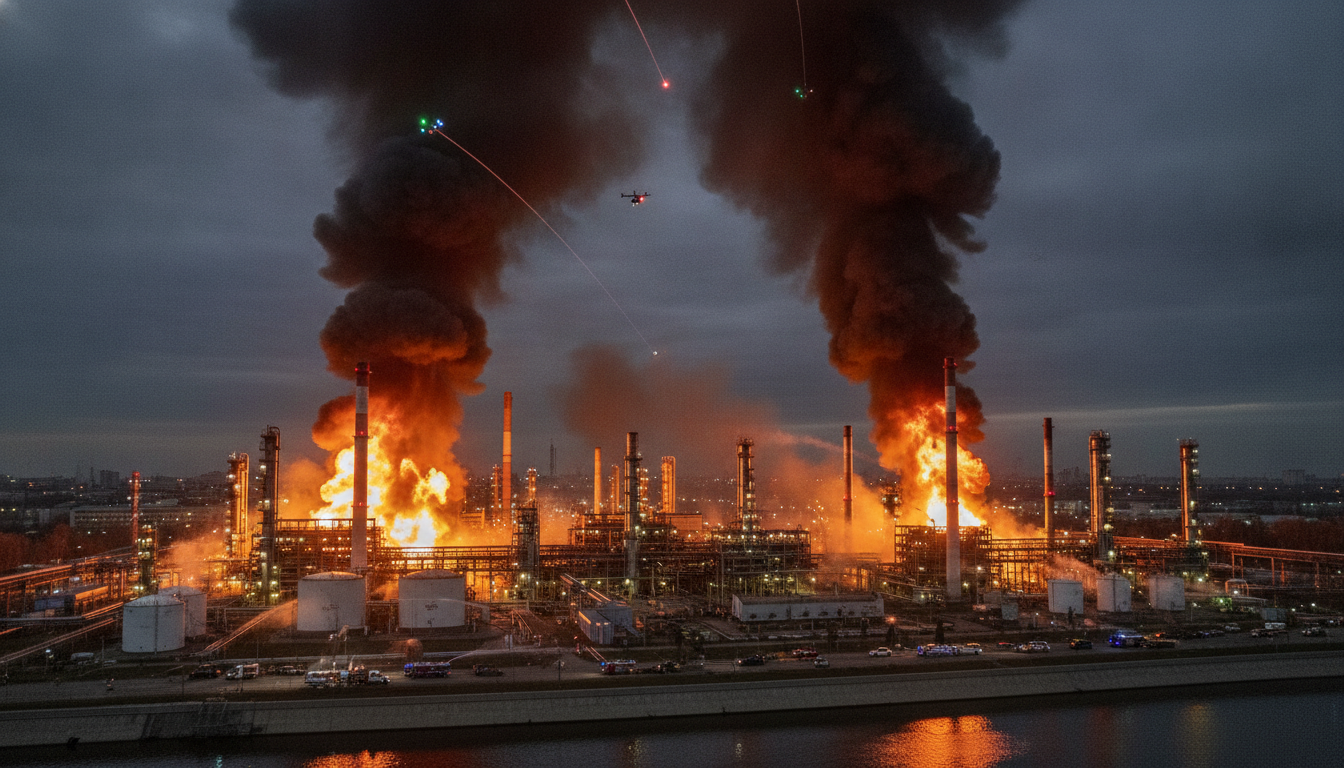
Moscow drone attack strikes Gazpromneft MNPZ refinery; 52 drones downed and Sheremetyevo briefly evacuated
Moscow drone attack damages MNPZ Gazpromneft refinery in Kapotnya late Wednesday; 52 drones were destroyed by Russian air defences and Sheremetyevo airport was briefly evacuated by staff and passengers.
A large-scale Moscow drone attack struck the MNPZ refinery in the Kapotnya district during the night, city authorities said. Mayor Sergei Sobyanin wrote on Telegram that Russian air defences were working to repel the assault and that several projectiles hit the facility. The attack triggered emergency responses across the capital and raised immediate concerns about fuel supply and urban safety.
Gazpromneft MNPZ refinery struck in Kapotnya
The MNPZ refinery, operated by Gazpromneft, was among the installations struck during the raid, according to municipal statements. The plant supplies a significant portion of Moscow’s fuel needs, including fuel for major airports, making it a strategic target if operations are disrupted. City officials reported that some facilities within the refinery complex were hit, but gave no immediate estimate of the operational impact.
The mayor’s office said the refinery had also been targeted in a previous large-scale drone strike earlier in the week. Planners and commercial operators will be watching closely for any sustained interruption to fuel deliveries that could affect transportation and logistics in the capital. Gazpromneft has not released a detailed technical assessment in the immediate aftermath.
Air defences destroy dozens of drones
Russian air-defence units reported shooting down multiple unmanned aerial vehicles during the incident, with city officials saying 52 drones were destroyed by around 04:15 GMT. Sobyanin described the assault as “large-scale” and said defensive forces continued to engage incoming projectiles through the night. Authorities credited the air-defence response with preventing wider damage to critical infrastructure.
Local emergency services remained on alert after the interception, conducting patrols and inspecting sites where debris or explosions occurred. Officials said that some drones nevertheless reached their intended targets, underlining the difficulty of fully defending a sprawling metropolitan area against swarms of small, low-flying systems.
Sheremetyevo airport briefly evacuated and reopened
The drone attack prompted an air alert at Sheremetyevo, one of Moscow’s primary international airports, resulting in the evacuation of passengers, staff and some aircraft to secure shelters. Airport authorities said the measures were precautionary and that operations began returning to normal shortly before 05:00 GMT once the alert was lifted. Flights experienced temporary disruptions and delays as the airport implemented safety procedures.
Airport management issued a statement confirming that normal services were being restored, while advising travellers to check with carriers for schedule updates. Ground handling and security teams worked to clear terminals and resume boarding after inspectors determined it was safe to do so.
Damage reported in Moscow region with no casualties
Regional governor Andrei Vorobyov reported damage to a residential building and a shopping centre in the Moscow region as a result of the drone strikes, but he said there were no reported injuries. Emergency responders assessed the structures for structural integrity and coordinated local sheltering and aid for affected residents. Authorities emphasized that their priority remained civilian safety while investigations continued.
Officials also began documenting property damage and collecting material evidence to determine the sequence of events and whether any critical systems were compromised. Insurance and municipal services will likely take part in recovery efforts in the coming days.
Pattern of reciprocal strikes in the broader conflict
The latest Moscow drone attack occurs amid a pattern of reciprocal strikes between Russia and Ukraine that has intensified in recent months. Russian forces continue to carry out near-daily strikes inside Ukraine, while Ukrainian operations have increasingly targeted transport nodes and hydrocarbon storage on Russian territory. Analysts note that strikes on fuel infrastructure are intended to constrain Moscow’s logistical and financial capacity.
Moscow has said its defensive posture is being adjusted in response to such threats, while Kyiv has framed attacks on infrastructure as part of a wider campaign to degrade military supply chains. International observers warn that escalation risks could increase civilian exposure to harm as both sides press operations farther from frontlines.
Ukraine and Russia have not reached a diplomatic resolution to the conflict, which has continued for more than four years and remains one of the deadliest European wars since World War II. The timing of the strike coincided with a diplomatic event that saw Russian leaders hosting Asian counterparts for a Russia-ASEAN summit, a context that Moscow acknowledged as politically sensitive.
Local authorities and emergency services said investigations into the origins and precise impact of the strike are ongoing, and they urged residents to follow official guidance and avoid affected areas. Utility companies and transport managers were mobilized to assess any ripple effects on supply chains and public services.
The incident underscores growing concerns about the vulnerability of urban centres to drone warfare and the challenges of protecting essential civilian infrastructure. Municipal and national agencies face pressure to adapt air-defence, emergency response and resilience planning as the use of unmanned systems in the conflict evolves.
