
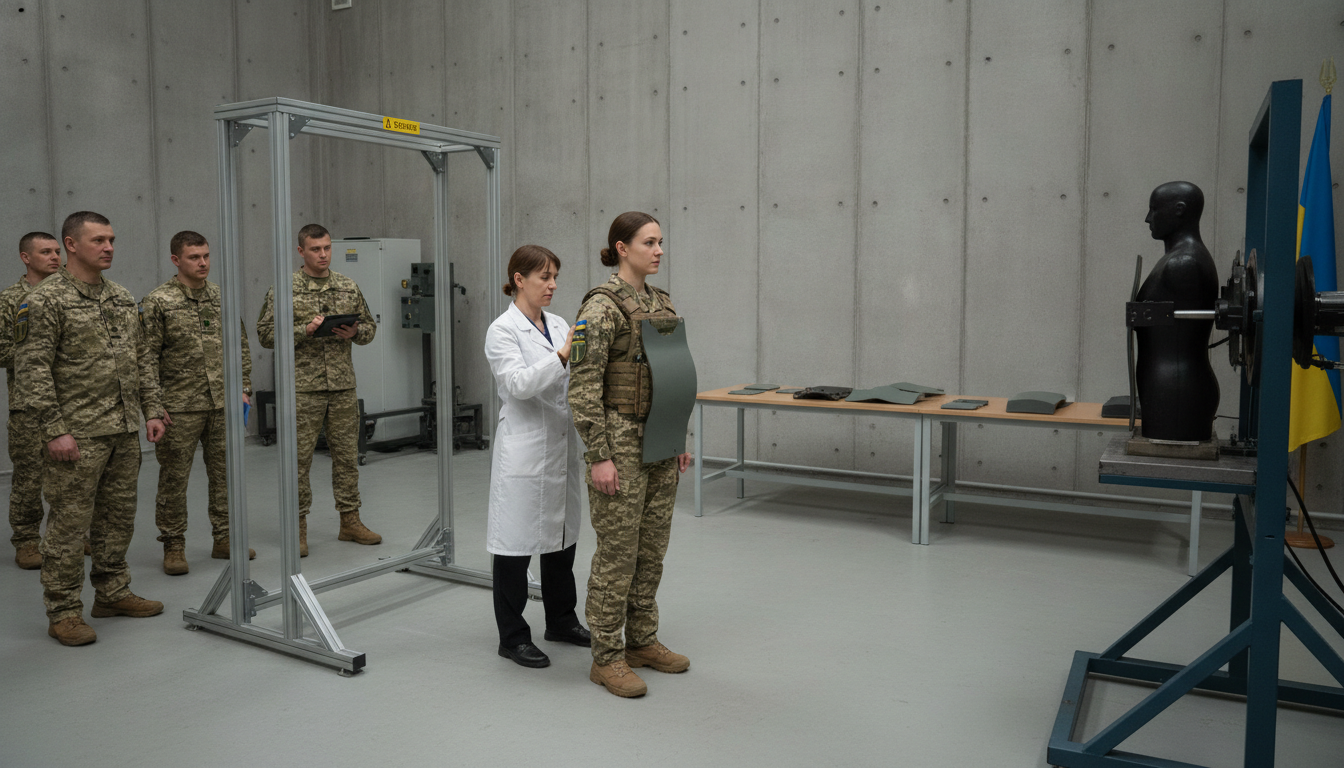
Ukrainian front-line women test purpose-built women’s body armour as Canada and UK supply curved ballistic plates
Front-line Ukrainian women are testing newly developed women’s body armour — curved ballistic plates designed to fit female anatomy — as Ottawa and UK suppliers send specialized equipment and manufacturers adapt designs to better protect women in combat.
Ukrainian front-line women trial women’s body armour
More than 10,000 women serving in combat roles in Ukraine have begun field-testing curved, female-specific ballistic plates intended to reduce gaps and improve coverage. The testing comes amid growing recognition from Ukrainian officials that most servicewomen have had to wear male-designed ballistic plates that are heavy, ill-fitting and sometimes abandoned because they impede movement and comfort.
Lawmakers and commanders say the change is driven by operational realities: women are increasingly present on front lines and face the same threats from small-arms fire, shrapnel and drone-delivered munitions as their male counterparts. Ukrainian figures cited by officials place total women in uniform at roughly 75,000, with a substantial cohort serving directly in combat roles.
Male-designed plates create protection and logistics problems
Standard flat ballistic plates and vests sized for men leave space around the chest and lower torso when worn by women, engineers and medical officers explain. Those gaps can expose vital organs to incoming fragments or projectiles, and the mismatch can force women to wear larger, bulkier plates that add unnecessary weight and alter balance.
The added burden can have a ripple effect on logistics and survivability: soldiers who carry oversized plates may forgo other essential kit such as extra ammunition, water or first-aid supplies to compensate for the weight. Manufacturers testing gender-specific curvature report measurable improvements in fit and a meaningful reduction in exposed areas during simulated impacts.
Canadian and UK companies supplying curved ballistic plates
The programme has attracted international industrial partners. UK donations of thousands of plates to Ukraine included curved female-specific inserts produced by a company with Canadian operations in London, Ontario. Those inserts were paired with tactical vests developed and supplied by a Quebec-based firm headquartered in Saint-Jean-sur-le-Richelieu.
Industry representatives involved in production described how curved plates sit closer to the chest and torso profile, reducing the forward tilt and the open spaces at the collar and lower ribs characteristic of flat plates. Ballistic testing and modelling conducted by manufacturers indicate a significant increase in protective coverage when curvature is matched to female anatomy.
Front-line feedback from Ukrainian servicewomen
Veteran officers and enlisted women on the front lines have been candid about the difference fit makes in everyday operations. Several long-serving servicewomen recounted wearing standard male plates during the early months of the full-scale invasion of 2022, noting discomfort, chafing and distraction during patrols and extended missions.
Commanders say properly fitting equipment reduces distractions and allows personnel to maintain situational awareness under stress. Some women who had procured their own tailored kit described how improved ergonomics helped them perform duties such as drone operation, electronic warfare coordination and forward reconnaissance more effectively.
Political advocacy and donor support for gender-specific kit
Advocacy groups and some Ukrainian lawmakers have lobbied for broader distribution of women’s gear, arguing it is both a dignity and readiness issue. Non-governmental initiatives supported by international bodies have supplied dozens to hundreds of tailored vests, while allied governments and charities have donated additional packages of lightweight body armour and uniform items.
Officials in Kyiv have publicly framed the rollout as part of acknowledging women’s equal role in modern combat operations. They have also urged partners in Europe and North America to scale procurement to meet demand and to prioritize equipment that meets female anthropometric standards rather than merely resizing male patterns.
Implications for allied procurement and military readiness
The move toward gender-specific body armour is prompting procurement reviews beyond Ukraine. National defence departments and allied militaries are weighing how to incorporate female-specific plates and vest systems into standard issue inventories, especially for light and front-line units where mobility and protection must be balanced carefully.
In Ottawa, defence officials have said they are working on systems designed with shorter, tapered plates and chest-level attachment points tailored for women, and have outlined plans to acquire more female-specific personal protective equipment. Military logisticians caution that integrating new kit requires updated sizing databases, training on fit and adjustments to supply chains, but they also note the potential dividends in survivability and unit effectiveness.
As testing continues on the ground in Ukraine and production scales up abroad, military and industry stakeholders say the priority is clear: ensure that protective equipment protects the person wearing it, regardless of gender, and that operational requirements drive design choices rather than the reverse.
