
Calgary begins implementation of Safer Together plan as council weighs $23M–$38M annual funding options
Calgary launches Safer Together implementation, outlining 15 initiatives and three budget choices that will shape public safety, homelessness supports and downtown investment.
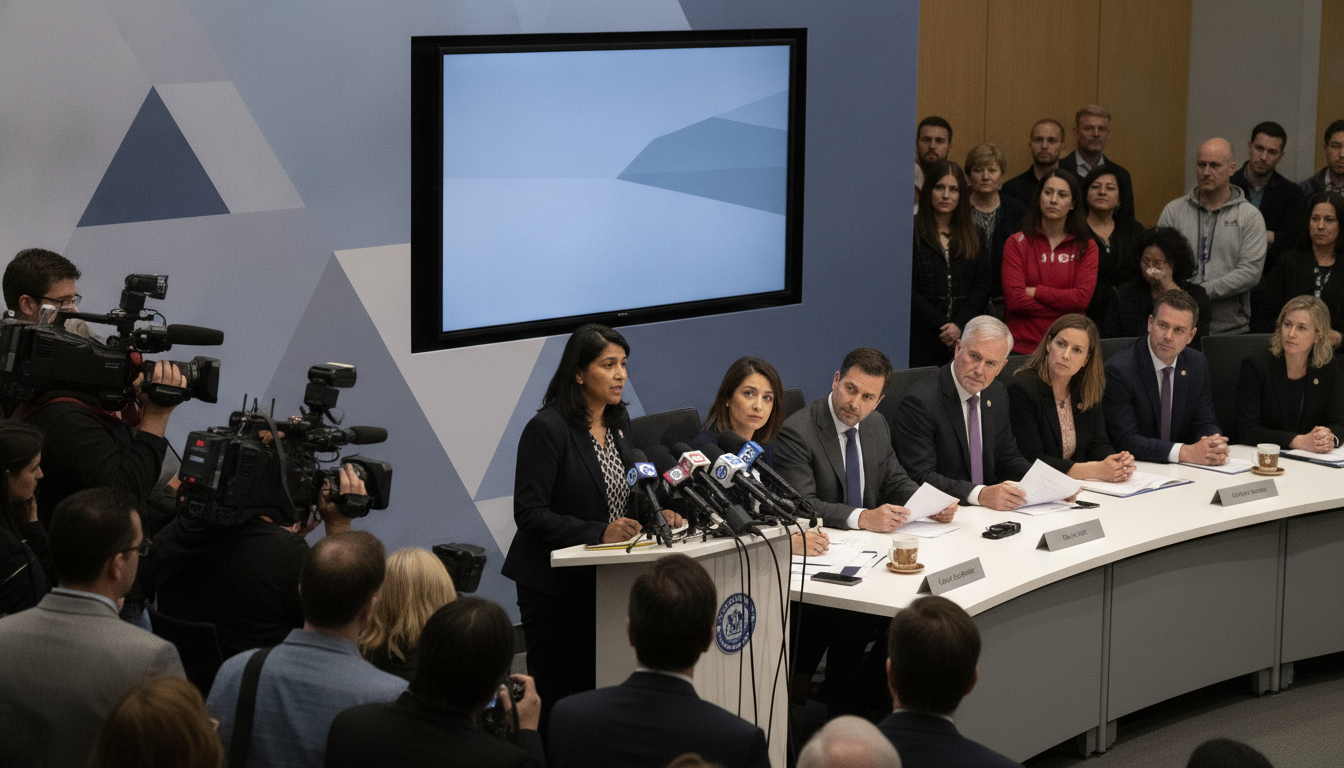
Implementation update presented to city council
The City of Calgary has begun rolling out the Safer Together framework after council approved the plan in May.
City officials brought an implementation update this week that outlined 15 specific initiatives intended to be phased in over the next four years.
The update also presented council with three distinct budget scenarios for the plan, pointing to significant differences in service capacity depending on the level of funding chosen.
Five priority areas guiding the strategy
Safer Together is built around five priority areas: inclusive communities, safer public spaces, expanded supports for wellbeing, housing capacity, and stronger financial security.
Those priorities are intended to direct investments in everything from street design to social services coordination and housing interventions.
City administration says the framework draws on ongoing programs and is intended to knit them together toward measurable outcomes by 2030.
Scope and examples of the 15 initiatives
The action plan identifies 15 initiatives to move forward, including infrastructure upgrades in parks and public spaces and improvements to maintenance and design.
Other elements include bolstering coordination of supports for people experiencing homelessness and expanding access to low-cost or free community services.
Administration described the package as a mix of capital design work, service coordination and outreach that can be adjusted depending on available funding.
Connection to existing Safety Hubs and frontline teams
Officials said Safer Together will build on existing Safety Hubs, which coordinate responses from the Calgary Police Service, bylaw officers, transit peace officers and social sector teams.
City staff stressed the approach is not intended as a law-enforcement-only response but as an integrated model that pairs enforcement with supports.
General Manager Katie Black told council that community safety is “multi-dimensional” and requires concurrent investments across services, infrastructure and partnerships.
Enforcement paired with wraparound supports
Coun. DJ Kelly emphasized to reporters that enforcement alone is ineffective without wraparound supports to prevent returns to the same circumstances.
He said the goal is to move away from a cycle of short-term removals and toward durable solutions that connect people to health, housing and income supports.
City administration relayed similar reasoning in its briefing, arguing that coordinated responses reduce repeat incidents and improve long-term outcomes.
Three budget options and their implications
Council was presented with three funding scenarios for the next four years: full investment at $38 million per year, a partial investment at $28 million per year, and a constrained option at $23 million per year.
Administration said the full option would permit the broadest set of interventions, including added enforcement capacity, greater access to programs and earlier supports to prevent escalation.
The partial and constrained options would require scaling back or postponing elements of the plan, with specific operational impacts outlined by staff.
What full investment would deliver
Under the $38 million-per-year option, administration said the city could increase enforcement capacity and expand proactive supports across neighbourhoods.
That level of funding would enable larger investments in downtown and transit safety, enhanced maintenance in public spaces, and stronger promotion of free and low-cost services.
City staff framed the full investment as the best chance to achieve the plan’s stated outcomes of improved safety and wellbeing by 2030.
Trade-offs in the partial investment scenario
The $28 million option was described by administration as a partial investment that would still advance several initiatives but produce reduced outcomes.
Officials warned that choosing the mid-level option would mean fewer peace officers in parks and public spaces—seven fewer than under the full plan—and scaled-back downtown and transit improvements.
Other reductions would include smaller allocations for community programs and less frequent garbage cleanup in business zones, according to the briefing.
Risks with the constrained funding choice
The lowest funding option, $23 million annually, was presented as carrying notable program and outcome risks.
City administration indicated that this level of investment would block downtown and transit safety improvements and that it would prevent hiring 14 security guards planned for parks and public spaces.
Officials said the constrained scenario could leave gaps in response capacity and undermine the ability to meet the plan’s 2030 outcome targets.
Departmental scope and cross-corporate investments
The proposed budget request spans 34 investments across 12 city departments, showing a cross-corporate approach to safety and wellbeing.
Administration argued that the multi-departmental structure is necessary because issues such as homelessness, domestic violence and public cleanliness intersect with infrastructure, community services and enforcement.
That complexity is one reason officials urged council to consider the full scope and timelines when weighing budget trade-offs.
Projected outcomes and the 2030 horizon
City staff set three primary outcome targets for 2030: increased access to supports and services, improved safety and perceptions of safety, and stronger incident response.
Officials said program and infrastructure changes introduced under Safer Together are expected to materially shift how residents experience public spaces and social supports.
Staff reiterated that many of the intended gains will be gradual and depend on consistent funding and coordination among municipal partners.
Reporting and accountability timelines
Council will receive a first progress update on plan implementation in spring of next year, according to the timeline presented by administration.
The city also plans to share results of consultation with the Calgary Police Commission in early 2027, signaling a staged reporting schedule tied to both internal and external partners.
Administration said those checkpoints will include performance measures aimed at tracking service access, incident response times, and community perceptions.
Dissenting councillors and jurisdictional debate
Not all councillors were persuaded that the municipal plan alone can resolve the underlying causes of safety concerns.
Ward 2 Coun. Jennifer Wyness criticized the city-facing approach and argued the crisis will only be addressed when provincial and federal governments step up with policy and funding.
Wyness told council that municipal spending without stronger intergovernmental collaboration risks being ineffective and that “blank cheques don’t work.”
Political context and calls for intergovernmental action
Several speakers at council meetings and in media interviews framed the Safer Together debate within a larger political context about responsibility for housing, mental health and income supports.
City administration acknowledged those systemic elements and characterized the municipal plan as part of a broader set of actions that will require provincial and federal engagement.
Officials and some councillors urged federal and provincial partners to coordinate program funding and policy levers to amplify municipal investments.
Operational details: staffing and public-space measures
Among the operational measures identified in the briefing were staffing increases for enforcement and outreach teams, as well as design and maintenance work in parks and transit areas.
Administration highlighted specific needs such as better lighting, improved sightlines, reliable garbage collection and more durable street furnishings to increase perceptions of safety.
The package is intended to pair visible environmental improvements with behind-the-scenes service coordination to address both immediate and root causes of public safety incidents.
How the plan would affect downtown and transit
Downtown and transit corridors were singled out for targeted investments under the full funding scenario, with staff pointing to concentrated supports and infrastructure improvements.
Officials said those investments would include both increased staffing presence during peak hours and targeted design work to improve accessibility and oversight.
Under the lower funding scenarios, administration warned that downtown and transit initiatives would be the most likely to be reduced or eliminated.
Engagement with community and service providers
City staff said Safer Together will involve ongoing engagement with community organizations and service providers to align supports and referrals.
Administration described plans to strengthen connections between municipal teams and the social sector, with the aim of smoothing pathways to housing, health services and income supports.
Officials emphasized that buy-in from community partners will be essential to the plan’s success and to maintain trust during the transition to a more coordinated model.
Public expectations and perceptions of safety
Improving resident perceptions of safety was presented as a core performance measure alongside objective incident data.
Administration acknowledged that changes in how people feel about neighbourhood safety will likely lag behind some operational improvements but contended that combined infrastructure and service changes can accelerate positive perceptions.
City spokespeople said communications and visible projects will be used to help residents see and understand the changes being made.
Cost pressures and competing budget priorities
Council will face difficult trade-offs during November’s budget deliberations as it balances Safer Together against other municipal priorities.
Administration framed the three funding options as a way to make those trade-offs transparent, showing what would be added or foregone at each level.
Councillors signalled the November debate will hinge on both fiscal capacity and differing views about the municipal role in addressing complex social issues.
Metrics and measuring success
Officials said they will establish indicators to monitor access to supports, incident response effectiveness and safety perceptions, though details of the metrics were not fully fleshed out in the update.
Administration committed to regular reporting and to using performance data to adjust implementation decisions over the four-year cycle.
City staff noted that measuring long-term wellbeing outcomes will require collaboration with health and housing partners beyond the municipal government.
Early actions and visible projects planned
Some early actions identified by staff include targeted maintenance in high-traffic public spaces, pilot outreach expansions and preliminary design work for safety-focused infrastructure upgrades.
Administration suggested these visible projects can provide near-term improvements while larger system changes are staged over the budget cycle.
Officials said early pilots will be evaluated to inform larger rollouts should council approve funding.
Safety hubs and a coordinated response model
Safer Together will rely on Safety Hubs’ proven coordination model to connect enforcement, bylaw, transit peace officers and social sector teams.
Administration argued that the Hub approach already demonstrates benefits by bringing different agencies into shared responses and that the Safer Together plan aims to scale that coordination.
Officials also stressed the importance of clear referral pathways so that people contacted by enforcement teams can access services promptly.
Community wellbeing and long-term housing goals
The housing priority in Safer Together focuses on meeting needs across the spectrum, from emergency shelter to long-term affordable housing options.
City staff said housing interventions are critical to reducing repeat interactions with enforcement and to improving overall community wellbeing.
Administration acknowledged that municipal tools are limited and that achieving housing-related objectives will require partnerships with the province and non-governmental housing providers.
Next steps before the November budget debate
Between now and the November budget deliberations, administration will continue to refine cost estimates, program details and implementation timelines.
Council members will have opportunities to seek further information and to propose adjustments before decisions are made during the fall budget cycle.
Officials reiterated that the choice of funding level will materially affect which initiatives can move forward and at what pace.
Public messaging and expectations management
City spokespeople said they will use public communications to explain the plan’s phased approach, the role of partners, and the probable timelines for visible changes.
Administration emphasized the importance of setting realistic expectations about how quickly complex systems can shift and about the interplay of municipal, provincial and federal levers.
Officials said transparency about trade-offs and reporting on progress will be central to maintaining public confidence.
Balancing enforcement and social supports
Throughout the council briefing and subsequent commentary, a consistent theme was the need to balance enforcement with investments in social supports.
Officials argued that visible enforcement without parallel services risks transient results, while supports without adequate public safety measures can leave residents feeling insecure.
Safer Together is designed to reconcile those approaches by coordinating teams and aligning budgets to produce sustainable change.
The city plans to return to council with a progress update next spring and to report engagement findings with the Calgary Police Commission in early 2027, setting a staged timeline for accountability and refinement.
Calgarians can expect early visible projects in public spaces alongside work to expand coordinated supports, but the scale and pace of rollout will depend on the funding decision council makes in November.
As the debate continues, council members and administration will weigh the trade-offs between immediate capacity, long-term outcomes and the degree of intergovernmental collaboration needed to meet the plan’s ambitions.
