
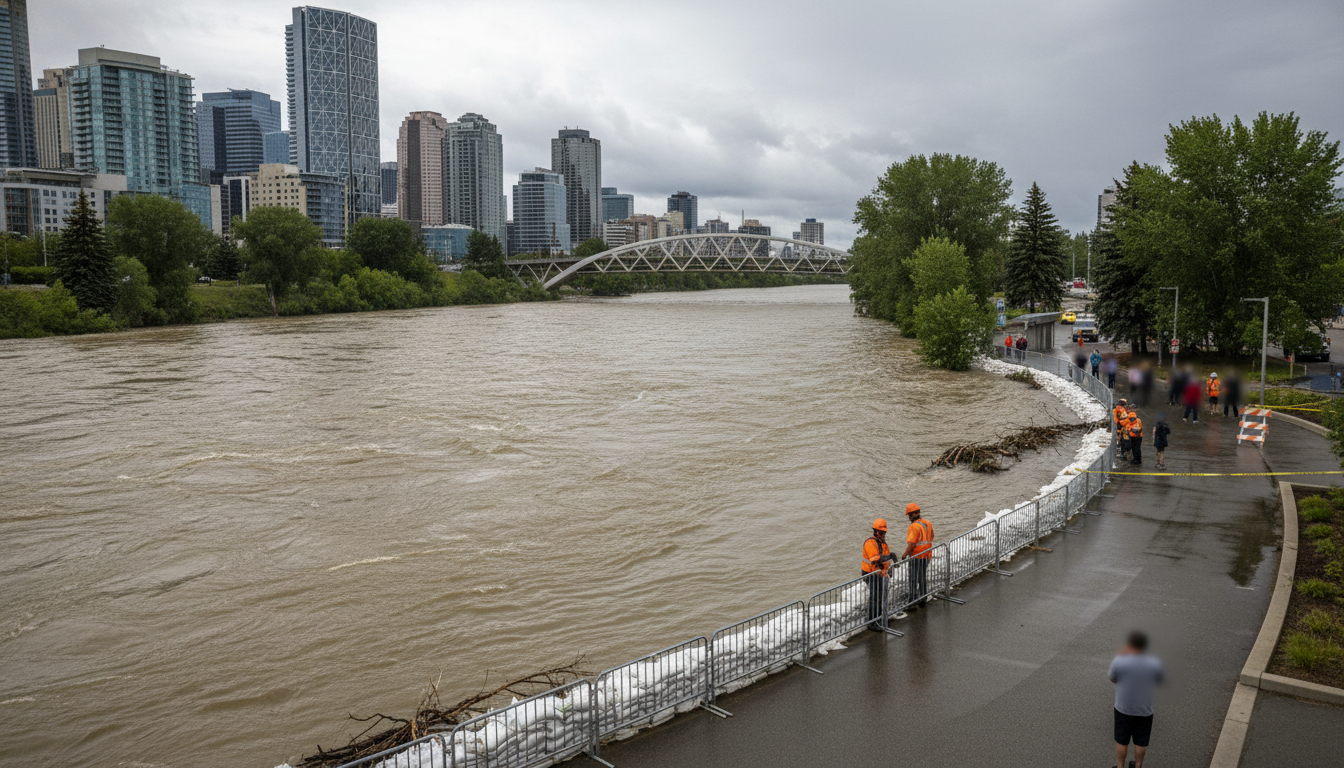
Bow River flooding advisory prompts safety alerts for Banff, Canmore and Exshaw
Parks Canada and local RCMP urge caution as high snowpack, warm temperatures and rain raise risk of Bow River flooding across the Bow Valley.
Strong warning after high streamflow advisory issued
Lake Louise RCMP and Parks Canada have issued warnings to residents and visitors ahead of a high streamflow advisory for the Bow River, citing conditions that could lead to Bow River flooding.
The advisory covers the river from upstream of Banff to Ghost Lake, a stretch that includes the towns of Banff, Canmore and Exshaw.
Officials say river and stream levels are running higher than normal because rapid snowmelt combined with recent warmth is already pushing flows upward.
The advisory forecasts an additional rise of about 30 centimetres through Friday, May 29, 2026, increasing the potential for low-lying flooding and groundwater impacts.
Areas most at risk along the Bow Valley
The advisory identifies low-lying river pathways and day-use areas in Banff as likely to be affected by rising water.
Local authorities report some sections of trail and public access have been temporarily closed where flooding or unsafe conditions have been observed.
Canmore and Exshaw are flagged for possible groundwater-related issues as rising water seeps into low-lying zones.
Residents in valleys and near embankments are being alerted to watch for undercut or unstable ground that may not look hazardous from the surface.
Forecasts point to additional rain over the coming days
Environment Canada meteorologists warn of thunderstorms and scattered showers in the advisory area over the next couple of days, followed by a steadier rain period beginning the weekend of May 30–31, 2026.
Total precipitation of 50 to 90 millimetres is expected across communities within the advisory area between the end of this week and early next week (May 30–June 2, 2026), which could compound runoff from the elevated snowpack.
Forecasters say the combination of warm temperatures, persistent runoff and predicted rainfall increases the likelihood that river levels will remain elevated or rise further.
Residents and visitors should treat weather forecasts and river-level notices as dynamic and check updates regularly.
Municipal safety notices and restrictions
The Town of Banff has advised the public to avoid all flooded areas and to stay clear of riverbanks, stressing that fast-moving, muddy water conceals hazards such as sinkholes, debris and exposed infrastructure.
Banff emergency crews say they are on heightened alert and prepared to respond as conditions change.
Canmore officials have warned that embankments may be undermined by flowing water and urged extreme caution near the river.
Canmore is also advising against the use of watercraft on the portion of the Bow River under the advisory, citing cold, fast-moving water and increased debris as significant safety risks.
Risks to people, pets and first responders
Local postings emphasize that fast stream flows can easily sweep people and pets into downstream hazards, and that rescues in these conditions are perilous for first responders.
Officials urge that no one enter floodwaters or attempt to retrieve items from the river, because submerged currents and debris can cause unexpected and severe danger.
Municipalities remind residents that what appears to be firm ground near the river may be compromised, and they ask the public not to create situations that could require emergency rescue.
Children and pets should be kept well away from river edges and temporary flood zones until waters recede and authorities confirm it is safe to return.
Where to get updates and what to do now
Residents should monitor notices from Parks Canada, Lake Louise RCMP, local town social media feeds and Environment Canada for the latest river conditions and weather forecasts.
For official flood information and advisories for Alberta, authorities recommend consulting floods.alberta.ca and local emergency management pages.
Take immediate precautions: move valuables and vehicles out of low-lying areas, avoid walking or driving through flooded paths, and keep clear of riverbanks and embankments.
If you encounter an urgent or life-threatening emergency, contact local emergency services rather than attempting a risky rescue yourself.
Officials say the situation may change quickly as more snowmelt and rain enter the river system, and they urge everyone in the Bow Valley to treat the Bow River flooding risk seriously and remain vigilant.
