
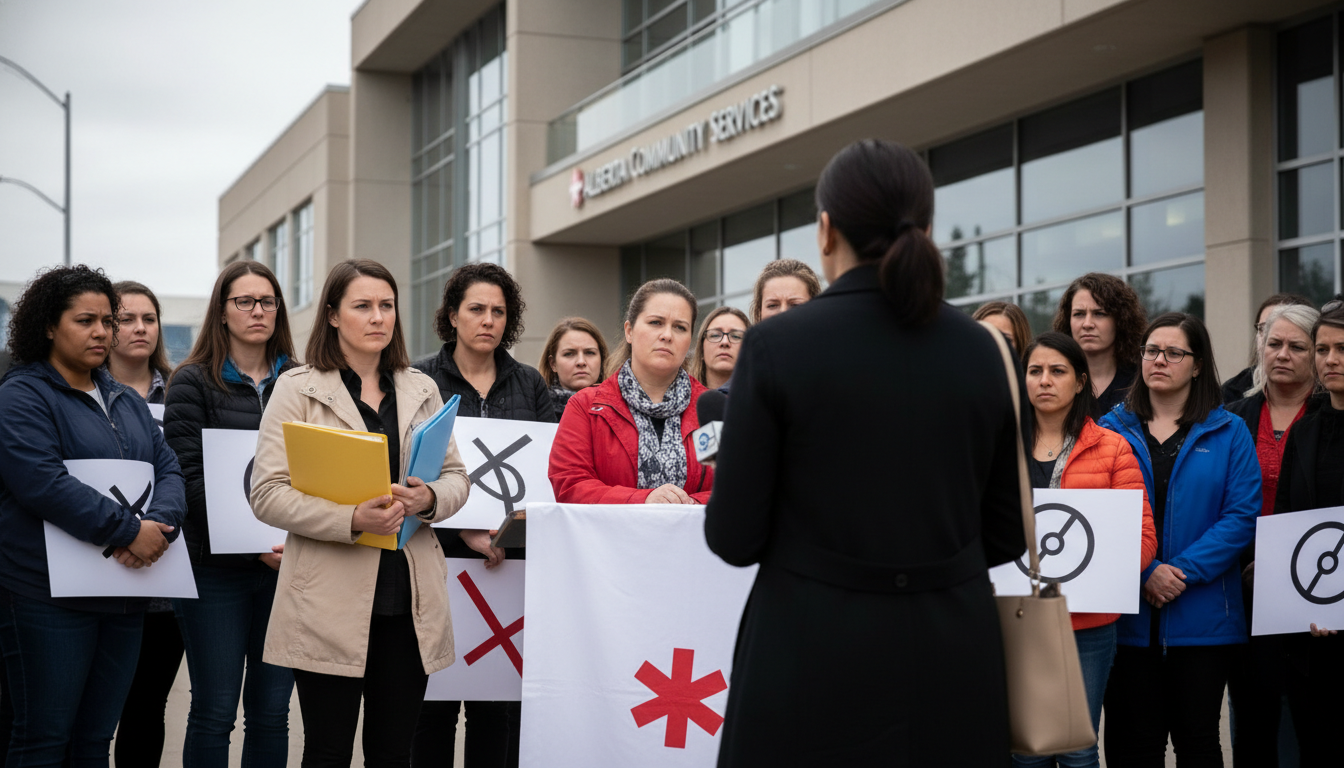
Alberta women’s shelters funding changes spark rural cuts and urgent calls for delay
Alberta women’s shelters funding changes announced by the provincial government will reallocate resources across the province, prompting warnings that more than a dozen rural shelters face cuts and reduced bed capacity ahead of a July 1 rollout.
The Alberta government unveiled a revised funding program on May 19 intended to increase total dollars for women’s shelters while changing how those dollars are distributed.
The Alberta Council of Women’s Shelters says the new approach will leave some rural communities with fewer staffed beds and fewer support workers.
Shelter operators and advocacy groups are asking for a pause in implementation and for the province to disclose the formula used to allocate funding.
Province Announces New Shelter Funding Model
The provincial government announced the updated program in mid-May, saying it aligns funding with service demand and the realities of operating shelters across Alberta.
Officials describe the model as needs‑based and transparent, and they maintain that most shelters will not see reductions when the changes take effect.
The Ministry of Children and Family Services has said 23 shelters received increased funding or experienced no change under the new distribution.
The funding update is scheduled to begin July 1, leaving a six‑week window for shelters to adjust budgets, staffing and operations.
Shelter networks and operators warned that the short transition time is unrealistic given tight staffing, existing financial constraints, and the complexity of shifting service delivery.
The Alberta Council of Women’s Shelters has formally requested that implementation be delayed until the 2027–28 fiscal year to give organizations time to adapt.
Uneven Distribution and Rural Cuts
While the province framed the package as an overall funding increase, shelter associations say the distribution is uneven and that more than a dozen facilities will face cuts.
The Alberta Council of Women’s Shelters reported that impacted sites are concentrated in rural areas where alternate resources and housing options are limited.
According to the council, many of the shelters affected have operated for years on minimal base funding and have not seen sustained increases for a decade.
Shelter leaders argue that assessing funding needs primarily by population risk overlooks the heightened prevalence and severity of intimate partner violence in rural communities.
Statistics cited by advocacy groups indicate rural residents experience higher rates of partner violence and face greater barriers to help‑seeking, including transportation and privacy concerns.
Shelter operators warn that reallocating funds away from smaller centres risks reducing immediate access to crisis beds when victims cannot safely travel to larger centres.
Shelter Operators Describe Immediate Operational Impacts
Managers at impacted shelters describe painful choices ahead as they reconcile reduced budgets with fixed building and payroll costs.
The council estimates that some organizations now face about a five per cent cut to operating budgets, a figure that for many translates directly into fewer staff hours or closed rooms.
Front‑line workers say services already run at lean capacity and that small reductions have outsized consequences for crisis response and transitional support.
Operators noted that shelters commonly use every dollar for client supports, from meals and security to counselling and housing navigation.
When budgets shrink, the options are stark: reduce staffing, limit admissions, or close rooms that cannot be staffed safely.
Those reductions, they say, will immediately affect women and children fleeing violence, who rely on the shelters as a predictable and confidential refuge.
Fort McMurray Shelter Faces Bed Closures and Staff Strain
One concrete example comes from Fort McMurray, where the local shelter operator says funding changes will force the organization to leave beds empty and consider staff cuts.
Waypoints Community Services Association manages the local facility, which normally offers 45 bedrooms but now anticipates being able to operate only 36 due to resource constraints.
Managers reported that senior staff reacted emotionally to the news and fear being forced to tell someone there is no space even when an empty bed exists upstairs.
Local leaders emphasized the breadth of needs the shelter addresses, from emergency protection and human trafficking responses to transitional housing and court accompaniment.
Staff warn that turning away clients or limiting services undermines both immediate safety and longer‑term efforts to help survivors find stable housing.
The Fort McMurray team is urging decision‑makers to visit the shelter and observe daily operations to understand how cuts translate directly into service gaps.
Government Response and Calls for Transparency
Provincial officials have defended the update as an improvement that allocates funds more consistently with service demands and operating realities.
A ministry spokesperson emphasized that most shelters did not see reductions and highlighted the increase or stability of funding for 23 facilities, including some in rural areas.
Despite that assurance, shelter advocates are pressing the government to disclose the specific formula and metrics used to reassign funds.
Advocates say transparency is necessary for trust and for shelters to plan responsibly, including pursuing alternative funding or adjusting service models with clarity.
The Alberta Council of Women’s Shelters has requested a delay in implementation until 2027–28 and a public explanation of how decisions were made.
Shelter operators and municipal leaders are also asking for province‑to‑province comparisons and operational data to ensure the distribution method reflects true service pressures rather than raw population counts.
Housing Shortages and Access Barriers Intensify Pressure on Rural Services
Beyond immediate shelter budgets, operators point to chronic housing shortages in smaller communities that complicate exits from shelters and increase demand for beds.
When affordable housing is scarce, stays at shelters lengthen, which in turn reduces turnover and the ability to admit new clients in crisis.
That dynamic places additional strain on limited provincial dollars and magnifies the impact of any funding reductions.
Rural survivors face added logistical burdens if they must travel to other communities to find space, including transportation costs, childcare arrangements, and loss of local social supports.
Privacy and confidentiality concerns also deter some rural residents from seeking help if the nearest shelter is a neighbouring town where people know one another.
Advocates caution that funding formulas driven primarily by population size risk undercounting these compounding barriers and the higher reported rates of severe violence in rural settings.
Implementation timeline and potential mitigation steps are now central to local planning conversations.
Shelter networks say they are exploring short‑term measures, such as temporary staffing adjustments and fundraising drives, but stress those are stopgap solutions.
Longer‑term remedies will require coordinated provincial investment in both emergency shelter capacity and affordable housing to improve exits from shelter systems.
Efforts to quantify service demand and operating realities are complicated by data gaps and varying reporting practices across shelters.
Advocates want a consistent, published methodology that incorporates utilization rates, waitlists, severity of cases, and local housing market conditions.
They argue that a transparent approach would let communities understand trade‑offs and help the province target investments where they reduce harm most effectively.
Municipal officials and community partners in affected areas are planning to press the province for meetings and, where necessary, public hearings to explain the local impacts.
Several shelter operators have announced they will document changes in service levels and client outcomes to create a record of the consequences of the funding shift.
Those local reports may shape future budget reviews and discussions about the equity of provincial funding across urban and rural contexts.
The debate over the funding model also underscores broader policy questions about prevention and long‑term supports for survivors.
Experts note that shelters are one component of a broader system that includes policing, family justice, counselling services, and affordable housing.
Reductions in shelter funding, even if offset by increases elsewhere, can weaken the immediate front‑line response that prevents further harm.
Shelter providers stress that emergency beds are not merely short‑term accommodation but a safety net that enables survivors to access legal help, health care, and housing navigation.
Closing or leaving beds empty creates backlogs in a system where demand is often unpredictable and peaks during crises.
For rural communities without alternative services, the loss of local capacity can mean a complete absence of safe, immediate options for those fleeing violence.
Advocacy organizations are mobilizing public awareness campaigns and preparing submissions for provincial budget consultations.
They hope to persuade decision‑makers that the distribution method must account for rural realities and the higher prevalence of intimate partner violence outside urban centres.
Some shelter networks are also seeking interim funding from municipalities, local businesses, and private donors to bridge the July 1 transition.
Shelter staff and community volunteers emphasize the human stakes behind budget lines: each reduction represents fewer counselling sessions, fewer safe beds, and more families forced to remain in unsafe situations.
Managers say the stress of impending cuts is already affecting staff morale and retention at a moment when many agencies struggle to recruit and keep qualified crisis workers.
Front‑line teams warn that losing experienced staff will degrade service quality and increase job turnover, which in turn raises training costs and disrupts client continuity.
The government frames the reforms as an attempt to modernize funding and better match resources to demand, but operators say the timeline and lack of detailed explanations have undermined confidence.
Calls for a pause are intended to allow an orderly transition that avoids losses in capacity and protects vulnerable residents during the summer months.
Shelter leaders say an open dialogue would also allow for technical adjustments to the formula and the introduction of targeted supplements for high‑need rural sites.
Local leaders say they will measure the effects of the changes in immediate admissions, waitlist lengths and the availability of transitional housing placements.
They plan to report back publicly if bed closures or staff reductions materialize, and to seek rapid restoration of funding where local data show increased harm or unmet demand.
Those outcomes, they say, should inform any future revisions to the funding model and help policymakers understand the full cost of reallocating shelter dollars.
As the July 1 date approaches, shelters are balancing urgent operational decisions with broader appeals for transparency and fairness in provincial funding.
The Alberta Council of Women’s Shelters and individual operators maintain that careful, collaborative planning is required to prevent avoidable harm among people fleeing violence.
Community leaders, municipal officials and advocacy groups are preparing to press the province for a measured approach that preserves emergency capacity while pursuing longer‑term system improvements.
The coming weeks will test whether the province will respond to calls for delay and formula disclosure, and whether shelter systems can adapt without reducing service to women and children who have nowhere else to turn.
