
Johnston Canyon death: Body of 25-year-old U.S. tourist recovered in Banff National Park
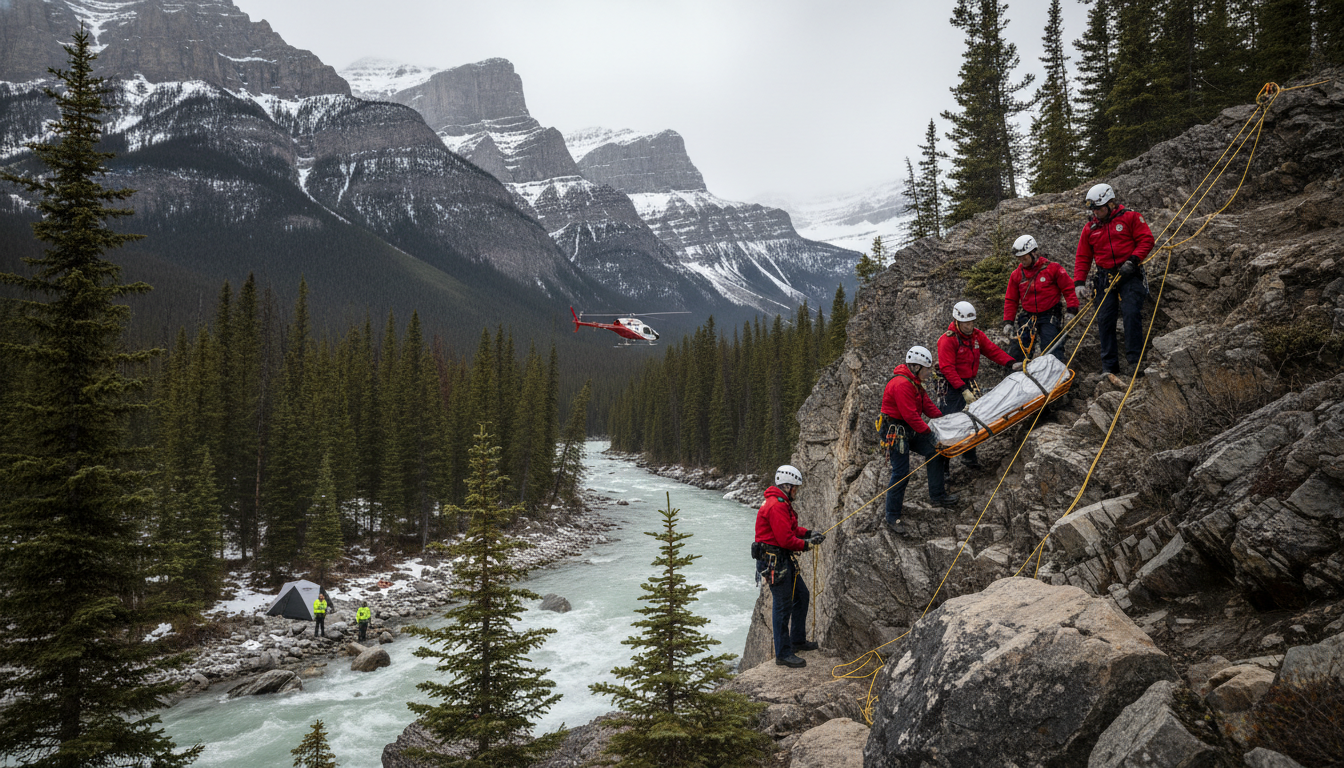
Authorities recovered the body of a 25-year-old U.S. tourist near the Lower Falls at Johnston Canyon on May 26, 2026; RCMP and Parks Canada responded.
The body of a 25-year-old American man who died in an earlier accident at Johnston Canyon was recovered on Tuesday, drawing renewed attention to safety and search challenges in Banff National Park. The Johnston Canyon death follows an initial incident on May 1 when emergency teams were impeded by hazardous water conditions and could not complete a recovery. RCMP and Parks Canada officials confirmed the recovery occurred downstream of the lower pool of the Lower Falls and that the trail had been temporarily closed to permit safe operations.
Body recovered from Johnston Creek downstream of Lower Falls
RCMP said the recovered body was located in Johnston Creek, downstream of the lower pool that feeds the iconic Lower Falls viewing area. The agency confirmed that recovery teams found the remains on Tuesday, May 26, 2026, and was coordinating next steps with partner agencies. The victim has been identified as a 25-year-old U.S. man, and RCMP described the incident as an accidental death linked to a suspected drowning.
Local teams closed the popular Johnston Canyon trail to allow response crews safe access for the recovery operation. Officials said the trail has since been re-opened to visitors, but cautioned that conditions can change quickly in canyon environments and that closures remain possible if hazards return. Authorities did not release additional personal details pending notification of next of kin and customary investigative procedures.
Timeline: May 1 incident and the weeks leading to recovery
On May 1, Banff RCMP and Parks Canada responded to reports of an incident near the Lower Falls area of Johnston Canyon. At that time, responders assessed the scene and attempted a recovery, but they were forced to suspend efforts because of dangerous water and terrain conditions. Spring melt and strong creek flows were cited as major complicating factors for safe operations.
Over the ensuing weeks, teams monitored the canyon and maintained communication with colleagues and partners where required. Parks Canada routinely manages fluctuating water levels and advises that spring runoff can make creek channels treacherous. The recovery on May 26 came after response crews determined it could be conducted safely without exposing personnel to undue risk, enabling them to retrieve the body from Johnston Creek.
Search and recovery challenges in canyon environments
Response officials said the initial inability to recover the victim on May 1 stemmed from hazardous water conditions that made river access and on-scene rescue untenable. Johnston Canyon’s narrow walls and fast-moving water create complex hazards, particularly in spring when snowmelt and rain increase flows. The combination of steep terrain, slick rock, and limited access points often constrains what crews can do without specialized water-rescue assets.
Parks Canada and RCMP personnel emphasize that safety of responders is a primary consideration during searches where conditions are unstable. In such cases, teams may rely on downstream monitoring, remote observation, and timing their interventions to windows of safer water flow. Recovery operations can require coordination between ground crews, water-rescue specialists, and incident commanders to balance the urgency of retrieval with the hazards present.
RCMP and Parks Canada response and public messaging
Both Banff RCMP and Parks Canada issued statements confirming their roles in the response and thanking partner agencies for their assistance. Officials noted that the initial call on May 1 indicated a suspected drowning near the Lower Falls and that the search required a cautious approach due to water conditions. The news release from RCMP described the recovery as occurring on Tuesday and reiterated that investigators were treating the event as an accidental drowning.
Parks Canada routinely posts alerts and advisories for Banff National Park users, and officials encouraged visitors to monitor those resources before and during trips. The agencies urged the public to respect closures and signage, stay on established trails, and avoid getting close to water edges or venturing onto frozen or wet rock surfaces. Authorities said they would provide further information as appropriate and as families are notified.
Trail safety and visitor advisories for Johnston Canyon and Banff
Johnston Canyon is among Banff National Park’s most visited day-use attractions, drawing thousands of visitors annually to its waterfalls and walkways. Park managers say the mix of heavy foot traffic and natural hazards—especially during spring runoff—requires active management and public awareness. Seasonal changes in flow, ice, and rock conditions can make areas that appear stable deceptively risky.
Visitors are advised to remain on the constructed catwalks and viewing platforms that were installed to improve safety and to obey temporary closures. Parks Canada warns that stepping off the designated paths, climbing on rails, or attempting to access creek beds can cause falls, hypothermia, or drowning. The agency also reminds travelers to check weather forecasts, wear proper footwear, and carry appropriate warm and waterproof clothing even on short outings.
Community response, investigation and next steps
The recovery has prompted responses from local authorities and community members who frequent Johnston Canyon for recreation and tourism. Park staff and volunteers often work year-round to maintain trails and signage, and local businesses that rely on summer visitation said they were mindful of visitors’ safety but also aware of the canyon’s importance to the local economy. Officials asked for patience while investigative steps proceed and while family notifications are completed.
RCMP investigators will continue to examine the circumstances surrounding the accident to determine the precise sequence of events and contributing factors. Coroners or medical examiners typically carry out autopsies or forensic examinations to formally establish cause of death, and such determinations can take time. Parks Canada said it will review operational and communications procedures as needed to minimise future risks and will continue public messaging about safe conduct in canyon environments.
Authorities reiterated that the recovery was completed without further incident and that the Johnston Canyon trail has reopened for the public. Visitors should continue to follow posted warnings and use caution, officials said, because natural hazards in mountain park settings remain present throughout seasonal transitions.
The Johnston Canyon death underscores the hazards that exist even in heavily visited park attractions and the need for both visitors and management agencies to respect natural forces and safety measures.
