
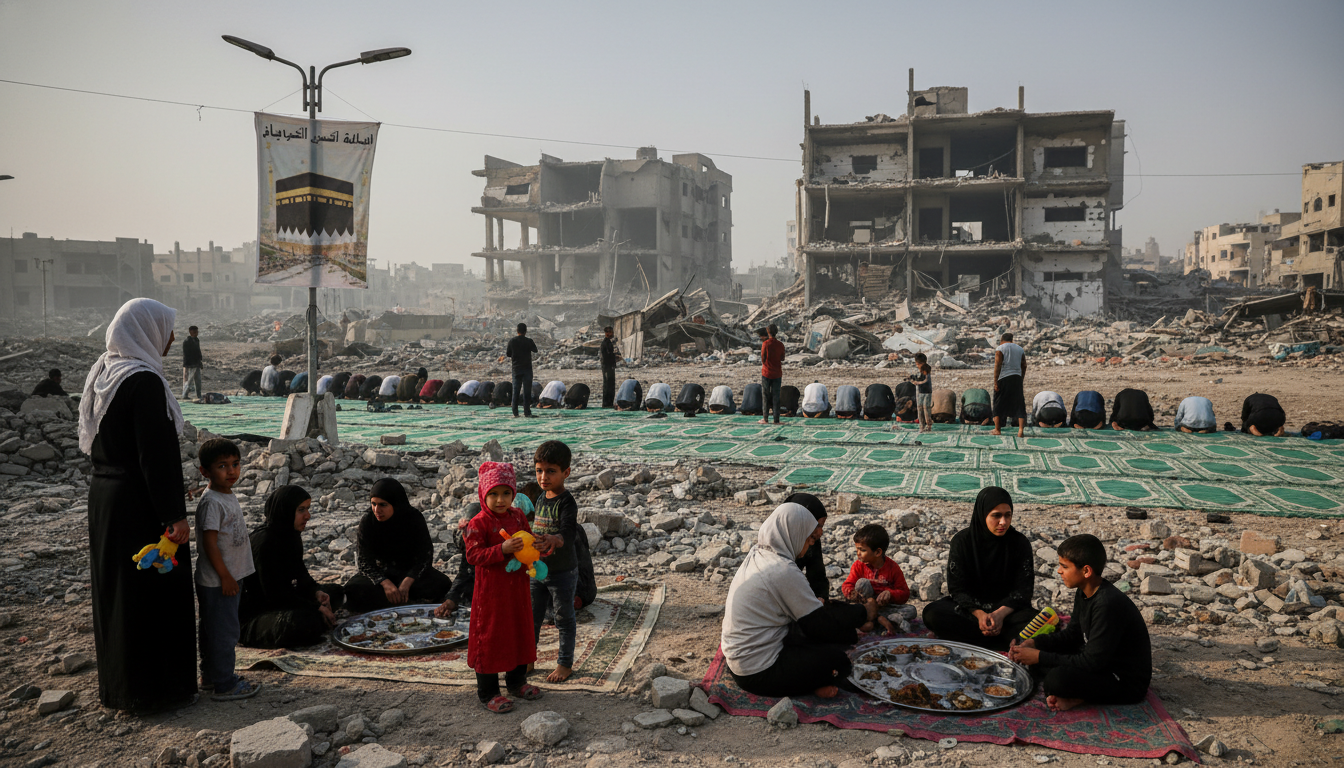
Eid al-Adha in Gaza marked by halted Hajj departures and vanished sacrifices
Eid al-Adha in Gaza: Hajj departures halted and sacrificial animals scarce as movement restrictions and soaring prices leave families displaced and grieving.
Gaza City — Eid al-Adha in Gaza has been transformed from a season of pilgrimage and shared feasting into a period of displacement, scarcity and mourning for many residents. Pilgrimage departures for Hajj remain suspended and traditional animal sacrifices are largely impossible for most families due to restrictions on exits, market collapse and widespread destruction. The change has deep personal consequences for older residents who had long planned the once-in-a-lifetime journey.
Hajj plans postponed across the enclave
Many prospective pilgrims from Gaza say the dream of performing Hajj has been indefinitely postponed as exit points remain tightly restricted. Several older couples who had secured places on the 2024 and 2025 lists say they cannot leave the territory, and some have suffered recent personal losses that make travel impossible. For those who had been saving for years, the combination of border closures and bereavement has turned aspiration into another casualty of the conflict.
Sacrificial animals disappear from markets
Market vendors and displaced families report a dramatic collapse in the availability and affordability of livestock ahead of the festival. Prices that were once accessible even to modest households have jumped many times over, and the animals that remain are often underweight or unsuitable for ritual sacrifice. The absence of sacrificial practices has erased an important social and religious ritual that used to bring extended families together and provide meat to poorer households.
Movement restrictions and siege pressures
Local economic analysts and trade associations report that more than 90 percent of livestock farms and related infrastructure have been destroyed or damaged, contributing to shortages. Authorities controlling crossings have also limited the entry of live animals and certain agricultural inputs, compounding the shortfall inside the strip. The combined effect of physical destruction and controls on trade has pushed prices higher and left many families unable to afford even basic fresh food.
Households coping with loss and austerity
Displaced families describe Eid preparations now focused on survival rather than celebration, with many unable to buy new clothes for children or to host visiting relatives. Several people recounted the loss of close family members and multiple generations wiped out by strikes, underscoring the festival’s altered meaning this year. Some households say they will substitute canned or frozen food where fresh meat used to be shared, while others expect no sacrifice at all.
Local livestock sector in ruins
Chamber of commerce figures cited by local sources indicate the livestock sector has suffered catastrophic damage, with farms, feed supplies and veterinary services disrupted across the territory. Import prohibitions and damaged supply chains have prevented replenishment of herds, while surviving animals fetch unusually high prices because of scarcity. The scale of damage to production capacity suggests recovery will require sustained investment and restored access that are not currently in place.
Aid dependence and community coping strategies
Relief agencies and community groups are providing limited food assistance, but distribution queues and inadequate rations mean many people still go without items associated with the holiday. Families are increasingly reliant on charitable networks, informal sharing, and donations from relatives abroad to mark Eid in any way. Community leaders stress that even symbolic observances — a small meal, a prayer together — retain importance as markers of normalcy amid prolonged hardship.
The human toll underlines a broader humanitarian emergency that extends beyond one festival: the inability to perform Hajj, the disappearance of sacrificial rites and the loss of homes and loved ones have reshaped daily life for many in Gaza. As residents prepare for another Eid away from their houses and, for some, away from family, appeals for increased access for people and goods and for renewed avenues of humanitarian relief continue to grow.
