
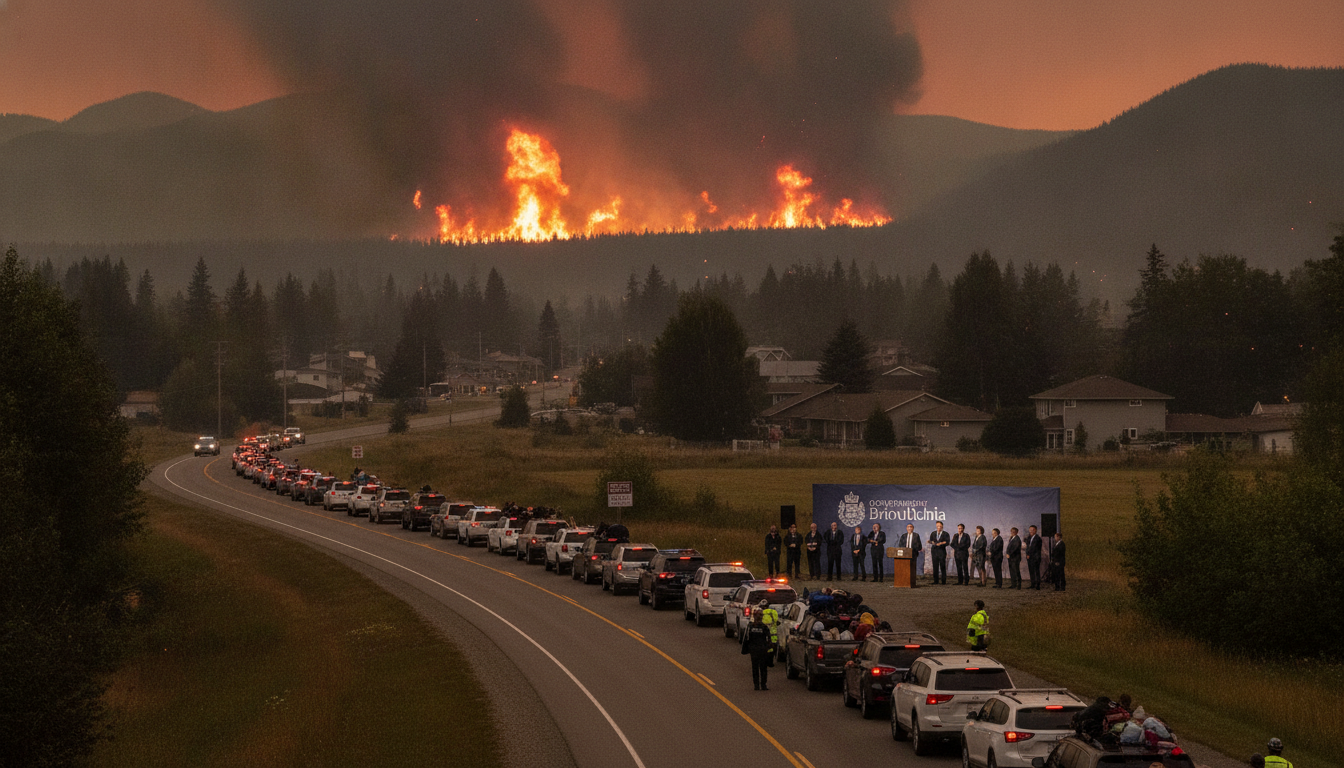
Bald Range wildfire near Summerland forces thousands to flee as Alberta sends crews
Bald Range wildfire near Summerland, B.C., forced more than 20,000 residents to evacuate between Aug. 7–9, 2026, and drew firefighters and aircraft reinforcements from Alberta.
The Bald Range wildfire, first reported on Friday, Aug. 7, 2026, exploded into a major emergency over the weekend as rapidly shifting winds drove flames toward lakeside communities in the Okanagan Valley. Authorities issued widespread evacuation orders and B.C. Premier David Eby declared a provincial state of emergency on Saturday, Aug. 8, 2026. As of Sunday afternoon, Aug. 9, 2026, the blaze had consumed an area estimated at roughly 95 square kilometres and forced thousands from their homes.
Bald Range wildfire forces mass evacuations
Evacuation orders and alerts covered the entire District of Summerland, which has a population of about 12,000, and extended into neighbouring Peachland and surrounding rural areas. Officials said more than 20,000 people were affected by orders or alerts by Sunday, with dozens of properties added to the evacuation list as the fire threatened critical watersheds and downtown Peachland. Local governments including the District of Summerland declared municipal states of emergency as crews focused on civilian safety and containment.
Eighteen firefighting aircraft were reported to have paused suppression work late Friday to assist in the rescue of residents, underscoring the scale and volatility of the incident. Highway 97, a major north–south corridor through the valley, was closed in sections, complicating movement for evacuees and responders. Emergency shelters and reception centres were stood up to receive those displaced while authorities coordinated evacuation routes and public-health advice.
Campers recount sudden, violent shift in conditions
Among those swept up in the evacuation was Calgary DJ Matt Strickland, 33, who had been in the Okanagan to perform and to camp with friends when the fire began. The group noticed smoke building on Aug. 7 and initially stayed at their campsite, but an abrupt wind change sent embers and burning debris into their area, forcing a rapid departure. Strickland described heavy ashfall and falling branches and said the air became so thick that breathing grew difficult as they fled toward Penticton.
With roads jammed and air quality deteriorating, Strickland and his companions spent the night in a Penticton parking lot before being pushed east when conditions worsened. Closed highways and widespread smoke made remaining in the valley untenable for many residents and visitors, prompting some to travel overnight to communities such as Cranbrook to find safer air and accommodations. Their experience reflects the sudden escalation that left families with little time to gather essentials before leaving.
Rescues and investigations complicate response
Emergency responders faced hazardous conditions as they worked to protect residents, with crews conducting evacuations under heavy smoke and active flame fronts. Authorities reported more than 50 people were rescued from areas near the fire on Friday night, and local RCMP said they were investigating a possible fatality in Meadow Valley, close to Summerland. The coroner’s office and police have been working with the affected family, but officials cautioned that confirmation and recovery efforts have been slowed by ongoing fire danger in the region.
First responders also warned about health hazards from smoke exposure and falling debris, and public-health officials urged residents to avoid travel unless it was part of an evacuation plan. Air-quality warnings were issued across the region as plumes from the Bald Range blaze and other nearby fires drifted over populated areas, increasing the risk for people with respiratory conditions and prompting closure of some public facilities.
Alberta deploys personnel, aircraft and equipment to assist
In an interprovincial response, Alberta sent what provincial officials called significant reinforcements to support B.C. efforts, including 186 firefighters and 27 support staff. The deployment also included two air tankers, three helicopters and other specialized equipment aimed at bolstering suppression capacity around Summerland. Alberta Forestry and Parks Minister Todd Loewen confirmed the personnel and equipment movement on X on Saturday and said the province stood “shoulder-to-shoulder” with B.C. as crews battled the fire.
Alberta Premier Danielle Smith said her government was prepared to send additional resources if requested, and she offered condolences to those affected by the fires. The mutual-aid arrangement reflects longstanding cooperation between western provinces during peak wildfire seasons, when conditions often overwhelm local capacity and require coordinated support.
Community impacts, air quality and recovery outlook
Local officials warned that recovery would be measured and that displacement could last days or longer depending on containment progress and infrastructure damage assessments. For many residents, the immediate concerns center on housing, access to clean air, and the safety of properties left behind as ordered evacuations took effect. Businesses in affected towns faced abrupt closures and a suspension of tourism activity during a period when the valley typically sees heavy summer visitation.
Longer-term risks include erosion and watershed impacts if the fire burns through steep terrain, which could affect drinking-water supplies and create hazards during future rain events. Emergency planners said they were coordinating with provincial and federal partners to assess logistical needs and allocate resources for relief, stabilization and eventual recovery work.
Officials cautioned the situation remained fluid on Sunday, Aug. 9, 2026, and asked residents to follow evacuation orders and public-safety messaging as crews worked to contain the Bald Range wildfire and protect communities.
