
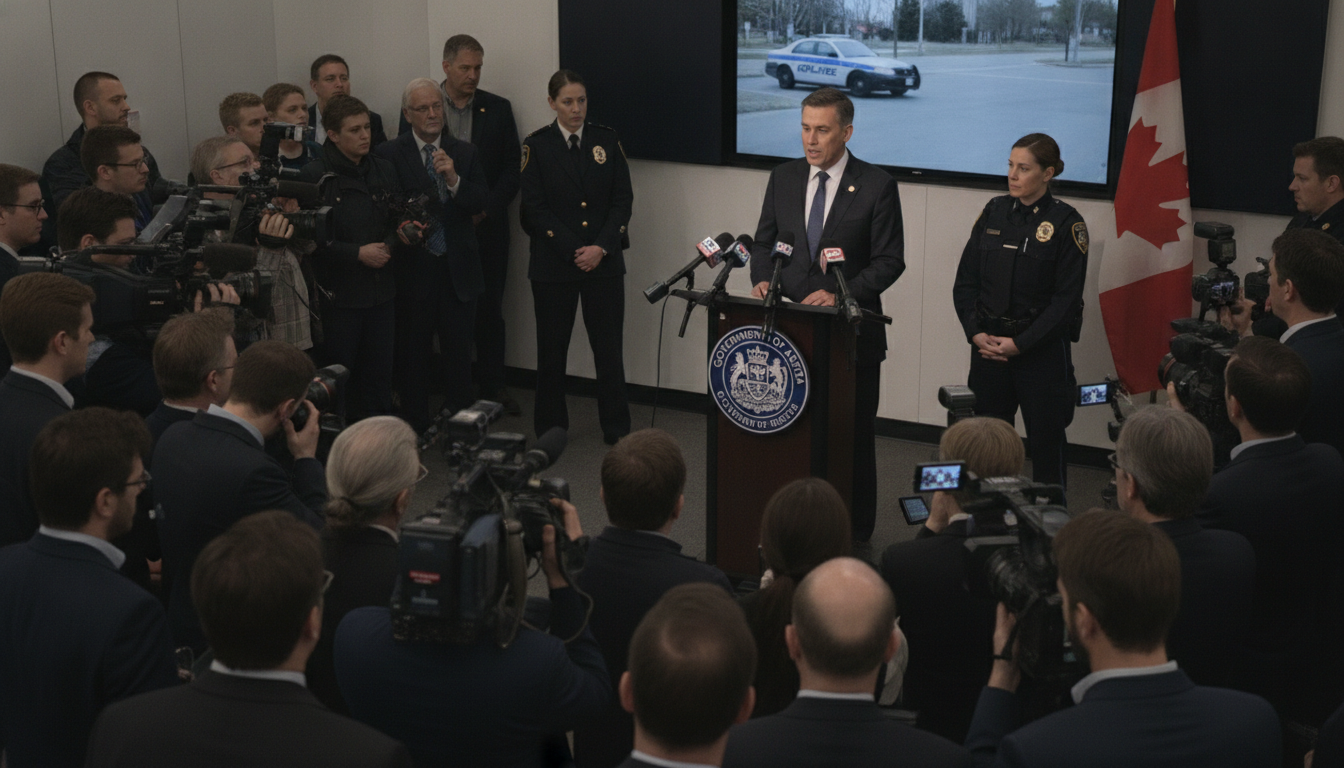
ASIRT clears Edmonton officer after October 2025 takedown that left man with brain bleed
ASIRT clears Edmonton officer in October 2025 takedown that caused a brain bleed, citing video, medical records and interpreter-assisted interviews in its report.
An independent review by Alberta’s police watchdog found no criminal wrongdoing by an Edmonton officer whose takedown of a man in October 2025 resulted in a brain bleed and facial injuries. ASIRT’s decision to not lay charges follows a five-page investigation that relied on video footage, medical documents and interviews conducted with the help of an interpreter. The finding closes the criminal inquiry while raising questions about use-of-force assessments and hospital care following the arrest.
Incident and immediate medical response
The incident began when a man approached a police vehicle occupied by two officers and a person already in custody, according to ASIRT’s report. Officers say the man appeared intoxicated and refused repeated requests to move from the area, prompting one officer to place him under arrest for public intoxication. During handcuffing the man resisted and the arresting officer performed a takedown in which the man’s head struck the ground and he lost consciousness. Emergency medical services transported him to the University of Alberta Hospital, where doctors treated a brain bleed and multiple cuts and scrapes to his face.
ASIRT’s evidence review and investigative steps
ASIRT’s five-page report states investigators reviewed video captured by a nearby business that recorded the entire encounter, and they interviewed the man, his sister and a police witness. Because the subject spoke limited English, ASIRT engaged an interpreter to ensure accurate questioning and translation during interviews. Investigators weighed the footage, witness statements and hospital records when determining whether criminal charges were warranted against the arresting officer. The watchdog concluded the available evidence did not support criminal prosecution.
Medical records and hospital course
Medical documentation cited in the report shows the man was assessed, treated and discharged five days after being admitted to hospital. Hospital staff recommended a procedure to relieve the intracranial bleeding, but records indicate the patient declined the intervention and made repeated attempts to leave against medical advice. ASIRT also noted the man had sustained a severe traumatic brain injury the previous year in a motor vehicle collision, a factor investigators considered when evaluating causation and vulnerability. Those prior injuries were taken into account alongside the new findings when ASIRT analyzed the likely cause of the bleeding.
Legal findings and rationale for no charges
In its determination ASIRT concluded police officers acted lawfully in the performance of their duties to preserve the peace, citing the video evidence as particularly probative. The watchdog found the man’s account — which included allegations of assault and the use of a weapon by police — to be inconsistent with the recorded footage and other testimonial evidence. Investigators concluded the severity of the injuries was more plausibly explained by the force of the man’s own body striking the ground during the takedown than by additional force applied by the officer. On that basis, ASIRT decided criminal charges were not supported.
Police procedure and custody context
According to the report, officers followed standard arrest procedures when attempting to detain a person perceived to be publicly intoxicated and uncooperative. The decision to leave the vehicle, place the subject under arrest and use a takedown was described in ASIRT’s findings as an effort to control an actively resisting person. The presence of a second officer and a witness officer in the police vehicle was documented and used to corroborate aspects of the interaction. ASIRT’s file emphasizes that video footage and independent medical records were central to corroborating the officer’s actions and the sequence of events.
Oversight implications and public accountability
ASIRT’s conclusion underscores the role of independent civilian oversight in assessing police use-of-force incidents and distinguishing between criminal conduct and lawful enforcement. The decision will likely be scrutinized by community groups and legal advocates who monitor policing practices and the treatment of vulnerable people in contact with law enforcement. While ASIRT’s mandate is criminal investigation and charge assessment, its findings often inform broader discussions about training, de-escalation and hospital coordination following custody-related injuries. The report provides a factual record that other oversight bodies, police services and hospitals may review for policy lessons.
The ASIRT finding brings the criminal probe to a close but does not preclude other administrative reviews or civil remedies that may be pursued by the injured man or his representatives. The watchdog’s report, grounded in video evidence, medical records and interpreter-assisted interviews, concludes the officer’s actions did not meet the threshold for criminal charges in the October 2025 arrest.
