
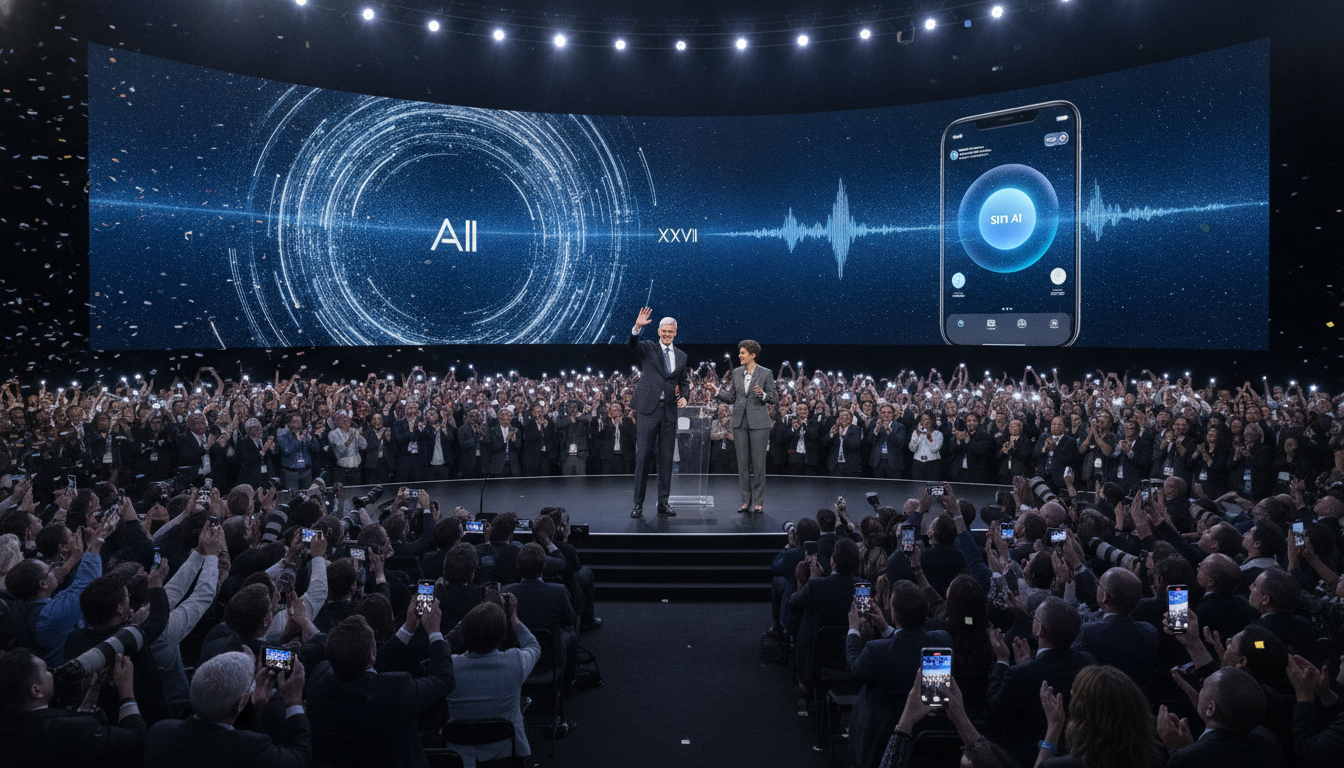
Apple’s WWDC 2026: Siri AI, iOS 27 and a roadmap to regain momentum
WWDC 2026: Apple unveils Siri AI, iOS 27 and Apple Intelligence updates, and App Store changes as Tim Cook prepares to hand over the CEO role on Sept. 1.
Apple used WWDC 2026 to present a broad set of software upgrades and developer tools intended to close gaps in its AI and core software experience. The keynote showcased a revamped Siri powered in part by Google’s Gemini models, sweeping Apple Intelligence integrations across apps, and a set of fixes aimed at longstanding user complaints. The event also marked a bittersweet moment in Apple’s leadership timeline as CEO Tim Cook delivered a farewell and confirmed a transition of day-to-day leadership to John Ternus effective September 1.
Siri AI receives a platform push
Apple framed the Siri overhaul as a necessary step to meet rising user expectations around conversational assistants. The new Siri is being positioned as both more conversational and more visually aware, and Apple said it will be available as a standalone app while remaining integrated across existing system apps. Apple emphasized privacy as a central design principle for Siri’s expanded capabilities, arguing that data will be used only to fulfill user requests and remain subject to independent verification.
Apple Intelligence expands across apps
The company rolled out a suite of Apple Intelligence features that connect context across Safari, Messages, Mail and Phone to surface timely, relevant actions. Examples include AI-powered reply suggestions in Messages, one-tap password updates, and cross-app context awareness so a call can pull relevant information from email and notes. Apple said it worked with Google and the Gemini family to develop foundation models that underpin these features, signaling a more collaborative approach to delivering on-device and cloud-assisted intelligence.
iOS 27 promises performance and broader device support
iOS 27 will be available on all iPhone models from the iPhone 11 onward, extending compatibility further back than recent releases. Apple highlighted performance gains across the system: faster photo rendering, quicker AirDrop transfers, and improved CPU scheduling to enhance multitasking. Several smaller quality-of-life changes were announced as well, including full-screen home widgets and separate volume controls for alarms and media, aimed at addressing long-running user frustrations.
Design concessions and the Liquid Glass tweaks
Apple acknowledged backlash to last year’s Liquid Glass aesthetic and introduced opt-in adjustments that let users tone down or emphasize the look within apps. The company stopped short of a wholesale redesign, instead offering layered icon approaches and controls to dial transparency and visual emphasis. That decision appears targeted at placating critics while preserving the design language for users who prefer the updated visual style.
Developer tools, personalized discovery and subscription bundles
WWDC delivered multiple developer-facing announcements intended to boost app engagement and monetization. The App Store will support developer-created subscription bundles to enable joint offers and lower combined pricing, a first for non-media apps. Apple also introduced personalized recommendations across the App Store with contextual “App Notes” explaining why an app is being suggested. Shortcuts gains natural-language creation, letting users describe workflows rather than build visual scripts, a change that could broaden automation to non-technical audiences.
Search, Photos and creative tools get AI upgrades
Apple said it rebuilt search foundations for Spotlight, Photos and Mail to reduce the number of missed results and speed retrieval. Photos picks up generative and spatial tools such as Reframe, which can adjust perspective as if the camera were repositioned, and Extend, which expands image composition. Image Playground returned with renewed emphasis on device integration and clearer limits on using generated images for model training, while a new systemwide dictation feature aims to improve transcription accuracy and formatting by cleaning filler words and adding punctuation.
Tim Cook’s onstage farewell underscored the broader context of the announcements and the company’s intentions for the next chapter. Cook framed the updates as part of a continuing mission to deliver meaningful products, and reiterated that Apple’s priority remains to enrich users’ lives through hardware and software. He also confirmed the leadership handover to John Ternus will take effect on September 1, marking this WWDC as his last as CEO.
The announcements leave a mix of immediate fixes and longer-term bets: clearer search, sharper Photos editing, and incremental UI choices answer concrete complaints, while Siri AI and Apple Intelligence represent Apple’s strategic response to rivals in a crowded AI landscape. Developers and users will be watching the beta cycle closely to see whether the promised performance gains and privacy guardrails materialize at scale.
Looking ahead, Apple’s September hardware event and the rollout of iOS 27 will be the next major tests of the company’s direction, measuring whether these software revisions restore confidence among users and developers as Apple transitions into a new leadership era.
