
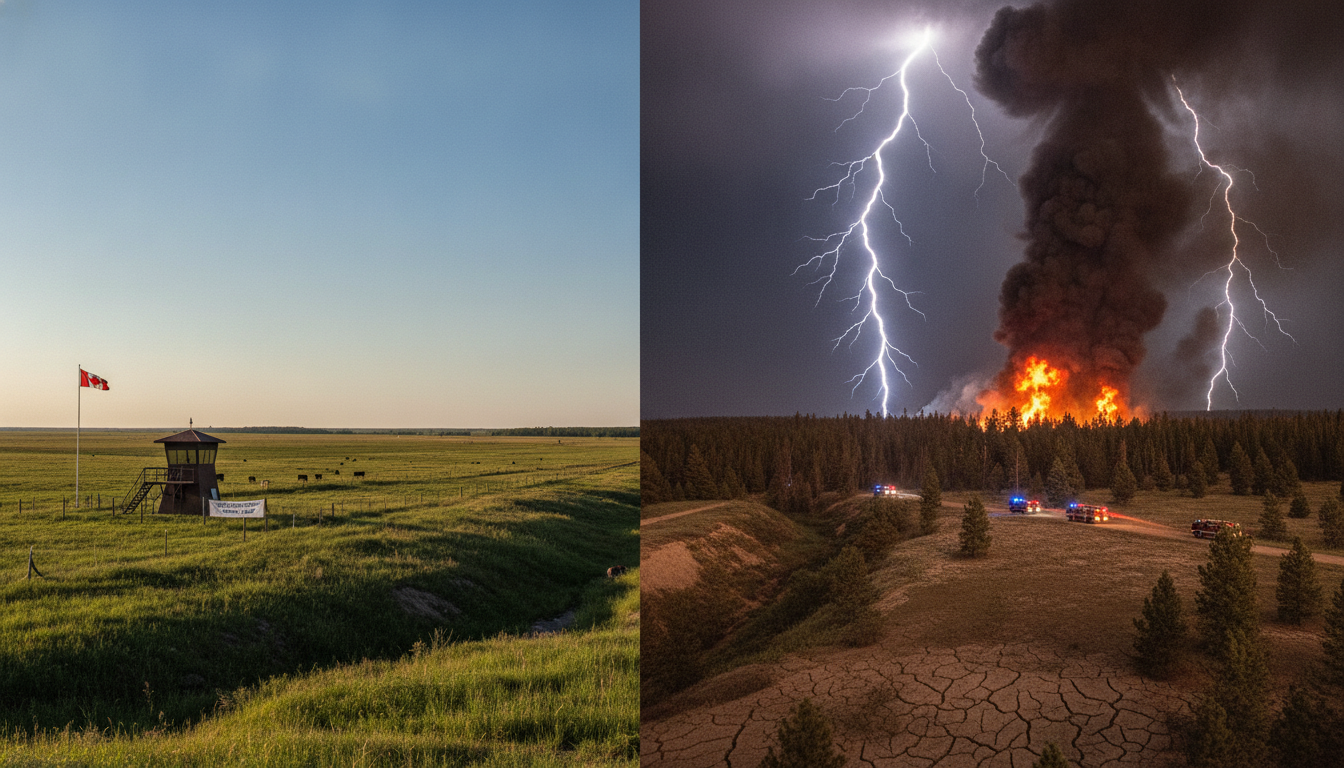
Alberta records first zero-fire day in more than 40 years, then lightning sparks new blazes
Alberta recorded its first zero-fire day in over 40 years before lightning sparked two new blazes; slow snowmelt and spring rains cut wildfire burn area to 3%.
Alberta’s brief, historic zero-fire day — a full 24 hours with no active wildfires detected anywhere in the province — ended this week when lightning ignited two new fires in the High Level Forest Area.
The “Alberta zero-fire day” counted as a rare pause in what is normally a violent wildfire season, and officials say the lull was driven by a combination of slow snowmelt, unusually cool conditions and above-average spring precipitation.
Despite the celebratory milestone, wildfire managers caution that the reprieve was short-lived and that pockets of the province remain at elevated risk as conditions can change rapidly with weather.
Historic 24 hours without a wildfire
Provincial wildfire records show the 24-hour period with no detectable fires was the first of its kind in more than four decades, a rarity in a province that routinely battles hundreds of wildfires each season.
Alberta Wildfire spokesperson Melissa Story described the day as “about 24 hours of glory” and confirmed the calm ended when two lightning-caused incidents were reported the following night in the High Level district.
Officials emphasized that a zero-fire day does not eliminate fire danger, but it does reflect how unusually damp and cool conditions have limited ignition and spread this season.
Lightning reignites activity in High Level Forest Area
The two new incidents were sparked by lightning strikes in the High Level Forest Area, where remoteness and lightning density can rapidly create new fire starts.
Fire crews moved to monitor and suppress the blazes, and Alberta Wildfire placed resources on alert to prevent expansion into populated or infrastructure-sensitive areas.
Authorities said early detection and favorable fuel moisture in many regions helped crews contain new starts before they grew large.
Spring rains and slow snowmelt cut burn area to 3 percent
Through mid-season, Alberta has recorded roughly 18,000 hectares burned, about three per cent of the five-year average for this point in the calendar, provincial figures show.
That contrasts sharply with the five-year mean of roughly 650,000 hectares a year, underscoring how a wetter spring and gradual snowmelt soaked fuels and suppressed the typical early-season surges.
Officials credited a convergence of hydrological factors — notably an extended snowpack melt that allowed water to infiltrate soils and a June with record rainfall — for dampening fine fuels such as grasses and surface litter.
Meteorologists point to a cooler-than-normal spell
Environment and Climate Change Canada meteorologist Janelle Gergely said regional temperatures over forested parts of Alberta averaged three to four degrees Celsius below the 30-year norm during the weeks leading to the zero-fire day.
Gergely’s analysis indicated a negative temperature anomaly combined with near-normal precipitation, conditions that reduce evaporation and keep relative humidity higher than in a typical dry spring.
She cautioned that the cooler interval was an anomaly and that shifting weather patterns could still bring heat or drying winds that raise fire danger quickly.
Northern and western zones still show high danger
Despite the provincewide lull, the government’s fire-risk mapping highlighted persistent hotspots in Alberta’s extreme north and western regions, where dryness and fuels remain more prone to burning.
Authorities reminded residents and industrial operators in those areas that localized conditions can diverge from broader averages and that human-caused ignitions and lightning remain constant threats.
Public warnings and restrictions in higher-risk zones have been maintained or adjusted as part of ongoing risk management, officials said.
What the quiet season means for firefighting and communities
For firefighters, the low-activity season has offered a rare opportunity to replenish resources, review deployments and assist neighbouring jurisdictions when needed.
Provincial officials noted crews have been available to support out-of-province efforts and to undertake prescribed work that is harder to schedule in busier seasons.
Emergency managers stressed the importance of sustained vigilance by the public, including following campfire rules, industrial precautions and reporting smoke immediately.
The zero-fire day in Alberta underscores how variable wildfire seasons can be and how much they depend on a string of weather and hydrological conditions.
While the province enjoyed an extraordinary 24-hour pause, the immediate rekindling by lightning is a reminder that fire danger can re-emerge quickly, and that preparedness and early detection remain central to protecting communities and landscapes.
