
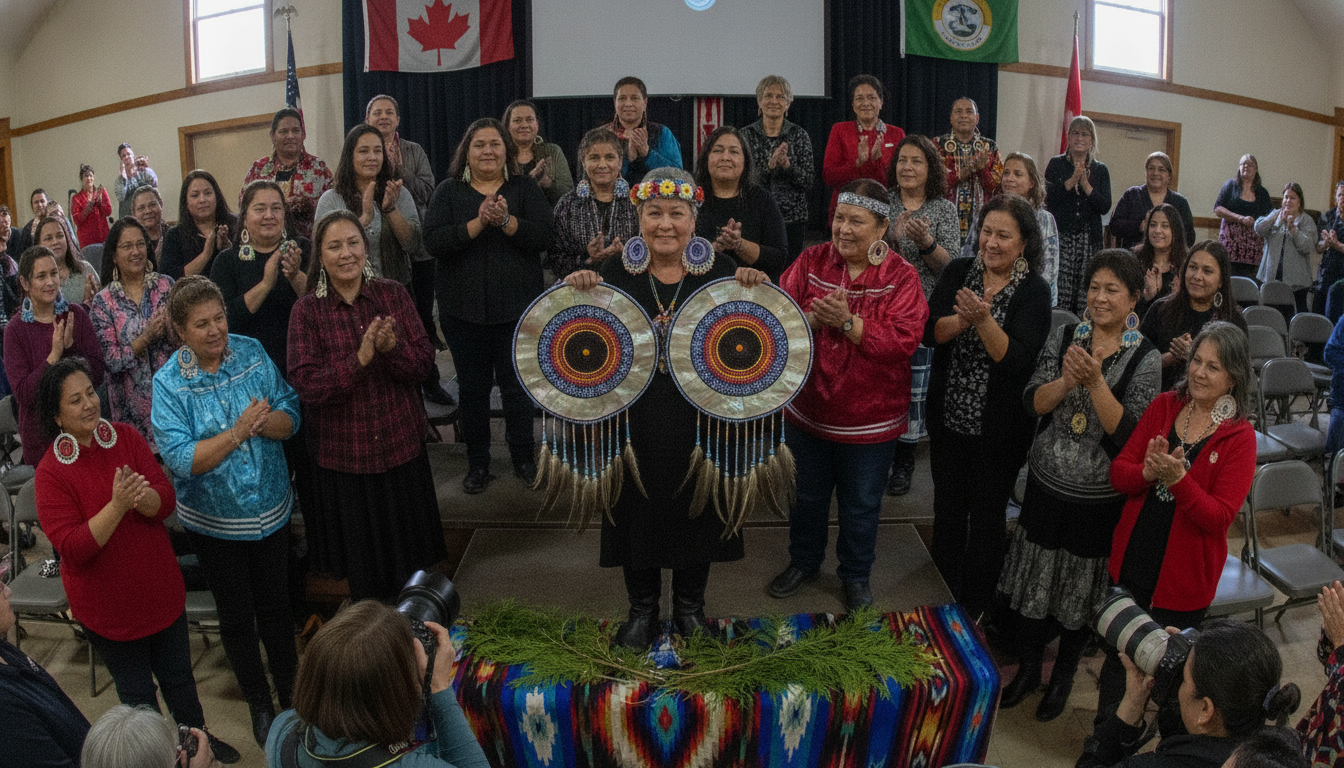
Big Auntie Earring contests become summer sensation at Treaty Days
Big Auntie Earring contests at Treaty Days this summer turned traditional earrings into oversized, humorous artworks, drawing communities across the Prairies.
This summer’s Treaty Days saw a new, light-hearted competition take centre stage as Big Auntie Earring contests emerged across several gatherings on the Prairies. The contests — which challenge participants to craft the most creative and oversized earrings — surfaced alongside annual treaty annuity ceremonies and cultural celebrations. Organizers and participants at events such as Sagkeeng First Nation described the trend as a joyful blend of humour, artistry and community spirit.
Big Auntie Earring contests debut at Treaty Days
The contests appeared as an informal addition to Treaty Days events, which mark historic agreements between First Nations and the Crown and include the distribution of annual annuity payments. At Sagkeeng First Nation, located roughly an hour and a half northeast of Winnipeg, the earring contest quickly became one of the day’s most talked-about attractions. Organizers said the idea spread organically, with attendees bringing oversized, inventive designs and cheering one another on.
Delanie Bruyere of Sagkeeng won the local contest with a pair of earrings that repurposed everyday items into wearable art. Her design used coat hangers as hooks and sections of cut pool noodle strung together to create bold, colorful shapes. Contest judges and spectators praised the piece for its creativity and playfulness, and Bruyere described the event as a chance to celebrate community and laughter.
Winning designs and inventive materials
Entries in the contests have ranged from exaggerated beading to absurdist materials like soda cans, pizza boxes and household objects. The use of unconventional components highlights both a DIY ethos and a sense of humour that competitors describe as central to the concept. Judges in various communities have emphasized craftsmanship alongside originality, noting that many entries combined sturdy construction with theatrical presentation.
Organizers set few formal rules beyond a size or safety guideline, allowing makers to push the boundaries of what constitutes an earring. Some contestants created works designed to sway and jangle, while others prioritized visual impact and scale. The diversity of approaches helped the contests draw multi-generational crowds and encouraged younger people to participate in cultural events they might otherwise skip.
Spread across Prairies and into the U.S.
Although the phenomenon gained notable attention at Sagkeeng, it is not isolated to a single community. Similar competitions have been held at Beaver First Nation in Alberta and Opaskwayak Cree Nation in Manitoba, while organizers in the northeastern United States have indicated plans to feature the contests at powwows such as Schemitzun in Connecticut. Social media posts and videos have amplified the trend, making it easier for communities to share rules, photos and judging criteria.
The contests’ spread reflects longstanding ties and cultural exchange among Indigenous communities on the Prairies and beyond. Organizers in separate jurisdictions said they learned about the idea through conversations at inter-community events, online groups and informal word-of-mouth. That rapid diffusion helped the activity gain momentum over the course of the summer, with more powwows and festivals adding a contest or a showcase to their programming.
Linking humour with cultural celebration
Participants consistently framed the contests as a humorous complement to the more solemn and ceremonial aspects of Treaty Days. Treaty Days typically include feasts, craft markets, powwows and the distribution of annuity payments, and contest organizers said they wanted an event that invited lighthearted participation without diminishing the day’s significance. For many, the oversized earrings became a playful form of cultural expression that coexists with traditional regalia and performance.
Elders and youth took part in the contests in many communities, reflecting an intergenerational exchange that organizers described as intentional. Several entrants said the humor helped create approachable moments for children and newcomers to engage with Treaty Days programming. At the same time, artisans who make and sell traditional earrings reported an uptick in interest in Indigenous jewellery and beadwork, suggesting the contests may draw attention to established crafts as well.
Community response and safety considerations
Community leaders and event planners noted a need to balance creativity with safety when larger, heavier pieces are involved. While most designs were lightweight or cleverly counterbalanced, some organizers instituted size and material restrictions to prevent injuries and ensure the contests could run smoothly alongside dances and ceremonies. Volunteers often assisted contestants with fittings and ensured that larger pieces would not snag during movement.
Overall response from attendees was overwhelmingly positive, with many praising the contests for bringing people together in spontaneous laughter and friendly rivalry. Vendors at craft markets reported increased foot traffic on contest days, and local media coverage helped attract visitors from neighbouring communities. Organizers emphasized that the contests were meant to be inclusive, accessible and safe for participants of all ages.
Social media role and cultural representation
Social media played a major role in propelling Big Auntie Earring contests beyond individual events. Videos of oversized earrings being modeled, judged and applauded circulated on platforms popular with Indigenous creators, helping the trend reach new audiences. Creators posted tutorials, time-lapse builds and behind-the-scenes footage that encouraged replication and adaptation while fostering a sense of shared ownership.
At the same time, community members stressed the importance of context and respectful representation. Many participants preferred to frame the contests as Indigenous-led and community-rooted, rather than a viral spectacle detached from cultural meaning. Organizers encouraged social posts that credited the communities and events where the contests began, and some groups used contest visibility to highlight other Treaty Days programming and to educate visitors about treaty history and living rights.
Cultural continuity and creative adaptation
Observers of the trend pointed to broader themes of cultural resilience and creative adaptation in Indigenous communities. By transforming everyday materials into expressive adornments, contestants echoed longstanding practices of resourcefulness and aesthetic innovation. The oversized earrings blend contemporary humour with a longstanding tradition of beadwork and personal ornamentation, creating a new form of cultural expression that many participants described as both modern and respectful of heritage.
Elders interviewed at several events noted that humour has always been part of communal gatherings and that light-hearted competitions have historically complemented ceremonial life. Younger makers said they saw the contests as an opportunity to innovate while learning from experienced artisans. The result is a living practice that both honors craft traditions and welcomes experimentation.
Event logistics and future outlook
Organizers considering adding Big Auntie Earring contests to their event schedules were advised to set clear guidelines on materials, size and judging criteria. Some communities have already drafted simple rules that emphasize safety, creativity and community participation. These frameworks typically encourage recycled materials, lightweight construction and categories such as “most inventive” or “best use of household items.”
Several event planners suggested that the contests could be formalized into parallel showcases at powwows and Treaty Days, with prizes donated by local businesses or community groups. Others cautioned against over-formalizing the activity, saying that its spontaneous, grassroots character is central to its appeal. For now, many communities plan to continue the contests on an ad hoc basis while sharing best practices informally.
Economic and cultural ripple effects
The contests generated incidental economic activity by drawing visitors to markets and food vendors during Treaty Days. Artisans reported increased interest in traditional beadwork, and some makers used contest attention to sell smaller, more wearable pieces. Vendors and organizers said the contests can provide modest boosts to event revenue and help introduce attendees to a wider range of cultural goods and services.
Beyond immediate economic effects, organizers hope the contests will serve as gateways to broader cultural engagement. By attracting diverse audiences, the events create opportunities to share information about treaty obligations, Indigenous governance and community programs. Several Treaty Days coordinators mentioned using contest intermissions to offer short talks, information booths and educational displays aimed at both Indigenous attendees and non-Indigenous visitors.
The contests also opened conversations about cultural recognition and pride. For competitors who make traditional earrings professionally, the playful format helped normalize a broader appreciation for Indigenous adornment in public life. That increased visibility may have long-term benefits for artists and craftspeople seeking to expand markets and find new audiences.
Voices from the communities
Participants and onlookers repeatedly described the contests with warmth and humour, highlighting the social value of shared laughter. “We like to use humour in a lot of the things we do,” one local winner said, reflecting a mindset that views light-hearted competition as a community-strengthening practice. Judges and volunteers emphasized the inclusive nature of the events and the intergenerational participation that emerged.
At least one youth organizer observed that the contests offered a non-intimidating way for younger people to take leadership roles in events historically dominated by elders. Youth-led teams helped with judging, staging and promotion, gaining experience in event management while contributing fresh ideas. That cross-generational collaboration is likely to shape how such contests are run in the coming seasons.
Comparisons to other novelty competitions
The Big Auntie Earring contests fit within a wider pattern of novelty competitions that have become popular at community gatherings across North America. From quirky hat parades to oversized hat contests and costume mash-ups, similar activities use absurdity and theatricality to draw spectators and bring people together. What sets the earring contests apart is their rootedness in Indigenous beadwork traditions and their occurrence within Treaty Days, which combine ceremonial significance with community celebration.
Organizers who were familiar with other novelty events noted that careful stewardship is important to maintain respect for cultural settings. In many communities that hosted earring contests, coordinators made efforts to keep the activity light without overshadowing ceremonial schedules or diminishing the significance of treaty acknowledgments and annuity distributions.
Looking toward next season
Many participants expressed optimism that Big Auntie Earring contests will return in future summers, either at Treaty Days or at separate powwow stages. Organizers across different communities plan to keep sharing designs and rules through informal networks, helping newcomers prepare and making contests more accessible. Some leaders suggested compiling a loose set of guidelines to help ensure consistency while preserving the contests’ spontaneous character.
Whether the contests remain an annual fixture or evolve into other forms of creative expression will depend on community interest and the preferences of local organizers. For now, the contests have succeeded in drawing attention, fostering laughter and creating new spaces for community members to celebrate creativity.
This new trend of oversized, humorous earring competitions at Treaty Days highlights how contemporary cultural practices can emerge quickly and spread through inter-community networks while retaining strong local roots.
