
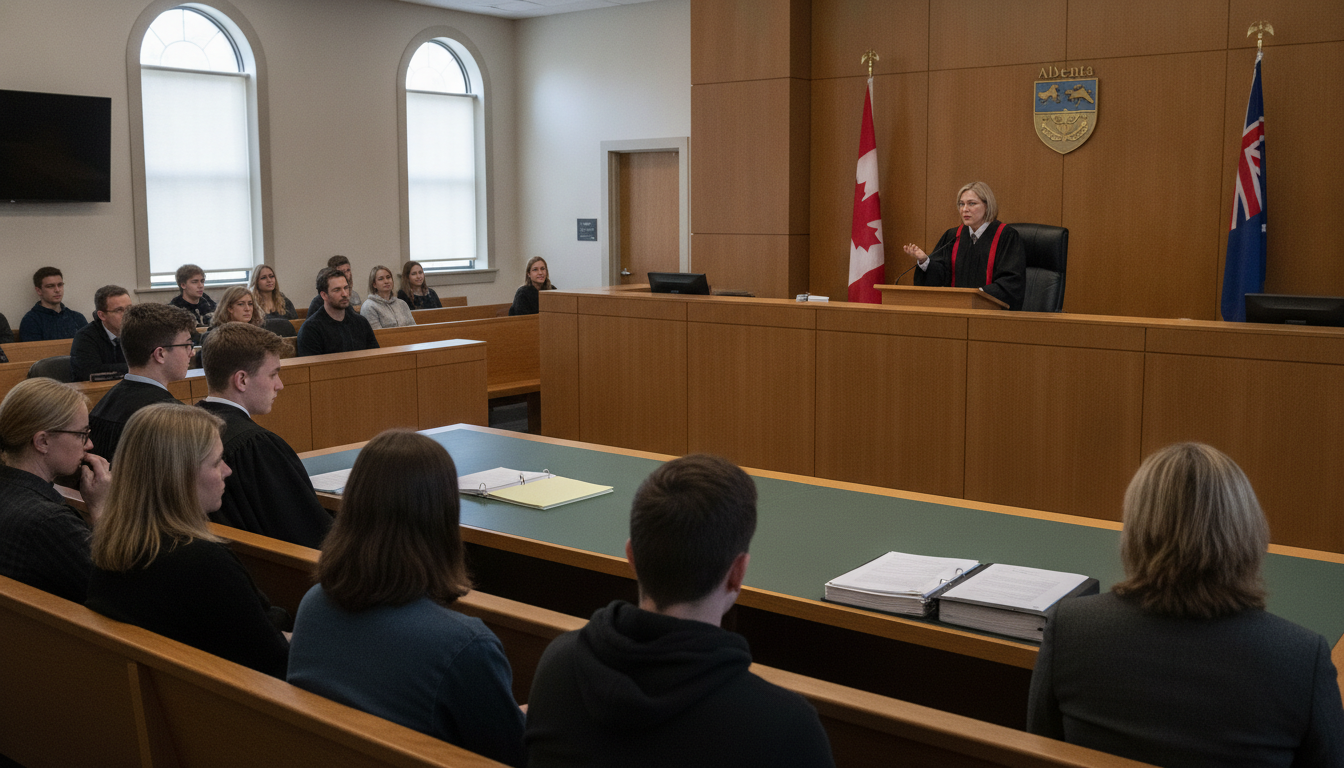
Judge urges Alberta to apply involuntary treatment for youth after 15-year-old’s fentanyl death
Judicial report (July 30, 2026) urges Alberta to enact involuntary treatment for youth under the Compassionate Intervention Act after a 15-year-old’s fatal fentanyl overdose.
Strong recommendation to use Compassionate Intervention Act for youths
The judge who led the public inquiry into the death of a 15-year-old known in the report as JN recommended Alberta move quickly to bring Alberta involuntary treatment for youth into force. Justice Thomas David Marriott concluded in a report released July 30, 2026, that the province’s new Compassionate Intervention Act could have changed the outcome for the boy, whose addiction began in childhood and ended in a fatal overdose.
Marriott wrote that existing short-term measures repeatedly failed to prevent the youth from leaving care and returning to street drugs, and he urged the government to adopt the Act “as soon as practicable.” The recommendation is aimed at giving caregivers and authorities longer-term tools than the five- and 10-day orders available under secure services and the Protection of Children Abusing Drugs Act.
Circumstances of the 15-year-old’s death
The report details that the boy died on June 26, 2021, after leaving a group home and being found unconscious outdoors; he was later pronounced dead at the Royal Alexandra Hospital. Toxicology identified fentanyl and methamphetamine in his system, and the inquiry traced a trajectory of escalating substance use beginning in early childhood.
Court records and caseworker reports cited in the inquiry describe years of group-home placements across Alberta after a permanent guardianship order placed the youth in government care. Multiple short-term involuntary orders were used over time, but each expired and the youth was able to leave care, after which his behaviour often deteriorated.
What the Compassionate Intervention Act would change
The Compassionate Intervention Act, which received royal assent in spring 2025, establishes a framework for longer involuntary recovery stays, and the report recommends the law be applied to youths as well as adults. Under the Act, the province plans a 90-day treatment period for individuals held under its provisions, a markedly longer timeframe than existing statutorily limited orders.
Proponents, including Mental Health and Addiction Minister Rick Wilson, frame the Act as a last-resort intervention when voluntary care has failed and when young people are overdosing with increasing frequency. The judge wrote that had the Act been in force at the time of this youth’s death, its tools “could have meaningfully impacted the outcome.”
Medical community raises questions about evidence for minors
Addictions specialists caution that involuntary treatment for minors sits in a complex ethical and clinical area, with limited direct evidence about effectiveness for adolescents. Monty Ghosh, an addictions physician and assistant professor affiliated with the universities of Calgary and Alberta, told journalists that trials specifically assessing forced or involuntary treatment in those under 18 are scarce.
Clinicians stress that capacity to consent varies and that “mature minors” may be capable of making informed decisions, complicating blanket approaches. Medical voices in the inquiry called for careful implementation, ongoing evaluation and supports that address the social determinants driving young people into substance use.
Government timeline and new Edmonton recovery centre
Officials say one practical obstacle to immediate application of the Act for youths is physical capacity; the Northern Alberta Youth Recovery Centre in Edmonton is under construction and is scheduled for completion in 2027. The facility is planned to provide 105 beds and will serve as the involuntary treatment centre for the region, according to announcements from the health ministry.
With the Protection of Children Abusing Drugs Act set to be repealed, Minister Wilson has said the province intends to use the Compassionate Intervention Act to fill the statutory gap, but implementation for under-18s depends on facilities being ready. The government has also pledged funding for broader addiction recovery capacity in the province as it transitions to the new legislative framework.
Political and advocacy responses to the inquiry
The inquiry and its recommendation drew immediate responses from opposition and advocacy groups calling for evidence-based policy and stronger oversight. Alberta NDP mental health and addiction critic Janet Eremenko said the death was a tragedy and urged the government to evaluate whether the new program is safe and effective for young people rather than proceeding on ideology.
Family submissions presented to the inquiry highlighted a demand for longer, more stable treatment options for youth with entrenched addiction, and some guardians and caregivers called for tools that would keep vulnerable children in care until stabilisation. The report underscores a tension between protecting individual rights and preventing preventable deaths among young people with severe substance use disorders.
This judicial report places fresh pressure on provincial officials to reconcile clinical uncertainty, legal safeguards and the urgent need to prevent youth overdoses. The coming months will test whether Alberta can operationalize involuntary treatment for youth while monitoring outcomes, protecting rights and expanding community supports that aim to reduce demand for such measures.
