
Ukraine mobilisation sparks street seizures, legal fights and rights alarms
Ukraine mobilisation has led to street seizures and detentions, prompting human rights warnings and corruption probes as Kyiv tightens conscription rules.
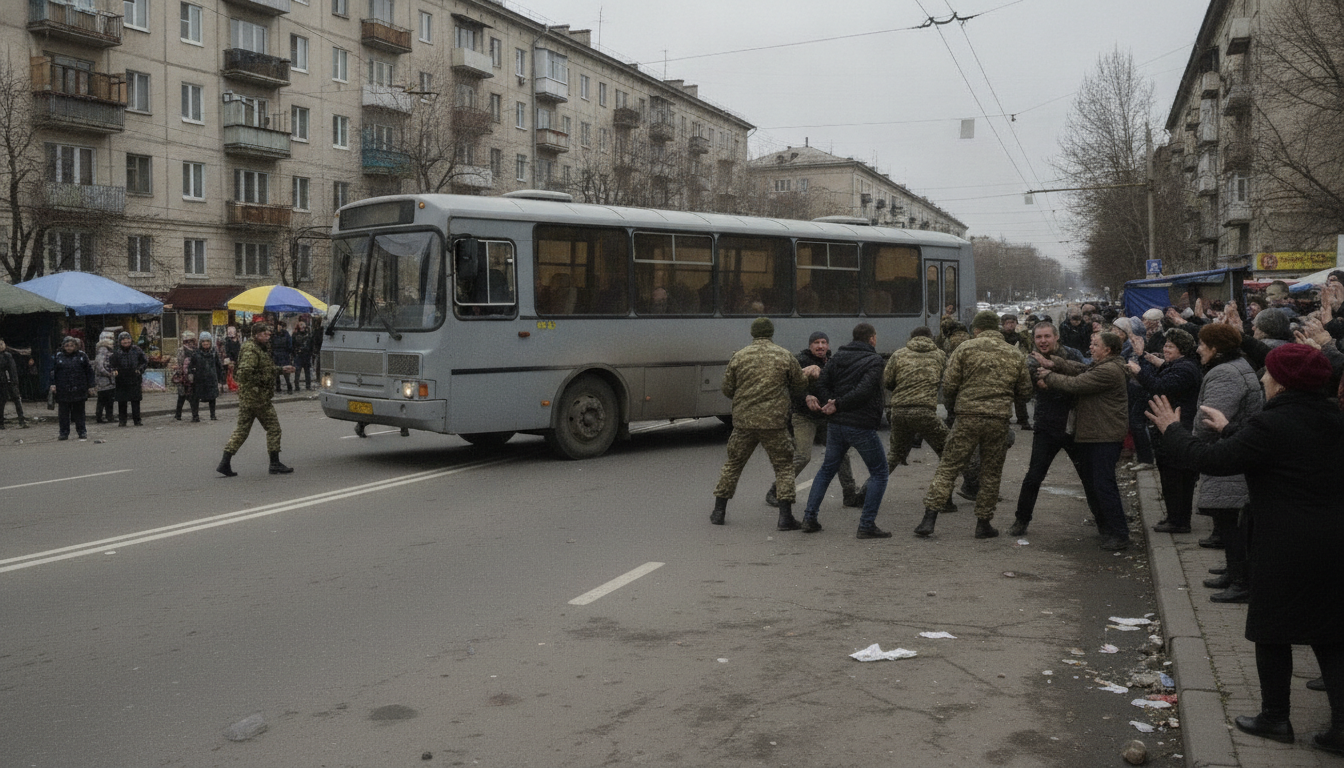
A 52-year-old Kyiv resident says he was forcibly placed into a police car and taken to a military recruitment centre in what locals call “busification,” part of a wider Ukraine mobilisation drive that has seen men stopped on city streets and sent to enlistment offices. The man, who asked to withhold his surname for safety, said his chronic health problems — including HIV, arthritis and poor eyesight — made him believe he was medically unfit for front-line service. He described phones confiscated, medical checks at a militarised clinic and two days in a barred room before being transferred for assessment. After legal costs and payments to intermediaries, he was released but now fears leaving his home.
Seizure and detention described by Kyiv resident
The man said officers ambushed him near his apartment, forcing him into the back of a car and ordering him to hand over his phone under threat of force. He said subsequent medical examinations initially failed to flag his HIV status to unit commanders, a detail that later contributed to his release. He described being held without access to relatives or lawyers while other recently detained men traded stories of sudden street abductions. He also reported paying roughly $5,000 in legal fees and an additional $30,000 to intermediaries who did not deliver on promises to secure his documents.
Mobilisation measures and legal changes behind the push
Lawmakers and officials tightened rules in 2024, lowering the draft age and increasing penalties for evasion, measures that authorities say were needed as battlefield losses mounted and volunteer ranks thinned. Two laws passed in April 2024 reduced the draft age from 27 to 25, raised fines for draft evasion and removed a previously discussed 36-month demobilisation clause for serving soldiers. Those changes coincided with a decline in volunteer enlistment after a failed counteroffensive in 2023, increasing pressure on recruitment services to meet manpower targets. Officials have defended the measures as necessary, while critics say the implementation has produced rights violations and public backlash.
Violent incidents and attacks near enlistment offices
Tensions have occasionally escalated into lethal violence: several attacks on recruitment officers and enlistment centres were reported across different regions, including shootings and explosions that left casualties. More than 600 assaults on enlistment officers have been recorded since the start of the war, with assaults nearly tripling in 2025 and 117 incidents reported in the first four months of 2026 alone. In July 2026, a crowd in Lviv damaged and overturned a recruitment service vehicle during the detention of a man accused of draft evasion, an episode that prompted national investigations. President Volodymyr Zelenskyy has warned that such scenes play into the hands of Russia, even as public outrage mounts.
Allegations of corruption in medical exemptions and commissions
Corruption has emerged as a major element of the mobilisation controversy, with investigators uncovering fake disability certificates and illicit enrichment among medical officials tied to the draft process. Security services say they cancelled 4,106 fraudulent disability certificates issued through corrupt medical examination commissions and charged dozens of commission officials in 2024. In January 2025 a senior military psychiatrist who sat on the central medical committee was arrested on charges of illegal enrichment after investigators found real estate, luxury cars and tens of thousands in cash. Journalists and prosecutors have also exposed cases of officials resigning or being implicated after reports of protected status being used to avoid service.
Human rights bodies and public trust register concern
International and domestic rights monitors have documented abusive mobilisation practices, including reports of beatings, harsh detentions and conscription of men with disabilities, language that Ukraine’s parliamentary human rights commissioner described as “systematic and large-scale.” A memorandum from a European human rights office in July 2025 highlighted multiple allegations of rights violations at enlistment points and called for safeguards. Public trust in enlistment officers has eroded: a July 2025 survey found a minority of citizens expressing confidence in recruiters, and grassroots Telegram channels emerged to track recruitment activity in real time. Security analysts say those tracking efforts were exploited by a suspected foreign intelligence operation that distributed a malicious app in 2024.
Institutional responses and leadership changes
Faced with public outcry, some defence institutions have acknowledged the need to reform mobilisation practices and to prevent rights abuses at enlistment offices. In July 2026 the government replaced key military leadership, indicating an intent to address shortcomings in mobilization and command oversight. Defence officials have said procedures will be reviewed and that mistakes must be corrected, while law-enforcement agencies investigate violent confrontations and explosive attacks tied to recruitment tensions. Still, families, lawyers and advocacy groups say concrete reforms and stronger legal protections are needed to restore public confidence.
Concerns about forced street mobilisations, corruption in exemption processes and a spike in violent incidents have combined to make Ukraine mobilisation one of the most contentious domestic issues amid the prolonged conflict, reshaping public debate about military duty, civil rights and the limits of emergency powers.
