
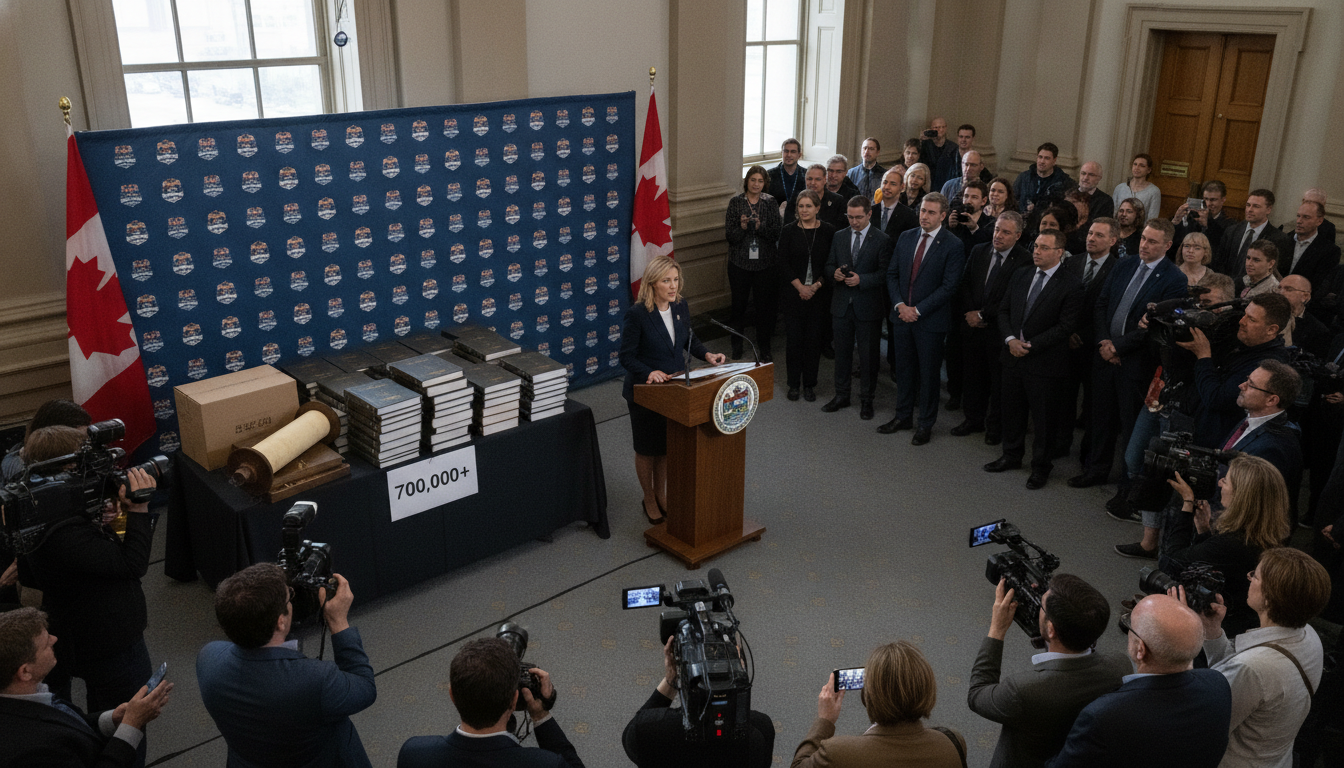
Alberta referendum: Government reaffirms commitment to remain in Canada amid disputed 700,000 petition claim
Alberta referendum debate grows as provincial government affirms unity with Canada while organizers’ claim of 700,000 petition signatures faces public scrutiny.
The provincial government reiterated that it supports Alberta remaining within Canada, while debate continues over petitions purportedly calling for an Alberta referendum on separation. The issue resurfaced after government spokesperson Blackett emphasized party and caucus support for national unity and said officials remain focused on restoring Albertans’ confidence. Organizers say about 700,000 people have signed petitions seeking a referendum, a figure now being contested by critics and some political figures.
Government restates support for Canadian unity
Blackett said the Premier, the government and the party remain committed to Alberta’s place in Canada, framing the government’s work as strengthening the province within the federation. The statement stressed a dual aim: addressing regional frustrations while pursuing more provincial autonomy through established constitutional channels. Officials presented the position as a response to public anxiety rather than a call for separatism.
Petition organizers assert 700,000 signatures
Groups backing a referendum say they have collected roughly 700,000 signatures advocating a vote on Alberta’s future within Canada. Organizers contend the petition numbers reflect widespread frustration over federal-provincial relations and policy disputes that many Albertans feel disadvantage the province. They argue the petition is a democratic signal that should prompt political leaders to engage in dialogue about Alberta’s role in confederation.
Founder Thomas Lukaszuk raises questions about tally
Forever Canada founder Thomas Lukaszuk has publicly challenged the accuracy of the 700,000 figure, saying the total warrants independent verification before it informs public policy. His critique centers on how signatures were collected and counted, and he has called for transparency about the methods used. The dispute highlights divisions even among groups ostensibly focused on provincial reform.
Political reaction spans parties and analysts
Responses from across the political spectrum varied, with some opposition figures urging the government to address the underlying grievances that fuel support for a referendum. Other politicians dismissed the petition’s significance until its numbers can be verified through an impartial process. Political analysts note that while protest petitions can influence public debate, they rarely translate directly into legal or constitutional action without formal procedures.
Legal complexities of any referendum on secession
Constitutional experts caution that any provincial push toward secession would encounter significant legal and procedural barriers under Canada’s constitutional framework. A unilateral provincial referendum on leaving Canada would raise questions about jurisdiction, the binding nature of such a vote, and the role of the federal government. Legal scholars emphasize that any legally enforceable path to separation would require negotiations and likely federal involvement.
Public sentiment and the role of petitions
Petitions have long been used to highlight public discontent, but their political weight depends on verification, public uptake and elected officials’ responses. For some Albertans, the petition represents a peaceful expression of frustration with fiscal and policy disputes with Ottawa. For others, observers say, the exercise risks inflaming division unless accompanied by clear, evidence-based proposals and constructive dialogue.
The government said it will continue work on policies aimed at increasing provincial control over certain areas while remaining within Canada, framing that approach as reconciliation rather than rupture. Officials insist building what they termed a “stronger, more sovereign Alberta within a united Canada” is achievable through negotiation and legislative action. Meanwhile, organizers of the petition maintain their calls for a public vote until an independent audit of signatures can confirm or refute their tally.
Public engagement is likely to shape how the matter evolves, and both proponents and skeptics are preparing for extended debate. Political leaders face pressure to respond with concrete policy proposals that address the grievances motivating the petition drive. How the government balances calls for greater provincial autonomy with its stated commitment to Canadian unity will be central to the next phase of this debate.
Verification of the petition numbers is now a focal point, with calls for independent review to prevent misinformation from steering political decision-making. Observers say transparent verification would clarify public sentiment and reduce the risk of disputed claims dominating the narrative. Until then, the petition remains a contested symbol of discontent rather than a definitive mandate for constitutional change.
