
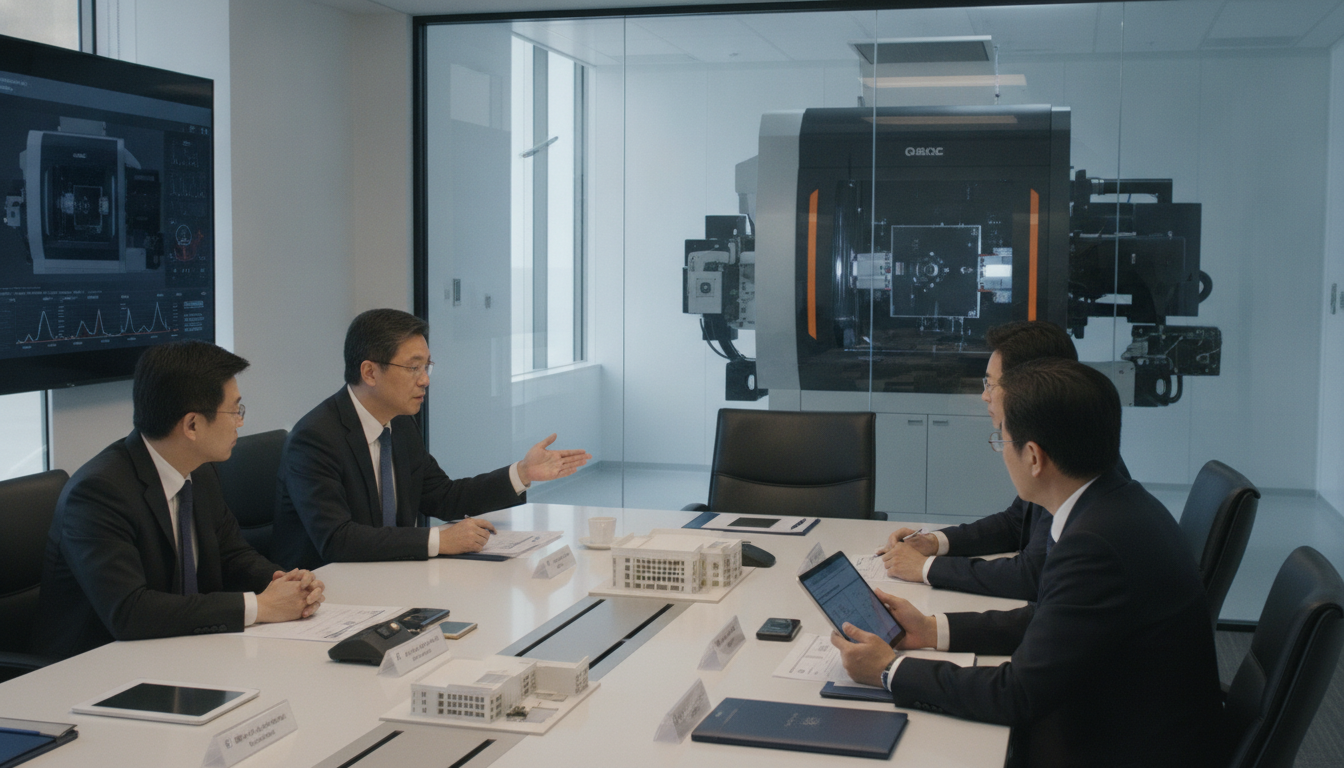
ASML machine labeled “very, very expensive” by TSMC, adoption to be delayed
TSMC calls ASML machine “very, very expensive,” and will delay use. The move raises questions about cost, procurement and the pace of advanced chip production.
TSMC deputy COO flags cost concern and pause in use
TSMC’s deputy co‑chief operating officer, Kevin Zhang, described the newest ASML machine as “very, very expensive” and said the company will not deploy it in the foreseeable future. The comment, made ahead of TSMC’s annual technology conference, signals a pause by the world’s largest contract chipmaker that could affect procurement calendars across the industry. The ASML machine and its price tag are now focal points for customers weighing near‑term capital plans against longer‑term technology gains.
Price tag described as several hundred million euros
Industry participants say the device carries a multihundred‑million‑euro cost, a level that challenges even large foundries’ capital allocation this cycle. For companies balancing multiple node transitions and fabs, such a one‑time outlay demands clear, measurable returns on yield and throughput. TSMC’s public reluctance to commit underscores how large equipment costs can reshape priorities for production scale‑up and R&D timing.
Advanced lithography capabilities underlie the expense
Manufacturers attribute the high cost to the machine’s cutting‑edge lithography capabilities and the complex engineering required to operate at extreme precision. Those technological steps aim to enable smaller transistor geometries and higher chip densities, which can drive long‑term performance and power gains. But the immediate commercial case depends on whether customer roadmaps and demand growth justify upgrading existing tool fleets.
Impact on smaller fabs and regional players
Smaller foundries and regional fabs face a starker calculation when confronted with the ASML machine’s price and throughput characteristics. Some may opt to extend the life of current tools, adjust product roadmaps toward less demanding nodes, or pursue shared access and third‑party foundry services to defer large capital purchases. The decision by a marquee customer like TSMC makes those alternatives more attractive for firms with tighter budgets or uncertain demand forecasts.
Supply chain and vendor reaction expected to shift
A delay in uptake by leading customers could ripple through suppliers and the broader semiconductor equipment market, affecting order books and delivery schedules. Component vendors and integrators that rely on predictable long‑term commitments may need to revise forecasts and capacity plans. At the same time, manufacturers of complementary equipment could see renewed demand for technologies that extend the viability of existing production lines.
Adoption timeline likely to be reassessed by chipmakers
With TSMC signaling a hold, other major chipmakers are expected to reassess their own timelines for adopting the ASML machine. Some firms may wait for clearer cost reductions or demonstrable throughput improvements, while others could stagger deployments to mitigate financial risks. That staggered approach would push broader industry adoption further into the future and give rivals time to optimize alternative techniques.
Strategic implications for R&D and manufacturing strategies
The episode highlights the tradeoff between technological leadership and capital discipline that defines modern semiconductor strategy. Firms now must weigh the long‑term advantage of early access to advanced lithography against the near‑term pressure to manage margins and cash flow. Boards and engineering teams will need to align on whether to invest in pioneering tools, pursue iterative optimizations, or accelerate partnerships with foundries that already make the investment.
Market observers note room for negotiation and time
Analysts say the current stance does not preclude later adoption if costs fall or if the machine proves essential for specific product lines that demand its capabilities. Purchasers often revisit procurement after initial deployments demonstrate practical yield improvements and operational stability. Over time, volume production, engineering refinements and competitive dynamics can narrow the price‑performance gap and make the ASML machine a more viable choice for a wider range of customers.
Final assessment: industry watches cost and timing
TSMC’s public characterization of the ASML machine as “very, very expensive” puts cost and procurement squarely at the center of the semiconductor conversation. The decision to delay use will prompt reassessments across fabs, suppliers and equipment makers as they judge when and how to adopt next‑generation lithography. For now, the ASML machine remains a powerful but costly option whose broader deployment will depend on demonstrable production benefits and shifting commercial calculations.
