
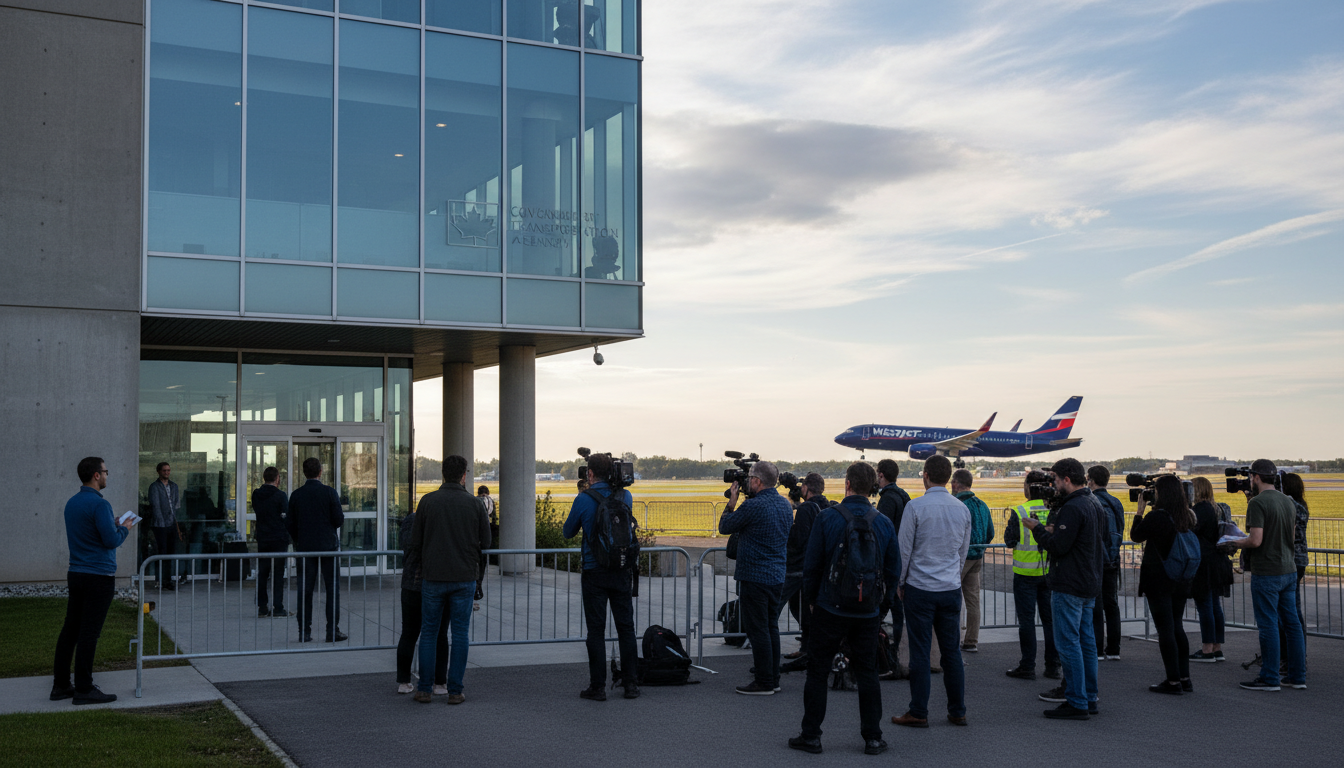
WestJet aircraft swaps tied to last‑minute cancellations, delaying travellers and triggering compensation disputes
Investigative report finds WestJet aircraft swaps tied to last‑minute cancellations, delaying passengers and leading to denied compensation under Canada’s APPR.
Passengers left stranded after Cancún‑Edmonton flight cancelled
Brad Vanderwilk and his partner were midway through dinner on the final night of a March vacation when an email arrived notifying them their WestJet flight from Los Cabos to Edmonton had been cancelled.
Their planned direct return dissolved into a reroute through Victoria, an unexpected overnight stay and a 16‑hour delay before they reached home.
The interruption came as families were expecting to return to work and childcare responsibilities, and it prompted Vanderwilk to file a compensation claim under Canada’s Air Passenger Protection Regulations, known as the APPR.
WestJet denied the claim, citing "unscheduled maintenance required for safety," a justification that has become common in similar passenger complaints.
Flight data shows aircraft swaps occurred minutes before cancellations
An analysis of flight records connected to Vanderwilk’s itinerary indicates the aircraft originally scheduled for his flight was swapped with a different plane that had been grounded for at least two days.
The swap appears to have been recorded in flight tracking systems in the same minute WestJet issued the cancellation notice, a timing that passengers and advocates say is alarming.
Investigative review of multiple complaints identified dozens of instances where a replacement aircraft was assigned shortly before flights were cancelled and passengers were subsequently told the disruption was safety‑related.
In the cases reviewed, WestJet consistently cited maintenance or safety as the reason for cancellations and used that explanation to deny monetary compensation that would otherwise be owed under the APPR for long delays.
Legal experts say timing undermines safety explanation
Consumer and aviation law specialists say the precise sequence — a grounded aircraft assigned and then an immediate cancellation — raises legal and regulatory questions.
Vancouver lawyer Simon Lin, who focuses on air passenger rights, said the law requires a causal connection between an event and its effect; if a plane is already known to be unfit to fly, invoking it as a new reason for cancellation is problematic.
Under regulatory precedent, airlines must provide enough detail for passengers to assess the legitimacy of a disruption and to know whether to challenge it, according to decisions from the Canadian Transportation Agency.
Experts note that simply labeling an issue "unplanned maintenance" without specifics can fall short of those expectations and prevent travelers from effectively contesting denials of compensation.
Advocacy groups allege deliberate pattern to avoid payouts
Gábor Lukács, founder of a national air passenger rights group, said the data points to a systematic approach where a serviceable aircraft is swapped with a non‑serviceable one and the latter is used to justify a cancellation.
He called the practice fraudulent and argued it lets airlines avoid the APPR financial penalties that apply when disruptions are within an airline’s control and unrelated to safety.
Lukács estimated the financial incentive is substantial, suggesting airlines could avoid tens of thousands of dollars per cancelled flight by denying passengers the APPR compensation tied to long delays.
Advocates have urged the national regulator to examine each case for false or misleading representations and to consider fines proportionate to the number of affected travellers.
Regulatory probe underway but details remain limited
Following earlier reporting on similar complaints, the Canadian Transportation Agency opened an enforcement investigation into aircraft swaps and the accuracy of airlines’ disruption explanations.
The regulator declined to provide an interview for this investigation and said it would not comment on the specifics of ongoing enforcement activity.
Officials confirmed the CTA takes alleged tariff breaches seriously and that enforcement work can involve assessing whether airlines complied with information obligations and the APPR compensation framework.
It is not yet clear whether the additional cases identified in the data analysis will lead to separate formal proceedings or expand the existing investigation.
Passengers describe opaque communications from the airline
Several travellers said they repeatedly asked WestJet for details about what maintenance issue triggered their cancellations and when the problem was first identified, but they received incomplete answers.
Passengers reported being given procedural explanations or short labels such as "unplanned maintenance," rather than documentation or timestamps that would allow meaningful scrutiny.
Legal advisers say transparency is essential because passengers must be able to reconcile airline communications with independent flight records and timing captured by tracking services.
When airlines provide minimal explanations, affected customers increasingly feel compelled to pursue claims through small claims court or formal regulatory complaints to obtain a determination and possible compensation.
Litigation and small claims actions multiply as travellers seek redress
Vanderwilk says he supplied WestJet with flight tracking data showing the aircraft swap and demanded an explanation for how a plane could be reassigned and the flight cancelled within the same minute.
He says WestJet declined to address the specific timing and closed his file, a response that pushed him toward preparing a small claims action to pursue the APPR compensation he believes he is owed.
Other passengers described similar paths: filing claims, receiving denials based on safety‑related maintenance, and then initiating small claims court processes or complaints to the CTA to compel a factual resolution.
Consumer advocates note that while small claims proceedings can be effective for individual compensation, they are time consuming and do not by themselves change industry practices unless accompanied by regulatory enforcement or larger litigation.
Passengers and advocates say meaningful change will require clearer enforcement of information rules and stronger consequences when airlines provide explanations that appear inconsistent with publicly available operational data.
They urged the regulator to require airlines to document maintenance decisions with timestamps and detailed descriptions so that passengers and oversight bodies can verify whether disruptions were truly unavoidable.
Vanderwilk and others say the core issue is not only the money but the accountability and transparency expected from a major national carrier.
They argue that when explanations are sparse and timing is suspicious, public confidence in airline practices and regulatory protections erodes.
Authorities and advocacy groups say preventing similar disputes will depend on both clearer airline practices and active oversight by the CTA.
Until those mechanisms produce clearer outcomes, passengers are being advised to document communications, retain flight records and consider formal complaints if they receive denials that appear inconsistent with flight‑tracking data.
Passengers who believe they were wrongly denied compensation under the APPR should compile timestamps, emails and any independent flight data showing aircraft assignments, cancellations and substitutions.
Those records can be used in regulatory complaints or small claims court and may be pivotal in proving that a cancellation was not required for safety and therefore within the airline’s control.
The ongoing probe by the transportation regulator will test whether patterns identified in flight data amount to breaches of tariff obligations or other rules that could prompt corrective measures.
For now, several travellers are seeking judicial or administrative vindication, and consumer groups are pressing for clearer rules and enforcement to deter practices they say game passenger compensation rules.
Public confidence in aviation service reliability and in the fairness of compensation regimes hinges on transparent, verifiable explanations for disruptions.
As investigations continue and legal actions proceed, the outcomes will determine whether current practices change or whether further regulatory or legal steps are needed to protect travellers and uphold the APPR framework.
