
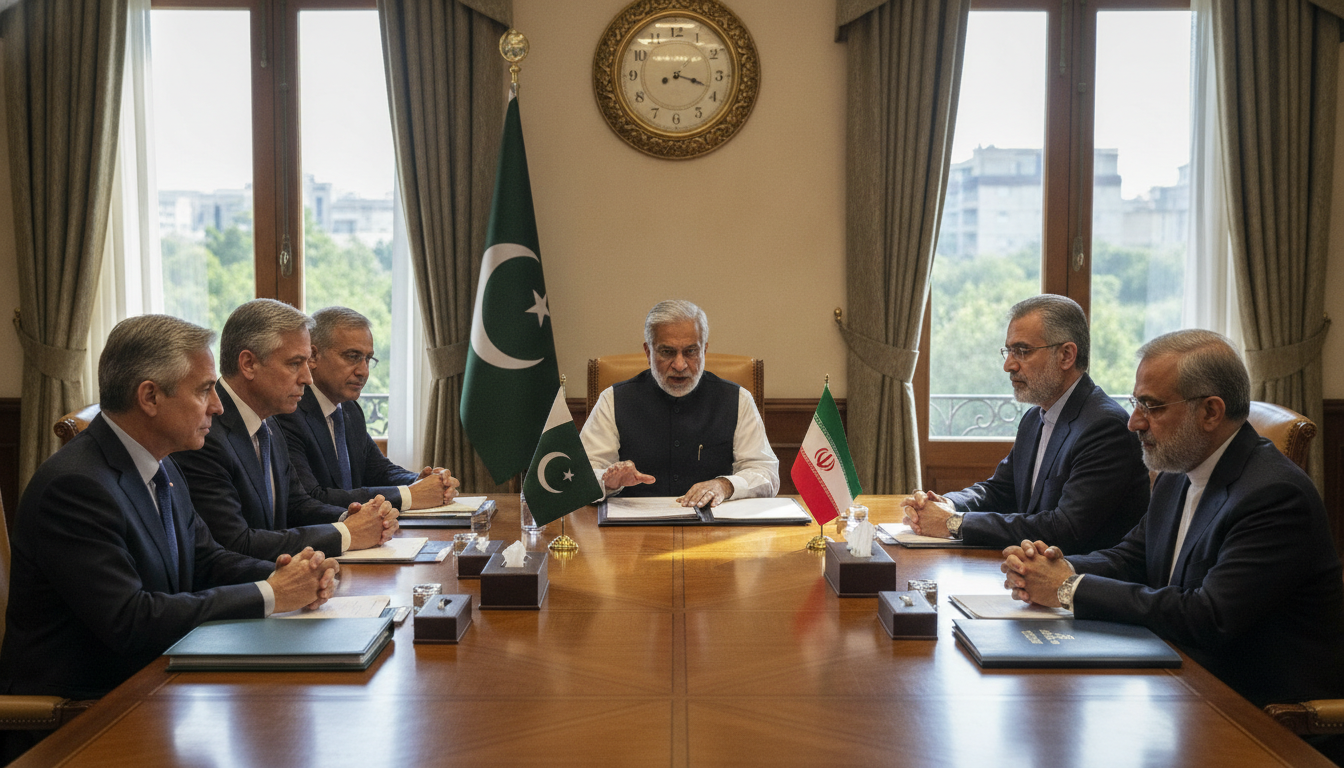
Pakistan urges restraint in US–Iran conflict, calls to honour Islamabad Memorandum of Understanding
Pakistan urges all parties to show restraint in the escalated US–Iran conflict and to honour the Islamabad MoU to prevent a wider regional war.
Pakistan urged all parties to exercise restraint as a fragile ceasefire between the United States and Iran unravelled into renewed strikes and counterstrikes, warning that a broader regional conflict would be catastrophic. The Foreign Ministry reiterated Islamabad’s call for both sides to honour commitments under the Islamabad Memorandum of Understanding (MoU), calling the agreement a stabilizing framework for the region. Pakistan said it remains prepared to continue mediation efforts aimed at de‑escalation.
Pakistan reiterates demand to honour the Islamabad MoU
The Foreign Ministry’s statement framed the Islamabad MoU as an “enduring foundation” for mutual respect and regional stability and urged all parties to comply with its obligations. Islamabad framed its appeal around the need to avoid miscalculations that could widen the confrontation beyond the immediate protagonists. Officials said Pakistan stands ready to resume or intensify its diplomatic role to prevent further deterioration.
US air campaign strikes multiple Iranian sites
The appeal by Islamabad followed a second night of US strikes that targeted roughly 90 Iranian sites, according to statements released by US officials. Reported targets included coastal radar installations, missile storage facilities, drone depots and naval assets — actions described by US sources as punitive and intended to degrade Iran’s strike capacity. The renewed strikes came after reported attacks on commercial shipping in the Strait of Hormuz and followed the revocation of a previous US waiver on Iranian oil exports tied to the MoU.
Iranian missile and drone strikes hit Gulf bases
Iran’s Islamic Revolutionary Guard Corps responded with missile and drone strikes aimed at US military facilities in the Gulf, including bases in Kuwait and Bahrain and trajectories toward a site in Qatar. Iranian state channels reported military casualties in several southern coastal provinces, underscoring the human toll of the exchange. The strikes on Gulf bases prompted regional capitals to condemn violations of sovereignty and raised fears of spillover into neighbouring states.
Regional capitals press for diplomacy amid public denunciations
Several regional and global leaders urged restraint as tensions flared. Qatar’s leadership encouraged renewed diplomacy and implementation of the June 17 MoU, while Egypt and Kuwait called for de‑escalation to preserve regional peace. Public rhetoric from Washington — including strong language directed at Iran and threats of further measures such as naval blockade or strikes on strategic Iranian infrastructure — intensified diplomatic alarm among Gulf states.
Analysts warn mediation is fragile and external intermediaries have limits
Former diplomats and regional analysts say mediation efforts are under severe strain as military actions outpace negotiations. Observers caution that intermediaries can only facilitate a path to settlement; ultimately the two protagonists must accept compromise. Pakistan’s past intervention, according to analysts, has helped keep channels open during previous crises, but the current environment of reciprocal strikes and punitive measures has reduced flexibility for negotiation.
Shipping, sanctions and the wider economic stakes
The exchange has already affected commercial shipping and energy markets, with reported attacks on vessels transiting the Strait of Hormuz increasing insurance and security concerns. Washington’s decision to reimpose restrictions on Iranian oil exports after the most recent incidents highlights the economic levers now back in play. Analysts say disruptions to the Strait and additional sanctions could drive broader market volatility and raise costs for regional and global traders.
The Pakistani appeal for restraint underscores an urgent diplomatic objective shared by many capitals: to prevent a localized exchange of force from cascading into a regional war. Islamabad’s call to honour the Islamabad MoU reflects an attempt to keep a narrow channel of negotiated commitments alive even as strikes and counterstrikes continue.
