
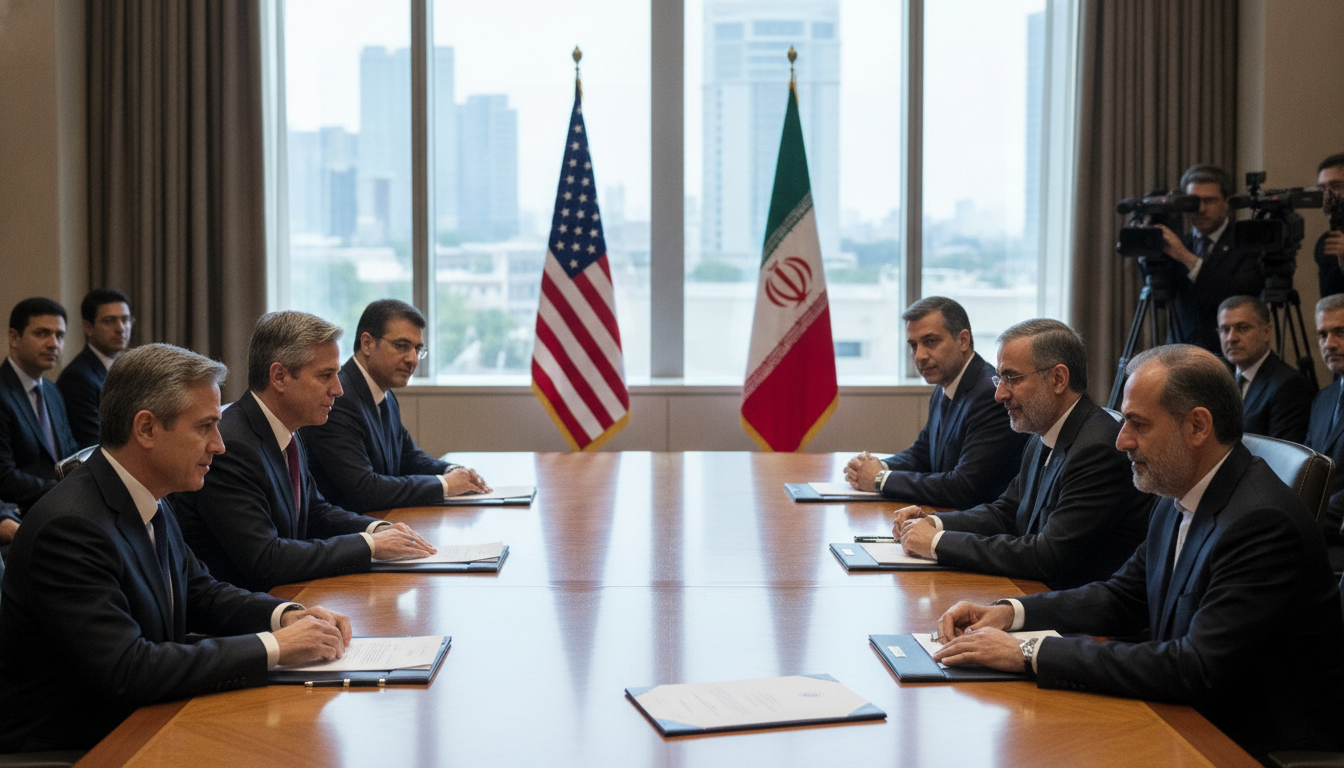
U.S. and Iran Agree Temporary Halt to Strikes as Talks Aim to Reopen the Strait of Hormuz
U.S. and Iran have agreed to suspend mutual attacks and pursue technical talks to restore safe passage through the Strait of Hormuz, amid stalled UN evacuation plans and renewed regional strikes.
The United States and Iran announced a mutual pause in attacks and said they will continue technical discussions aimed at reopening the Strait of Hormuz, a vital oil transit route that has been effectively closed by the conflict. (axios.com)
Details of the Truce and Next Steps
The ceasefire arrangement, reached after a memorandum of understanding signed earlier in June, calls for both sides to halt offensive actions while technical teams work through protocols governing safe transit. The pause is intended to allow commercial traffic to resume under agreed procedures and to reduce immediate risks to ships and crew. (axios.com)
U.S. officials said the two countries planned further meetings in Doha this week to focus on navigational arrangements in and around the strait. Observers caution the truce is fragile because interpretations of the written protocol differ and isolated incidents have already tested the arrangement. (axios.com)
UN Evacuation Scheme Paused After Vessel Attack
The U.N. International Maritime Organization had begun coordinating an evacuation corridor to clear several thousand seafarers from vessels stranded in the strait, but the operation was suspended after a commercial vessel was struck off the coast of Oman. The pause highlighted how quickly relief efforts can be derailed by violence at sea. (ungeneva.org)
United Nations officials said initial evacuations had moved some ships via designated northern and southern routes, but that the central shipping lanes remain dangerous because of mines and unexploded ordnance. The IMO stressed that any large-scale operation depends on stable security guarantees and access to internationally recognized transit channels. (ungeneva.org)
Oman and the UN Set Up Alternate Corridor, Iran Objects
Oman, working with the International Maritime Organization, announced a temporary alternative shipping corridor intended to allow vessels to exit the strait without using Iran-controlled channels. Several commercial ships used the route in recent days, drawing praise from shipping operators seeking relief from months of disruption. (thenationalnews.com)
Tehran objected to the alternative corridor, insisting that only Iran may manage passage through waters adjacent to its coast and warning it would penalize any vessel that transited outside Tehran’s prescribed lane. Iran’s foreign ministry and military spokespeople framed the issue as a matter of sovereignty and security, complicating multilateral attempts to re-establish normal navigation. (theguardian.com)
Attacks on Vessels and Military Responses Heighten Tensions
This week two commercial vessels were struck by projectiles of unclear origin, incidents that U.S. forces attributed to Iranian-backed actors and that prompted U.S. retaliatory strikes in Iranian territory. The cycle of attack and reprisal has undercut confidence in the ceasefire and raised concerns about unintended escalation at sea. (washingtonpost.com)
Naval authorities also warned that the presence of naval mines in established traffic separation schemes continues to block the central channel through the strait, forcing ships into alternative and less-protected routes. Shipping groups estimate that dozens of mines must be cleared before normal commercial patterns can safely resume. (theguardian.com)
Lebanon and Israel: Strikes Continue Despite Washington Framework
While the U.S. and Iran address the Hormuz standoff, Israel continued strikes in southern Lebanon as debates over a recent Israel-Lebanon framework unfolded in Washington. Israeli leaders said military operations targeted Hezbollah infrastructure, including a deep tunnel complex, while Lebanese officials and Hezbollah rejected portions of the framework that link any Israeli withdrawal to the militia’s disarmament. (aljazeera.com)
Lebanese authorities reported bombardments and isolated casualties in southern localities, and political leaders in Beirut warned that the framework would not be accepted in its present form. The ongoing clashes in Lebanon add another layer of instability to efforts to cement broader regional de-escalation. (aljazeera.com)
The pause in hostilities between the United States and Iran offers a narrow window to reopen the Strait of Hormuz, but success will depend on clearing mines, agreeing predictable transit rules, and enforcing a shared security mechanism that all coastal states and shipping partners accept. (axios.com)
Longer-term resolution will require sustained diplomacy, marine-safety operations to remove hazards, and verification measures to prevent local actors from reigniting attacks that could quickly collapse the fragile arrangements. International shipping interests hope the Doha talks and follow-up technical sessions can turn a tentative pause into reliable, enforceable procedures for civilian navigation.
The coming days will test whether the temporary halt to strikes can be translated into tangible safeguards for seafarers and commerce in one of the world’s most critical maritime chokepoints.
