
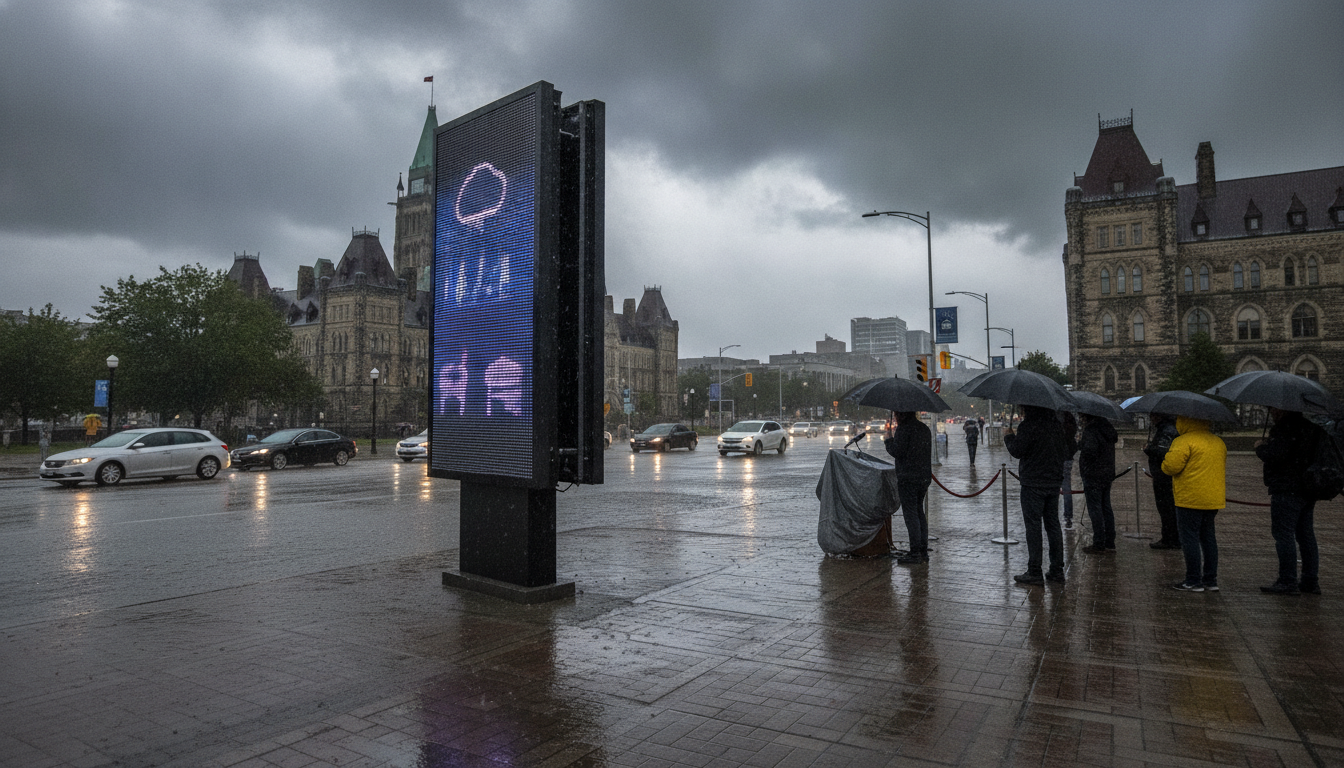
Environment Canada: Weekend storms could produce record rainfall and challenge July 1901 benchmark
Environment Canada warns heavy weekend rain could push monthly totals near the July 1901 record, increasing flood risks and straining local infrastructure.
A senior Environment Canada meteorologist warned this week that a significant weather system expected over the coming weekend could bring enough precipitation to place the month among the wettest on record. The agency’s forecasters said current projections make it likely the month will record the second-highest rainfall total on record, and that the weekend event could close the gap on the longstanding July 1901 benchmark. Residents in affected areas were urged to monitor official updates as agencies prepare for heightened runoff and potential flash flooding.
Environment Canada issues official warning
Environment Canada has flagged the approaching system in its public forecasts, noting multiple rounds of rain are possible across several regions. Forecasters emphasized that model runs consistently indicate a substantial uptick in precipitation beginning Friday and continuing into the weekend. The agency said the timing and intensity of individual bands will determine where the heaviest totals fall and where impacts will be most severe.
Meteorologist Matt Loney, speaking for the agency, described the likelihood of unusually high monthly totals and said the expected rainfall could bring the month within range of the July 1901 record. Environment Canada is coordinating forecast updates with provincial and municipal emergency management bodies to ensure warnings, watches and advisories are issued promptly where needed.
Forecast models show concentrated weekend precipitation
Multiple numerical weather prediction models point toward a pattern that favors prolonged rainfall for pockets of the country rather than uniform soaking everywhere. Forecasters say slow-moving storm systems and moisture-laden atmospheric rivers are likely contributors to locally intense downpours. That concentration raises the prospect of rapid accumulation in urban drainage systems and low-lying river basins.
The models still differ on the exact placement of the heaviest bands, meaning some communities could see heavy totals while nearby areas receive only moderate rainfall. Environment Canada advised that short-term forecast updates should be treated as authoritative, because small track shifts in the system will have outsized effects on which watersheds receive the greatest rainfall.
July 1901 monthly rainfall record referenced by meteorologists
The July 1901 monthly total is a historical benchmark that forecasters use to gauge extreme monthly rainfall events. While the precise measurement and record-keeping methods have evolved since 1901, the month remains a useful point of comparison for unusual, sustained precipitation. Meteorologists caution that matching or exceeding a month-long record depends not only on a single storm but on the accumulation of multiple events over several weeks.
Analysts say the possibility of approaching that benchmark underscores the unusual persistence of wet conditions this month. Climatologists also note that long-term trends and variability can influence how such records are set, but immediate concern focuses on short-term impacts such as flooding, erosion and damage to transportation networks.
Emergency services and infrastructure advisories
Local emergency management agencies are reviewing contingency plans and pre-positioning resources in areas identified as higher risk. Municipalities commonly prepare by clearing drains, inspecting pumps and alerting crews that manage stormwater infrastructure. Schools, transit systems and road authorities may post advisories or temporary closures depending on how the situation develops.
Officials advised residents to take routine preparedness steps: move valuables from basements, have an emergency kit ready, and avoid driving through standing water. Emergency hotlines and local alerting systems remain the primary channels for official instructions, and citizens were asked to follow directions from municipal and provincial authorities.
Potential impacts on rivers, transit and communities
Hydrologists are monitoring river levels and soil saturation, because antecedent wetness can amplify runoff and flooding risk even from moderate additional rainfall. Where the ground is already saturated, even relatively short but intense rains can cause streams and urban sewers to overflow. That combination drives much of the near-term concern among public works and emergency officials.
Transit services and highways may be affected by localized washouts, standing water and reduced visibility during heavy rain. Utilities and communications infrastructure can also be stressed in rapidly evolving situations, prompting agencies to recommend that households prepare for short-term service interruptions and to report outages promptly.
What residents should watch for this weekend
Environment Canada will issue updated forecasts and specific warnings as the system approaches, including localized flood watches and severe weather advisories where warranted. Residents are advised to check the agency’s forecasts regularly, sign up for municipal alerting systems and follow local media for the latest closures and advisories. Those in flood-prone areas should consider moving vehicles to higher ground and securing outdoor items that could be swept away.
Simple precautions, such as avoiding walking or driving through floodwater, can reduce risk during peak rainfall. Emergency management officials also recommend discussing family plans in advance and ensuring that vulnerable neighbours or those with mobility challenges have support if evacuations become necessary.
Longer-term monitoring will determine whether the month ultimately challenges or surpasses the July 1901 monthly rainfall benchmark, but meteorologists say the weekend system is a pivotal event. Environment Canada and local authorities continue to urge preparedness as forecasts are refined and specific impact zones become clearer.
