
U.S. Announces Israel-Lebanon Framework, Pilot Withdrawal Plan for Southern Lebanon
U.S.-brokered Israel-Lebanon framework announced in Washington proposes a U.S.-supervised pilot withdrawal of Israeli forces from parts of southern Lebanon, with Lebanese Armed Forces to assume control.
The United States announced an Israel-Lebanon framework Friday after talks in Washington that proposed a pilot, partial withdrawal of Israeli forces from southern Lebanon.
The announcement, made by U.S. Senator Marco Rubio acting in a U.S. diplomatic capacity, said the pilot withdrawal would be supervised by the United States and would transfer control of a predefined zone to the Lebanese Armed Forces.
The Israel-Lebanon framework is intended as a step toward reducing frontline tensions, though officials cautioned that key details and timelines remain to be finalized.
U.S.-Brokered Framework Announced in Washington
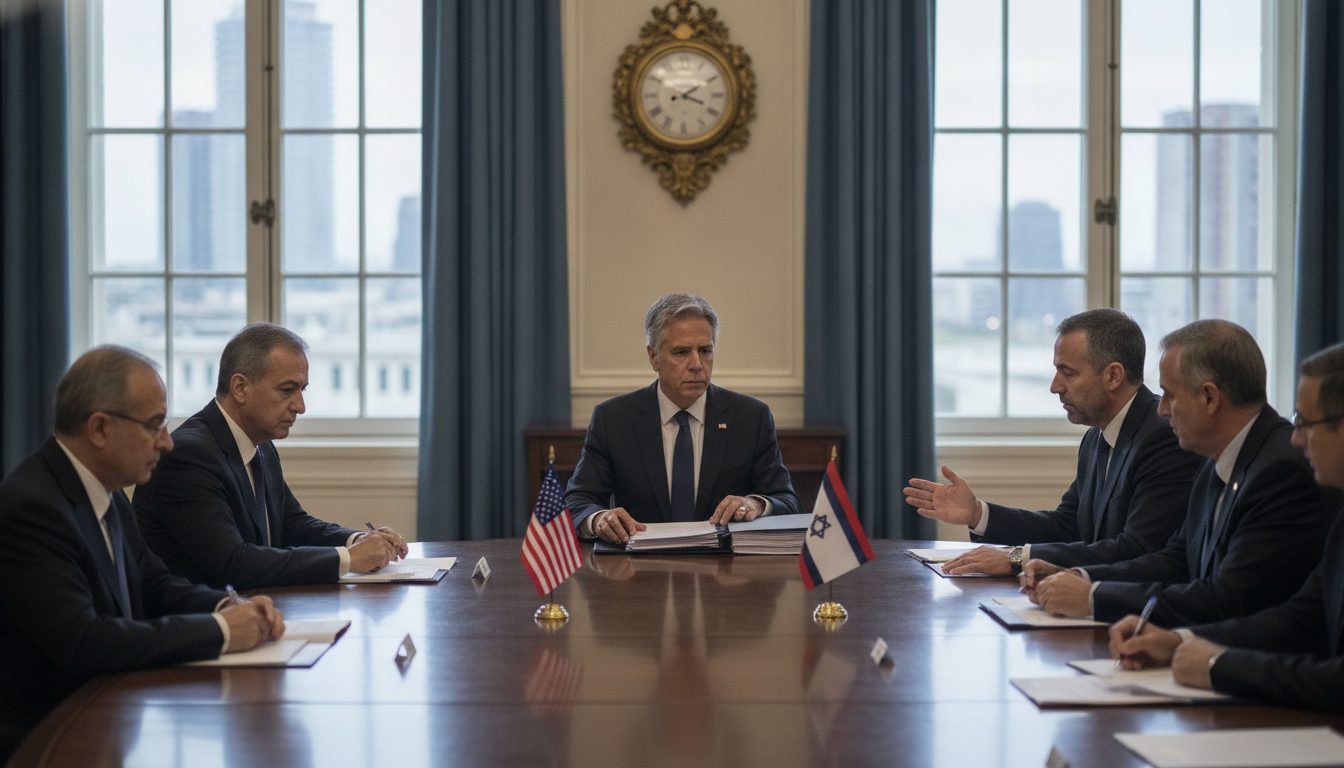
The framework emerged from talks convened in Washington that brought U.S. mediators together with representatives from Israel and Lebanon.
U.S. officials characterized the agreement as a preliminary, negotiable outline rather than a binding pact, designed to open a path for further diplomacy on the security line in the south.
The involvement of a senior U.S. political figure underscored Washington’s role as a mediator and signaled an effort to manage escalation along the Israel-Lebanon frontier.
Pilot Withdrawal Plan Outlines Partial Pullback
Central to the framework is a pilot withdrawal in which Israeli forces would pull back from a delimited section of southern Lebanon.
Under the proposal, American personnel would supervise the withdrawal process and monitor the handover of the specified area.
Proponents describe the pilot as a way to test conditions on the ground and build confidence before any wider changes are implemented.
Lebanese Armed Forces to Assume Control of Predefined Zone
The outline specifies that the Lebanese Armed Forces (LAF) would assume control of the zone vacated by Israeli forces during the pilot phase.
Placing the LAF in a lead security role is presented as a means to reinforce Lebanese sovereignty and provide a national security guarantee in the immediate area.
Officials said the exact geographic boundaries and operational rules for the LAF takeover remain subject to negotiation and verification.
Security and Political Risks Along the Frontline
Observers warn the plan faces significant security and political hurdles, particularly given the presence of non-state actors and complex local dynamics.
The potential for armed groups to contest any movement of forces adds uncertainty to implementation, and both sides will need mechanisms to prevent incidents during the transition.
Political leaders in Beirut and Jerusalem will also face domestic pressure over concessions and the perceived balance of security gains and risks.
Monitoring, Verification and International Oversight
The framework envisions a monitoring role for U.S. personnel during the pilot phase, but the long-term oversight architecture has yet to be defined.
Negotiators said further discussions would clarify verification procedures, how incidents would be investigated, and whether additional international partners would join monitoring efforts.
Establishing robust reporting and incident-response channels will be central to sustaining the pilot and preventing a return to open hostilities.
Next Steps and Unresolved Details
Officials involved in the talks emphasized that the framework is a preliminary step that requires follow-up negotiations to set firm timelines, maps and operational protocols.
Both capitals will need to consult domestic authorities and security commands before agreeing to specific implementation measures.
More details are expected as diplomats reconvene to convert the framework into a concrete plan, and as oversight arrangements are finalized.
The Israel-Lebanon framework represents a cautiously optimistic bid to reduce tensions through a controlled, supervised handover of territory, but its success will depend on precise mapping, effective monitoring and the ability of Lebanese and Israeli authorities to manage political and security pressures at home.
