
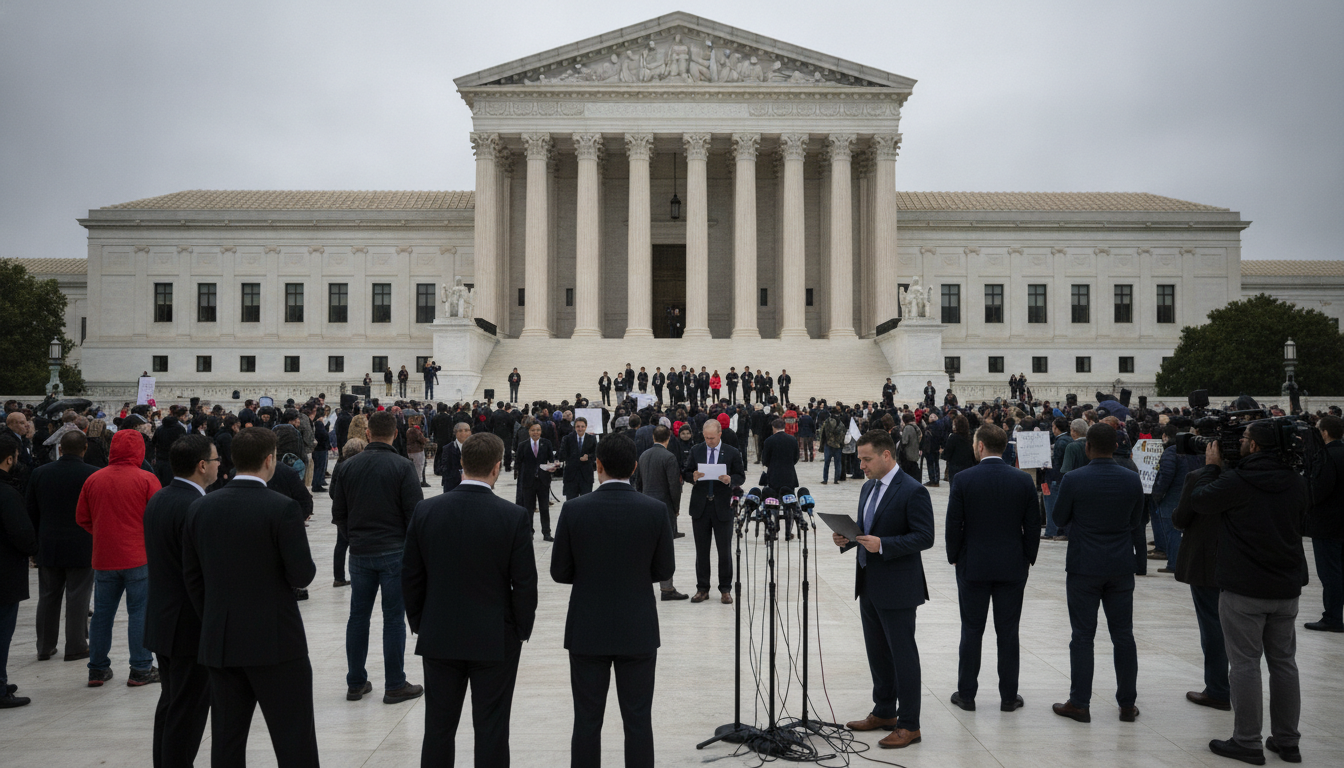
Supreme Court rules for Roundup maker Bayer, blocking many state failure-to-warn lawsuits
Supreme Court rules for Roundup maker Bayer, blocking state failure-to-warn lawsuits over glyphosate and reshaping future litigation and regulatory clarity.
The U.S. Supreme Court ruled Thursday that failure-to-warn claims against the maker of Roundup are precluded by federal pesticide law, a decision expected to prevent thousands of state court lawsuits alleging the herbicide caused cancer. The ruling directly affects claims tied to glyphosate and could largely curtail litigation that has dogged Bayer since its acquisition of Monsanto.
High court’s ruling and legal basis
The court, in a 7-2 decision authored by Justice Brett Kavanaugh, found that the Federal Insecticide, Fungicide and Rodenticide Act (FIFRA) preempts state-law failure-to-warn suits when federal law requires the EPA-approved label without a cancer warning. The majority concluded that allowing such suits would force label changes the federal registration process does not permit.
Liberal Justice Ketanji Brown Jackson, joined by Justice Neil Gorsuch in dissent, argued the plaintiff’s claim would not impose different requirements than those already set by federal law and therefore should not be preempted. The split highlights continuing debate over the balance between federal regulatory authority and state tort remedies.
The Durnell case that reached the court
The decision stems from the case of John Durnell, who sued Monsanto in Missouri state court after being diagnosed with non-Hodgkin lymphoma he attributed to decades of Roundup exposure. A jury had awarded Durnell $1.25 million, and a state appeals court later upheld that verdict before the Supreme Court accepted the case.
Durnell’s lawyers contended Missouri law requires adequate warnings and does not impose requirements differing from FIFRA. The high court disagreed, finding that Durnell’s claim would effectively require a cancer warning that federal law and EPA determinations do not require.
Bayer response and market reaction
Bayer hailed the decision as a pivotal win that should significantly contain the litigation around Roundup and provide regulatory clarity for farmers and related industries. A company spokesperson said the ruling should lead to dismissal of current warning-based claims and deter similar future suits.
Shares of Bayer rose sharply after the ruling, reflecting investor relief over potential liabilities that had mounted in the wake of multibillion-dollar verdicts and widespread suits. The company had previously proposed a multibillion-dollar settlement to resolve many claims and removed glyphosate from its consumer Roundup products amid the litigation.
Public health advocates and critics’ reaction
Environmental groups and public health advocates sharply criticized the ruling, warning it limits access to state courts for plaintiffs who claim harm from pesticides. Advocacy organizations framed the decision as favouring corporate interests over individuals and public health protections.
Critics argued the EPA’s conclusions on glyphosate have been contested and that state tort suits offer a means for victims to seek accountability. The dissenting justices’ comments underscored these concerns, describing the decision as closing courthouse doors to victims of alleged harm.
Implications for future litigation and settlements
Legal experts said the ruling will make failure-to-warn claims far more difficult to pursue, though it may not end all Roundup-related litigation. Some suits and appeals outside the scope of warning-based claims could continue, and the Supreme Court’s decision leaves room for other legal theories to be litigated.
Bayer previously offered a $7.25 billion proposal to resolve tens of thousands of current and future lawsuits, a deal that company officials said would substantially reduce legal uncertainty if accepted by the plaintiffs and approved by a court. With the Supreme Court’s ruling, the calculus for remaining settlements and pending appeals has changed, though observers noted that some claims could persist where they fall outside the settlement’s terms.
Regulatory clarity and industry consequences
The decision reinforces the primacy of EPA determinations in pesticide labelling and may strengthen regulatory certainty for manufacturers and farmers who rely on approved products. Supporters argue the ruling prevents a patchwork of state requirements that could disrupt agricultural supply chains and innovation.
Opponents counter that the outcome reduces pressure on regulators to revisit safety conclusions and diminishes incentives for companies to consider additional warnings or risk mitigation measures. The interplay between federal oversight and state consumer protections is likely to be central to future policy debates about pesticide regulation.
The Supreme Court’s ruling marks a significant turning point in the decade-long legal saga over glyphosate and Roundup, with broad implications for plaintiffs, manufacturers and regulators alike as litigation and policy discussions continue to unfold.
