
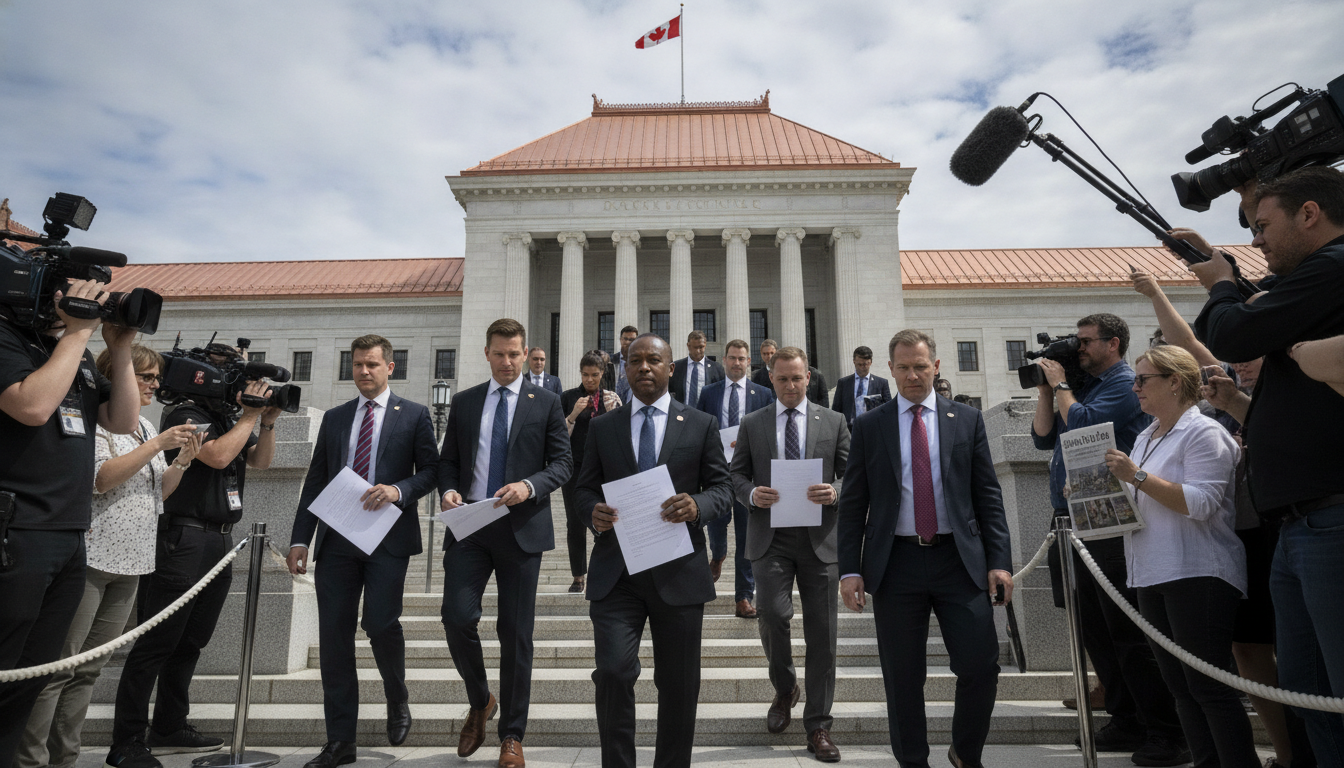
Supreme Court allows Alberta election interference lawsuit against former chief electoral officer to proceed
Supreme Court allows Joseph Anglin’s election interference lawsuit against former Alberta chief electoral officer Glen Resler to proceed; $2.2M sought.
The Supreme Court of Canada has dismissed an appeal by former Alberta chief electoral officer Glen Resler, clearing the way for a civil lawsuit alleging election interference and bad-faith conduct to go to trial. The decision, released Friday, found that former Wildrose MLA Joseph Anglin’s claim of misfeasance in public office and related torts is not an improper attempt to challenge the 2015 provincial election result. The ruling allows Anglin’s claim, which seeks $2.2 million in damages, to proceed on the merits while narrowing certain damage claims.
Court frames scope of permissible claims
Justice Mary Moreau, writing for the majority, concluded that Anglin’s statement of claim raises an arguable case that Resler acted in bad faith and exceeded the protections of statutory immunity and parliamentary privilege. The court determined the lawsuit does not amount to an abuse of process nor a collateral attack on the election outcome. That finding permits the misfeasance and related claims to move beyond preliminary dismissal and toward a full hearing.
The Supreme Court nonetheless limited the scope of recoverable damages by striking the claim for “loss of a chance” of re-election, concluding that such relief is not available if Anglin succeeds at trial. The decision leaves open the central factual questions about Resler’s conduct and intent, which will be resolved at a later stage of the litigation. Costs were awarded against Resler on the appeal.
Facts of the 2015 complaint and ensuing investigations
Joseph Anglin, who represented the Rimbey–Rocky Mountain House–Sundre riding from 2012 until his 2015 defeat, brought the suit after a series of administrative actions and investigations were launched during that election. The origin of the dispute rests with complaints alleging violations of the Elections Act while Anglin campaigned, including orders to remove campaign signage and other enforcement actions taken by Resler’s office.
Anglin alleges those steps were taken with improper motive and amounted to an abuse of public power intended to damage his re-election prospects. The statement of claim seeks compensation for reputational harm, lost employment opportunities and the claimed impact on his 2015 campaign. The Supreme Court’s ruling confirms that, at least at this stage, those factual allegations are sufficient to sustain several tort claims.
Legal theories urged and rejected at the threshold
At issue in the litigation were several legal doctrines that could have shielded Resler from civil liability, including statutory immunity under Alberta’s election laws and parliamentary privilege. Resler argued his decision-making fell squarely within the discretionary functions of his office and was therefore protected when performed in good faith. He maintained that allowing the suit to proceed would impermissibly question the conduct of a public official exercising statutory duties.
The Supreme Court majority rejected those threshold bars, finding Anglin had pleaded facts that, if proven, would demonstrate bad faith and misfeasance in public office — a tort that targets deliberate or reckless abuse of public power. The court emphasized that statutory immunity does not extend to actions taken in bad faith, and that parliamentary privilege was not applicable to bar the civil claim at this stage. However, the majority narrowed the remedy by precluding recovery for a speculative “loss of a chance” to be re-elected.
Judicial history and appellate pathway
The matter has travelled through Alberta’s courts before reaching the country’s highest bench. In 2022, a judge of the Court of King’s Bench of Alberta dismissed Anglin’s claim, concluding there was no evidence of malicious prosecution or similar misconduct sufficient to sustain the pleaded claims. That decision was overturned by the Alberta Court of Appeal in 2024, which reinstated claims for misfeasance in public office and trespass to chattels while excluding malicious prosecution allegations.
Friday’s Supreme Court decision largely echoes the Court of Appeal’s view that the dispute does not constitute a forbidden attempt to overturn an election result. The high court’s majority found the lower appellate court was correct to conclude the pleadings raised an arguable case for misfeasance and that the matter should proceed. The Supreme Court’s intervention thus resolves competing thresholds applied by the lower courts and clarifies the availability of several common-law causes of action against a public officer when bad faith is alleged.
Implications for election officials and public office holders
Legal experts say the ruling underscores a narrow line between protected statutory duties and actionable misconduct by public office holders. The decision reaffirms that officials who exercise statutory powers in good faith are afforded protection, but it also signals that those protections do not grant blanket immunity where plausible allegations of bad faith or deliberate abuse of power are raised. The court’s approach preserves the policy objectives of statutory immunity while ensuring accountability when the factual record supports allegations of malice or intent to harm.
For election administrators, the judgment may prompt a reassessment of internal decision-making, record-keeping and communication practices. Clear documentation of the grounds for enforcement actions and evidence of neutral decision processes will be important if officials face civil scrutiny. Provincial governments and electoral bodies may also review training and oversight mechanisms to reduce litigation risk and to maintain public confidence in the impartial administration of elections.
Damages, remedies and what the court left open
Anglin seeks $2.2 million in damages, alleging reputational harm, loss of work opportunities and adverse effects on his 2015 campaign. The Supreme Court made a point of rejecting the availability of “loss of a chance” damages for re-election, ruling that this speculative category of relief should be struck at the pleading stage. The majority noted, however, that ordinary compensatory damages for reputational and economic loss remain potentially available and must be assessed at a trial on the evidence.
The court also clarified that the question of whether statutory immunities or privileges apply will turn on the concrete facts proven at trial. If Anglin can demonstrate that Resler acted with conscious wrongdoing or malice, the statutory shields he claimed would not apply. The high court’s ruling therefore leaves open the central factual inquiries — motive, knowledge and the propriety of the actions taken — which a trial judge will have to determine.
Next steps and procedural timeline
With the Supreme Court clearing the path for the action to proceed, the case will return to the Alberta courts for further litigation on the merits. A future hearing will determine factual responsibility, the availability of compensatory remedies and the appropriate measure of damages if Anglin prevails. The timeline for those proceedings will depend on court scheduling and any further interlocutory disputes between the parties.
Both sides may now prepare for discovery, witness examinations and evidentiary hearings that hone the factual record underpinning the bad-faith allegations. If the case proceeds to a full trial, the courts will evaluate documentary evidence, witness testimony and the legal standards that apply to misfeasance in public office and other tort claims. If either party disagrees with steps taken in lower courts after the matter resumes, further appeals on narrow legal points remain possible, although the Supreme Court’s decision will constrain the frontier of threshold dismissals.
The high court’s ruling, issued Friday, marks an important judicial determination that allegations of intentional misuse of public authority can be tested in civil litigation, even where those allegations arise in the electoral context. The decision leaves intact protections for good-faith public decision-making, while confirming that those protections are not absolute. The coming litigation phases will establish whether the factual record supports Anglin’s claim of deliberate interference and, if proven, the appropriate compensatory relief.
