
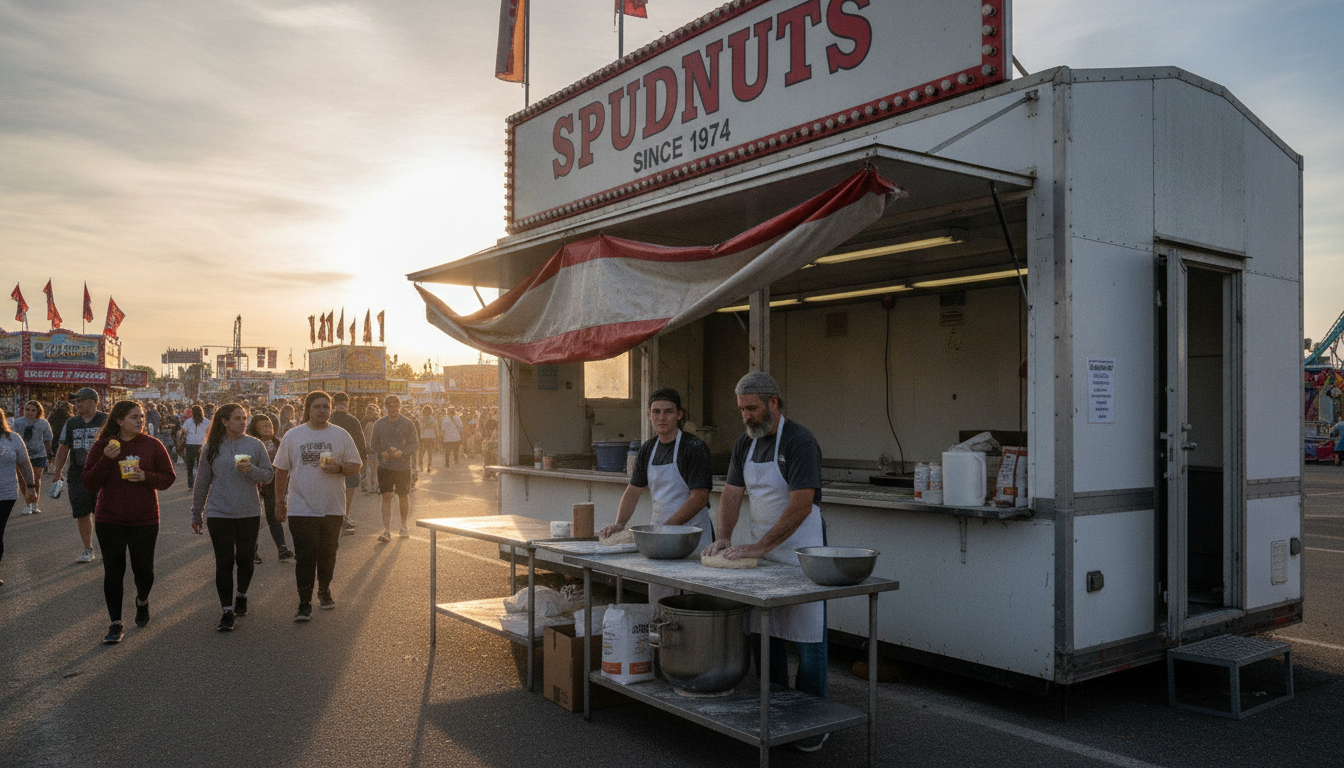
Saskatoon Exhibition drops spudnuts; Prairie bakers and volunteers vow to keep the treat alive
Spudnuts remain a flashpoint after the Saskatoon Exhibition announced it will not feature the potato-based doughnut this summer, prompting nostalgia and renewed support from Prairie bakeries and fair volunteers.
The Saskatoon Exhibition’s late-June announcement that spudnuts would be absent from the fair this year touched off a wave of public reaction, with many attendees describing the fried rings as a generational tradition. Organizers said the move followed a detailed review of operational needs, staffing and facilities, and they left future years open to reconsideration.
Local bakers and long-time volunteers across the Prairies reacted quickly, saying the decision at the city fair will not mean the end of spudnuts in Saskatchewan or Alberta. Vendors and volunteer groups point to continued demand at community fairs, specialty bakeries and fundraising booths where the treat still sells out fast.
Saskatoon Exhibition ends a decades-long fair tradition
The Saskatoon Exhibition cited operational constraints and staffing challenges when announcing the removal of spudnuts from its food lineup. The fair acknowledged the strong emotional ties many families have to the pastry and described the choice as difficult.
Social media responses ranged from stunned nostalgia to simple curiosity from those who had never encountered the pastry. Several commenters described the annual spudnut stop as a ritual passed down through generations, with families buying extras to bring home.
Organizers said no decision has been finalized about future years, leaving the possibility of a return open but indefinite while the fair assesses resources and long-term sustainability. The move has renewed public discussion about how fairs balance tradition with changing logistics and menu trends.
Prairie bakeries see renewed interest and competition
Bakers in southern Alberta and Saskatchewan said the Saskatoon decision has increased demand at their shops rather than dimmed interest. At Bootsma Bakery in Lethbridge, the owner recalled a local “spudnut war” after a longtime shop closed and several bakeries began offering the treat competitively.
Bootsma Bakery sells spudnuts only on Thursdays and offers a dozen varieties, from classic glazed to maple dip and toasted coconut. Maple bacon, combining sweet and salty notes, was singled out as an especially popular option.
The bakery uses a hybrid recipe that blends potato-based flour with some wheat, a technique the owner favors because an exclusively potato-based dough can become dense. Bakers say regional potato production supports access to high-quality ingredients across the Prairies.
How spudnuts differ from regular doughnuts
Spudnuts owe their distinct texture and moisture to the potato component in the dough, which absorbs liquid while retaining enough structure to hold air. That characteristic produces a light, tender crumb that differs from standard wheat-only doughnuts.
Recipes vary widely: some bakers use potato flour, others incorporate mashed potatoes, and some adopt hybrid mixes to balance texture and ease of handling. The variety in approaches has contributed to regional signatures and loyal followings at different bakeries.
Historic accounts trace potato doughnut recipes back to immigrant traditions and mid-20th-century commercial chains in North America, but the exact lineage is diverse and locally adapted. For customers who grew up with them, the flavor and texture are distinctive enough to inspire strong loyalty.
Volunteer operations keep spudnut sales running at community fairs
In community settings the spudnut remains a fundraising mainstay that depends on large teams of volunteers and early starts. In The Battlefords, for example, Rotarians reported that mixing and frying begin at 5 a.m. during the annual fair, with multiple shifts across the day.
Those operations typically require dozens of volunteers per shift and can involve well over a hundred volunteers across several days. The heavy labour and coordination explain why some larger fairs have decided to scale back or pause the offering even as smaller community events keep it going.
Volunteer-run spudnut booths can generate significant proceeds, with some committees raising more than $30,000 annually for local projects. Organizers say the funds and the social energy of the production are as important as the treat itself.
Younger tastes, changing fair menus and the doughnut challenge
Bakers and vendors acknowledge a shifting dessert landscape, in which artisanal doughnut shops and novel fair foods attract younger customers who may never have tasted a spudnut. Established doughnut varieties and new innovations compete for menu space at fairs and bakeries.
At the same time, the proliferation of new specialty items has altered expectations about fair food, from international corn dog variations to trend-driven sweet hybrids. That menu diversification helps explain why some events prioritize items with broader, contemporary appeal.
Still, the spudnut’s fans argue that familiarity is often the barrier: many younger consumers simply do not know what a spudnut is until they try one. Vendors who introduce the pastry carefully report that first bites can win immediate converts.
Community responses and efforts to preserve the pastry
The Saskatoon Exhibition’s announcement sparked messages from families remembering early visits and yearly traditions, with some expressing disappointment and others eager for a revival. Public reaction has included offers from smaller vendors and calls for pop-up events to keep the pastry visible.
Bakeries have reported tourists requesting spudnuts as a regional experience, and some shops are willing to prepare batches on special request. Local groups and fundraisers are exploring options to maintain public access to spudnuts without the large-scale infrastructure once provided by fair booths.
Those efforts include limited-schedule sales, targeted fundraising days, and collaborations between bakeries and community organizations. The collective response shows how culinary traditions can migrate from centralized fairs to distributed community and retail channels.
Operational realities behind the decision to pause spudnut sales
Fair organizers cited a range of practical considerations in their review, including equipment, food-safety requirements, space constraints and the labour-intensive nature of frying and glazing large quantities. Those factors can make spudnut production harder to sustain at larger events that face year-over-year cost pressures.
Volunteer dependence is also a critical variable, with some fairs able to muster the necessary teams while others cannot. The need for trained staff and consistent shifts magnifies the difference between volunteer-run community booths and professional fair concessions.
For some organizers, the choice to pause a long-running menu item reflects a broader challenge: balancing nostalgia and fundraising value against the realities of modern event management. The decision is rarely simple and often prompts community discussions about preservation and adaptation.
This summer’s adjustments at the Saskatoon Exhibition have nudged local bakers and volunteers to rethink how the treat will circulate in future years. The absence of a spudnut booth at one major fair has created an opening for smaller-scale efforts to amplify access and keep the pastry in the public eye.
Community groups that rely on spudnut fundraising are refining volunteer recruitment and operational plans to meet demand without overburdening teams. Meanwhile, some bakeries are testing limited runs and themed promotions to reintroduce spudnuts to younger customers.
The conversation around spudnuts underscores a larger pattern in regional food culture, where legacy items survive through a mix of commercial production, grassroots volunteering and targeted promotion. At stake is not just a fried pastry but a shared memory tied to family outings and local fundraisers.
Bakers emphasize that hands-on experiences—offering samples, scheduling special sales, and partnering with community events—can revive interest even when large fairs step back. For many supporters, the taste and texture remain persuasive: once someone tries a spudnut, they often seek it out again.
The future of spudnuts will likely depend on a patchwork of solutions: smaller vendors maintaining production, community groups organizing volunteer-powered sales, and occasional fair appearances if logistical conditions permit. Each approach preserves a different aspect of the tradition, from fundraising muscle to everyday retail presence.
For now, the removal of spudnuts from the Saskatoon Exhibition has heightened public appreciation and galvanized local bakers and volunteers to act. Whether the pastry returns to the big fair tent or continues to thrive in bakeries and community booths, the spudnut remains an active piece of Prairie culinary life.
Enthusiasts and organizers say the pastry’s survival will hinge on community will, adaptable production methods and creative outreach to new generations. The coming seasons will show whether spudnuts can reassert their place among fair favourites or evolve into a more distributed, bakery-driven tradition.
