
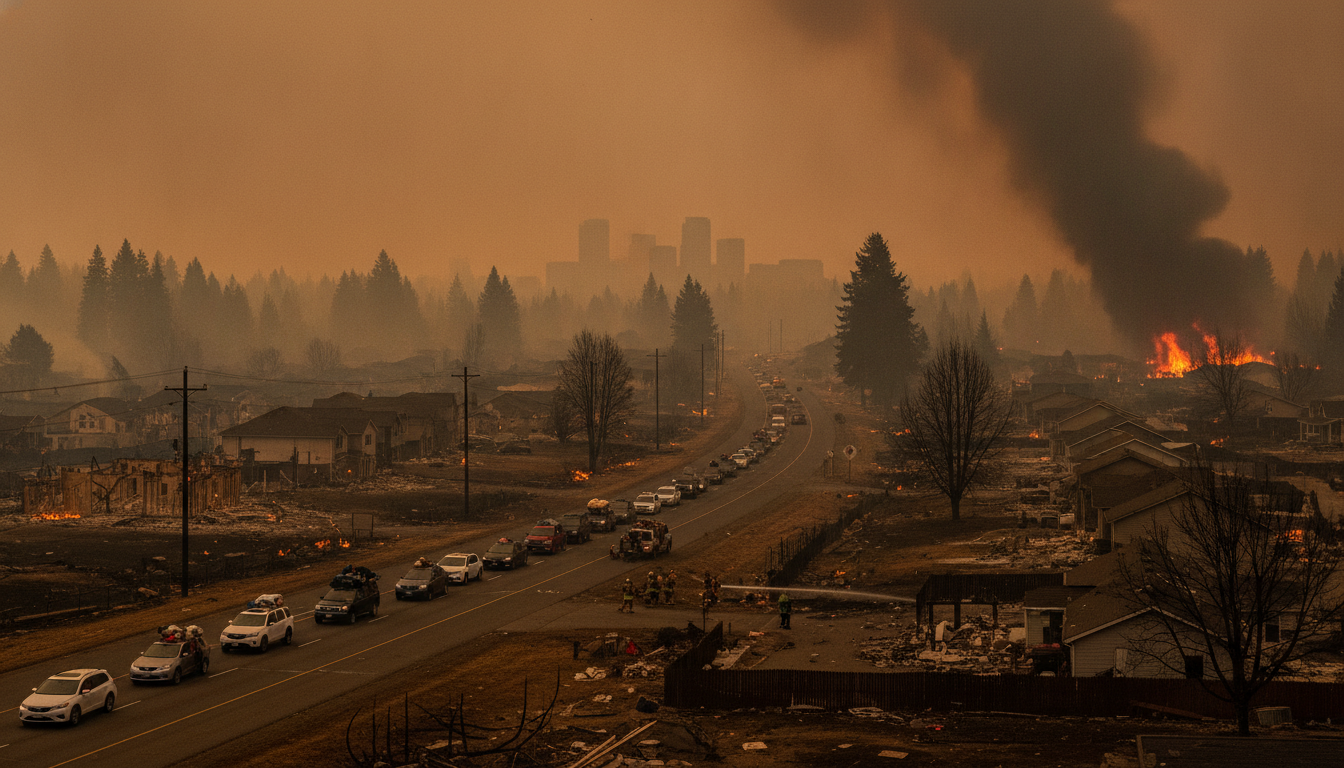
Spokane wildfires drive 65,000 residents from homes as hundreds of buildings burn
Spokane wildfires have forced roughly 65,000 people to evacuate after three fast-moving blazes tore into residential areas, destroying more than 700 structures and scorching thousands of acres. Emergency crews from across the region are battling uncontained fires as officials begin the slow process of search and damage assessment.
Rapid spread and scope of the blazes
The fires ignited on Spokane’s northern outskirts and, driven by strong winds, spread quickly from grassland and forest into neighbourhoods. Fire managers report the three main incidents have burned in excess of 8,000 acres (about 3,237 hectares) and consumed hundreds of homes and other buildings. More than 1,000 firefighters have been mobilized to the area, but the scale and speed of the outbreaks have made containment difficult.
Evacuations expanded to tens of thousands
Evacuation orders grew from a few thousand residents to about 65,000 within 48 hours as flames moved toward populated corridors. Emergency shelters were opened across Spokane to accommodate families and pets, while officials initially logged nearly 300 missing-person reports that have since fallen as residents checked in. Authorities continue to urge evacuees to follow official routes and not to return until areas are declared safe.
Damage surveys and search operations underway
Aerial surveys and on-the-ground teams are now entering devastated neighbourhoods to document losses and search for survivors and victims. Entire blocks have been reduced to rubble and ash, with some properties surviving only as chimneys and foundations. Officials warn that a full accounting of destroyed and damaged buildings will take days, and that disrupted utilities and downed infrastructure will complicate recovery efforts.
Investigation and environmental conditions cited
Local law enforcement said a 37-year-old has been arrested on suspicion of arson in connection with one of the fires, though investigators are still piecing together the exact circumstances. Experts emphasize that ignition sources are only part of the story; prolonged drought, a low winter snowpack and weeks of high temperatures left vegetation tinder-dry and highly flammable. Scientists also note that climate-driven warming has lengthened and intensified fire seasons, making rapid spread more likely when an ignition occurs.
Weather forecast and firefighting challenges
Crews benefited briefly from cooler temperatures and lighter winds, but forecasts call for a return of hot, dry, and gusty conditions later in the week. National and local meteorologists warn of temperatures climbing toward the high 30s Celsius in parts of the region, combined with low humidity and wind gusts that could re-energize the fires. Meanwhile, firefighting resources remain stretched as dozens of other large fires burn across the western United States.
Regional wildfire pressure and national response
The Spokane emergency is one of several severe incidents across the Northwest, with major grassland and forest fires active in Idaho, Oregon, Utah and Montana, and isolated large blazes reported elsewhere. A lightning-caused fire spanning hundreds of square miles in western Idaho and eastern Oregon continues to threaten ranchlands and communities, while large fires in central Utah and other states have destroyed structures and livestock. The National Interagency Fire Center has described overall activity as unusually intense, requiring coordination and resource-sharing among states.
Federal and state officials have been urged to expedite assistance to support firefighting, evacuations and short-term relief for displaced families. Washington’s congressional delegation has requested an emergency declaration to unlock federal aid, and local officials say immediate help will be critical for sheltering residents and restoring basic services.
Authorities have repeatedly warned residents to avoid flying drones near the blazes because aircraft can interfere with water-dropping and reconnaissance missions. They also remind the public that re-entry to evacuated zones is strictly controlled until structural and safety assessments are complete.
The coming days will be pivotal for containment and recovery, with crews working to secure perimeters and prevent new spot fires amid forecasts of worsening weather. Emergency coordinators ask the public to follow official updates and to give first responders space to operate as damage assessments and support services ramp up.
