
GM bets on LMR battery and new development center to cut EV costs
GM LMR battery plan and $900M Battery Cell Development Center aim to lower EV prices, preserve range and accelerate vehicle development with AI-driven tools.
General Motors is positioning a new Battery Cell Development Center and a shift to LMR battery chemistry as the cornerstone of a bid to lower electric vehicle costs without sacrificing driving range. The automaker’s $900 million initiative, company officials say, couples chemistry changes with a dedicated development facility intended to accelerate the move from lab experiments to mass production. GM executives have framed the program as a way to reduce per-vehicle battery expense — a change that could make models such as the Chevrolet Silverado EV meaningfully cheaper for buyers.
Battery Cell Development Center to bridge R&D and production
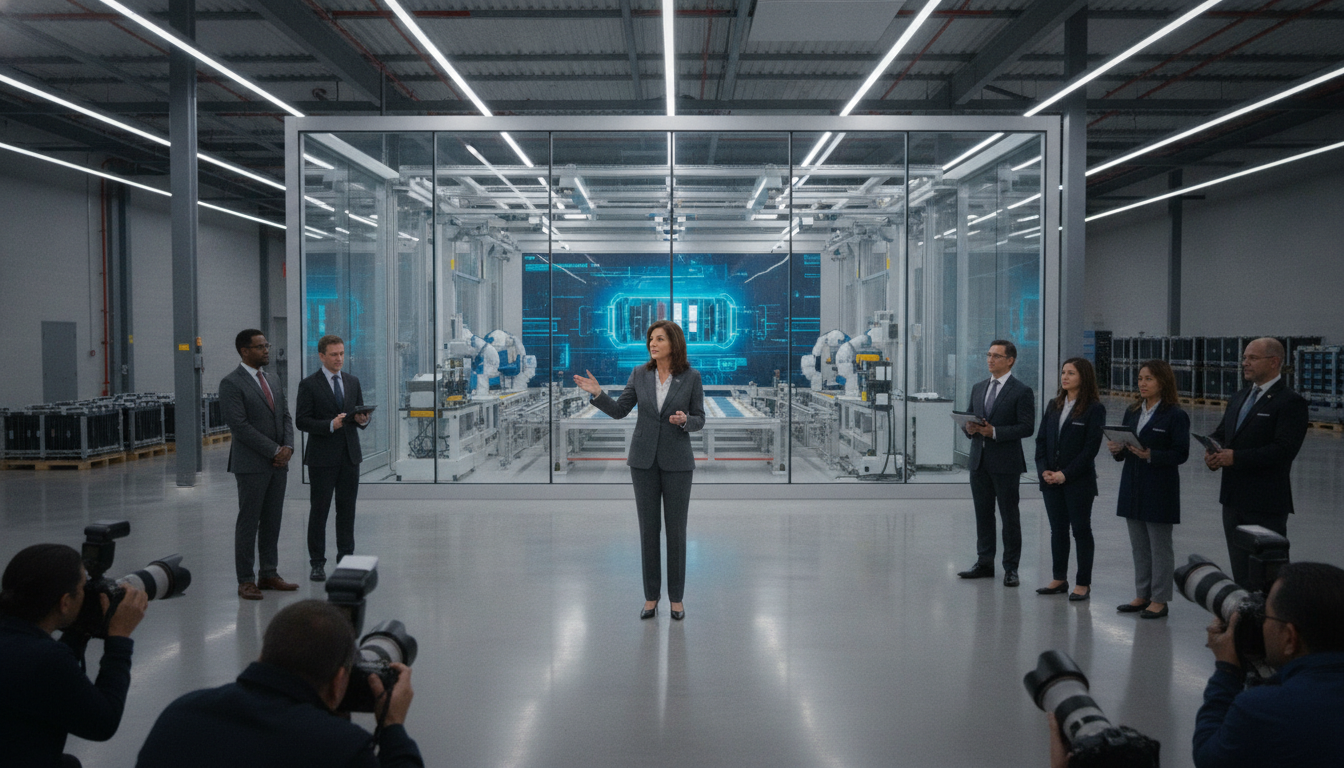
GM’s Battery Cell Development Center is being described internally as the bridge between research laboratories and full-scale cell manufacturing. Company leaders say the center will standardize development workflows, validate new cell chemistries at scale and shorten the timeline for changes to reach assembly lines. By consolidating cell development, testing and pilot production under one roof, GM intends to reduce engineering handoffs that often delay commercialization.
LMR battery chemistry promises lower cost while retaining range
The centerpiece of the technical plan is a move to LMR battery chemistry, which GM says preserves usable range while cutting raw material and manufacturing costs. Executives argue that the chemistry change reduces reliance on pricier inputs and simplifies cell processing, helping produce a lower-cost battery pack without a large range penalty. The company’s estimates suggest the shift could drive thousands of dollars in savings per vehicle when fully implemented.
Consumer price effects could be immediate for key models
GM has highlighted concrete retail examples as part of its cost narrative, indicating that mainstream models could see material price relief. The automaker projects that certain vehicles might be several thousand dollars cheaper with LMR-driven packs and process improvements, a potential boost for affordability at a time when sticker shock has slowed some EV purchases. Lower battery costs would also give GM room to invest in other vehicle features or margin preservation without passing the full burden to buyers.
AI integration aimed at accelerating vehicle development cycles
Beyond chemistry and hardware, GM is expanding its use of artificial intelligence to streamline engineering and product development workflows. The automaker is combining externally sourced AI models with internally developed systems that can be deployed across engineering, simulation and validation tasks. Company product and integration leaders say those tools are intended to shave weeks or months off development cycles, helping faster iterations between the Battery Cell Development Center and vehicle programs.
Scaling production presents supply chain and manufacturing hurdles
Turning chemistry and development gains into volume production will require new supply agreements, factory adjustments and rigorous quality controls, industry analysts note. Securing material sources compatible with LMR formulations and qualifying manufacturing processes at gigafactory scale are nontrivial challenges that typically take years to resolve. GM’s strategy centers on using the development center to derisk those transitions, but the company will still need partners, converters and cell producers to deliver costs and capacity at the level mass-market EVs require.
Implications for competitors and the broader EV market
If GM’s approach achieves its cost and range targets, the ripple effects could be substantial across the industry by shifting the economics of mainstream EVs. Lower-cost battery packs would compress the price gap between internal combustion and electric models, potentially accelerating fleet electrification and nudging other automakers to adopt similar chemistries or process changes. Investors and suppliers will watch closely for early production milestones that validate GM’s assumptions on cost per kilowatt-hour and pack-level durability.
The success of GM’s plan will hinge on execution across chemistry adoption, pilot production, supplier alignment and the effective deployment of AI tools to reduce development friction. Company officials portray the Battery Cell Development Center and LMR chemistry as complementary moves designed to make EVs more affordable and more competitive, but delivering those gains at scale will require steady progress on many technical and commercial fronts.
