
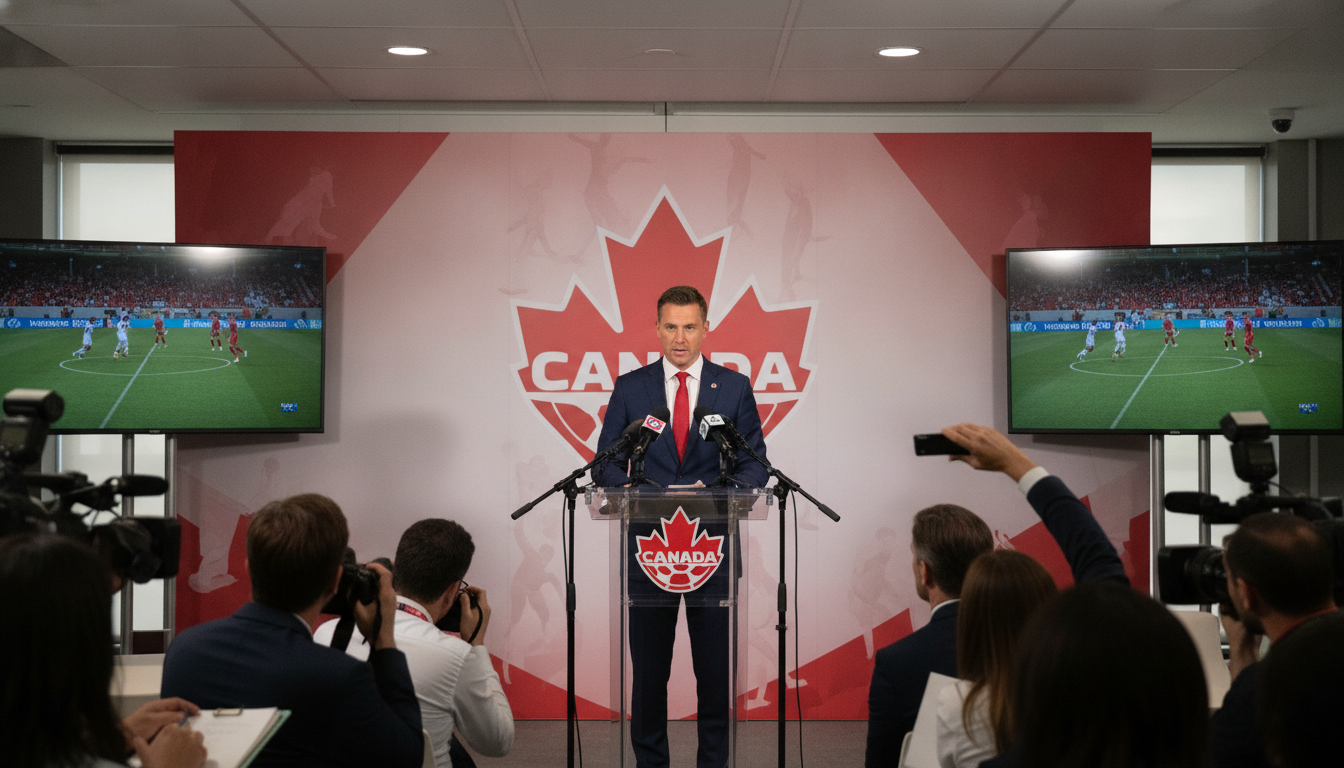
Jesse Marsch details how he has prepared Canada’s men’s team for the 2026 World Cup
Jesse Marsch says a blend of tactical intensity, leadership shaping and targeted friendlies has put Canada’s men’s team in a competitive position for the 2026 World Cup. The head coach outlined his approach in a wide-ranging interview about preparation, emphasizing match exposure and squad identity as pillars of readiness. Marsch’s comments follow a string of training camps and international fixtures intended to sharpen the roster before the tournament at home. (sportsnet.ca)
Marsch frames preparation around high-level opposition
Marsch has prioritized testing Canada against top international sides to accelerate development and reveal tactical vulnerabilities under pressure. He told reporters and interviewers that facing strong opponents is deliberate, designed to elevate standards and replicate World Cup intensity in friendly settings. The strategy reflects a belief that growth comes faster from competitive adversity than from low-risk fixtures. (fifa.com)
Tactical emphasis on transition and pressing patterns
The coach has focused sessions on transition moments — how quickly the team recovers defensively and exploits turnovers to create chances. Tactical drills have stressed coordinated pressing triggers, compact defensive lines, and rapid vertical movement to suit the squad’s athletic core. Marsch described these patterns as foundational to the team’s identity heading into tournament play. (sportsnet.ca)
Physical conditioning and injury management
Canada’s training program has combined high-intensity conditioning with careful load management to reduce injury risk ahead of the World Cup. Staff have monitored minutes in club play, adjusted session intensity, and used targeted recovery protocols for key starters. The emphasis on medical oversight aims to keep players available when the squad convenes for final preparations. (sportsnet.ca)
Leadership structure and final roster thinking
Marsch has invested in cultivating a leadership group capable of enforcing standards on and off the pitch, pairing experienced internationals with emerging talent. He has spoken about the need for “flawless character” in the locker room and the value of a clear hierarchy when decisions tighten during a tournament. Those leadership considerations have informed recent camp invitations and the selection process for the World Cup roster. (sportsnet.ca)
Contract continuity and long-term planning
Canada Soccer recently extended Marsch’s contract through the 2030 World Cup, signaling institutional support for continuity after the 2026 tournament. The extension reflects a wider strategy to build on the foundations being put in place now and to maintain the coaching architecture that delivered this preparation plan. Officials cited the importance of stability as Canada transitions from host duties into a longer-term development phase. (onesoccer.ca)
Match-simulation work and opponent scouting
Scouting and match simulation have been central to camp work, with analysts preparing bespoke plans for different opponent profiles Canada is likely to face. Training weeks have included situational scrimmages that replicate opponent tendencies and set-piece scenarios expected at the World Cup. The staff’s preparatory emphasis is designed to shorten tactical learning curves once the tournament begins. (sportsnet.ca)
The preparations that Marsch described combine short-term urgency with a plan for durability and continuity, reflecting Canada Soccer’s dual aims of performing at the home World Cup and building a program that endures beyond 2026. Players and staff now face a condensed run of fixtures and final camps before squad submission, with every training session assessed against the demands of tournament football. The next weeks will test whether the team’s identity and conditioning translate into match-day results on soccer’s biggest stage.
