
Fairchild Semiconductor’s Enduring Legacy: How a 1957 Breakaway Built Silicon Valley
Fairchild Semiconductor catalyzed the modern tech industry, and its influence is still visible more than six decades after its 1957 founding. The company’s open engineering culture and torrent of spin-offs created companies that later became household names, and industry veterans say the chain of innovation began there. Observers now credit Fairchild with shaping the processor, the personal computer and the smartphone through the firms it seeded.
Fairchild Semiconductor’s 1957 breakaway and mission
Fairchild was born in 1957 when a group of engineers left their previous employer to start a company that would do things differently. The founders sought a flatter, more collaborative engineering environment and prioritized rapid innovation over corporate hierarchy. That approach set a new model for technology entrepreneurship and laboratory-driven product development.
A culture of openness turned into a startup engine
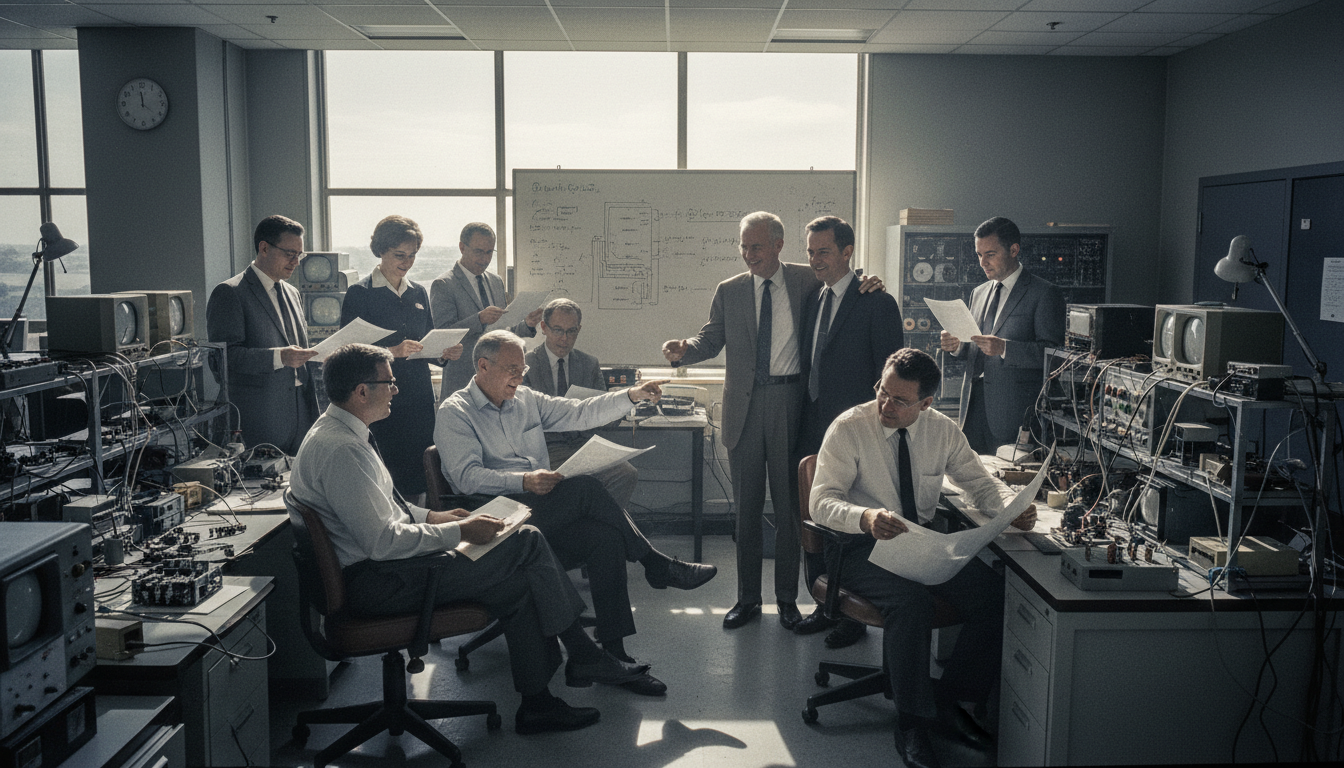
The company’s internal culture, characterized by open exchange of ideas and hands-on problem solving, became a defining myth in the Valley. Engineers learned to move quickly, to tolerate failure, and to spin out new ventures when opportunities or disagreements arose. Over time that pattern created a self-reinforcing ecosystem in which employees-turned-founders exported knowledge, capital and talent across multiple new firms.
Spin-offs that reshaped the technology landscape
From Fairchild’s ranks came more than a hundred new companies that together transformed electronics and computing. Notable descendants include Hewlett-Packard, Intel, AMD, National Semiconductor and prominent venture firms such as Sequoia, among others. These spin-offs carried forward both technical breakthroughs and business practices that multiplied Fairchild’s original influence across decades.
Industry leaders’ assessment of Fairchild’s role
Executives and historians frequently point to Fairchild when tracing the lineage of Silicon Valley’s core industries. “Without Fairchild there would be no processor, no computer, no smartphone,” said Jan Becker, the contemporary steward of the historic site, summarizing the consensus among many regional observers. That assessment reflects both Fairchild’s technical contributions—most notably in semiconductor design and manufacturing—and its cultural imprint on how companies are built and scaled.
From laboratory innovation to commercial products
Fairchild’s work accelerated the transition from laboratory inventions to mass-market electronics. Its development and refinement of semiconductor processes lowered costs and improved reliability, enabling chips to be manufactured at scale. Those advances made possible the microprocessors and memory devices that underpin modern computing devices, setting the technical foundation for later consumer electronics.
Enduring lessons for entrepreneurs and engineers
The Fairchild story is often cited in contemporary discussions about how firms should manage talent, encourage experimentation and structure incentives. The company demonstrated that a permissive environment for engineers can accelerate invention, but it also illustrated the tension between preserving institutional knowledge and allowing founder-led departures. Policymakers, investors and founders draw different lessons from that balance when shaping today’s innovation strategies.
How Fairchild shaped regional economic growth
Beyond technology, Fairchild contributed to the economic transformation of the San Francisco Bay Area into a global tech hub. The web of alumni-founded companies attracted venture capital, skilled workers and service industries that clustered around semiconductor and computing firms. That concentration produced a multiplier effect: more startups generated more exits, more funding, and more opportunities for successive generations of entrepreneurs.
Preserving the history while looking forward
Sites associated with Fairchild’s early operations have become focal points for reflection on the origins of modern tech, and care has been taken to document oral histories and archival materials. Historians emphasize the need to preserve both the company’s tangible artifacts and the stories of individual engineers. At the same time, contemporary firms study Fairchild’s model to inform their approaches to innovation and governance.
Fairchild Semiconductor’s legacy is a mix of technological breakthroughs, a distinct workplace culture and an outsized role in launching companies that would later define personal computing and consumer electronics. Its 1957 founding set in motion a pattern of talent mobility and entrepreneurial creation that still shapes how new technologies are developed and scaled. The company’s influence remains a touchstone in debates about innovation policy, corporate culture and the origins of Silicon Valley.
