
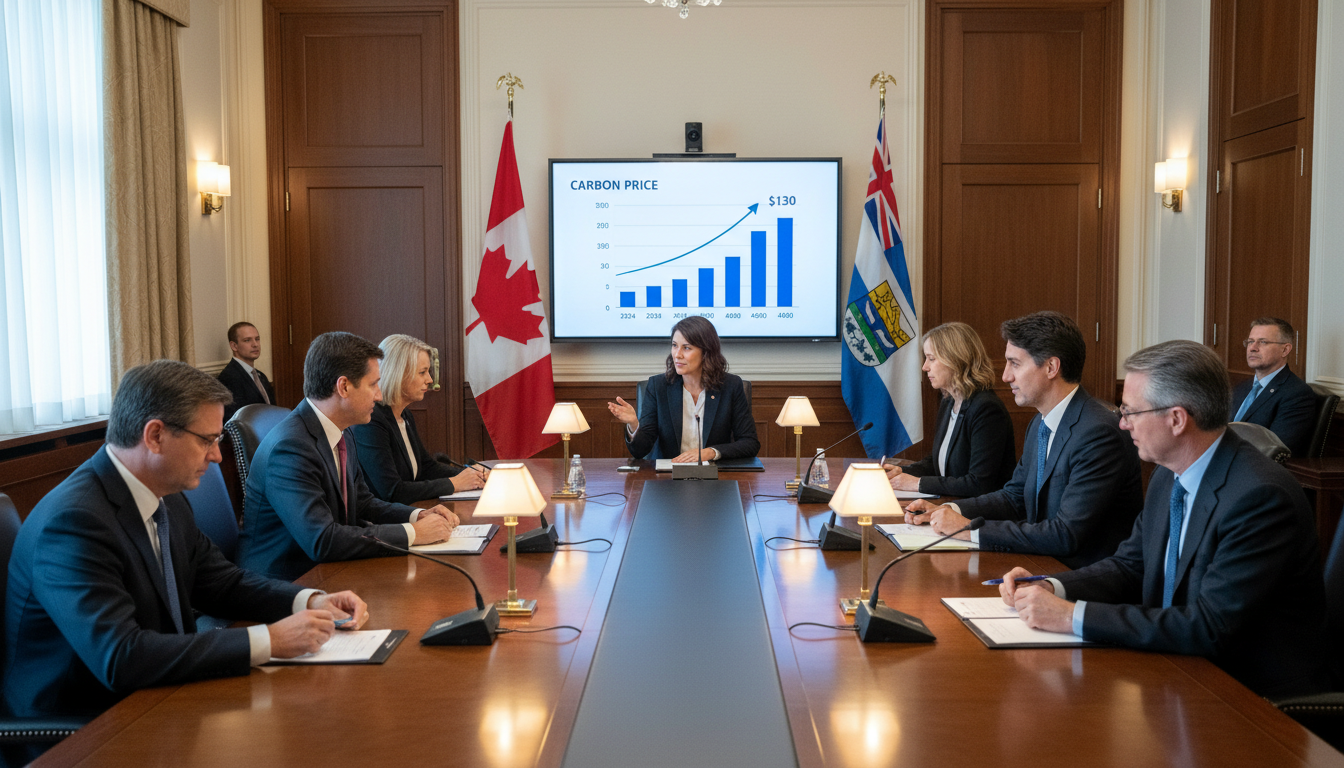
Canada and Alberta agree to raise carbon price to $130 per tonne by 2040
Ottawa and Alberta aim to raise the carbon price to $130 per tonne by 2040 as part of a memorandum tied to a proposed Pacific pipeline.
Agreement sets $130 carbon price target by 2040
Canada and Alberta have reached a memorandum of understanding that would see the effective carbon price for large emitters rise to $130 per tonne by 2040.
The target replaces earlier federal ambitions for a steeper near-term increase and is linked to a broader deal that also clears a path for a potential pipeline to the Pacific.
Government officials say implementation details remain to be finalized, including the timetable for intermediate increases.
Departure from earlier $170 target for 2030
The $130-per-tonne pledge marks a clear shift from previous federal policy that sought a displayed price of $170 per tonne by 2030.
That earlier trajectory was designed to support Canada’s pledge to cut greenhouse gas emissions 40 percent below 2005 levels by 2030 and to reach net zero by 2050.
Climate analysts warn the slower pace could undermine the likelihood of meeting those targets unless offset by stronger measures elsewhere.
Alberta’s market realities and how the carbon price functions
Alberta is responsible for applying carbon pricing to large industrial emitters and currently has a displayed charge for excess emissions set at $95 per tonne.
However, a surplus of carbon credits in Alberta’s market has meant many businesses were able to meet obligations by buying credits at much lower traded prices—often around $40 per tonne.
Under the agreement, the government intends to lift that effective market price toward $130 per tonne over the coming years, with sources indicating an interim rise to about $100 per tonne as an early step.
Regional political fallout and competitiveness concerns
British Columbia’s premier has voiced concerns that a special pricing arrangement for Alberta could give its industries a significant competitive advantage.
Provincial leaders in regions that compete with Alberta for major projects warn that divergent carbon prices can influence investment decisions and bids for resource contracts.
Observers say how broadly the new price schedule applies—whether only to Alberta or across multiple provinces—will determine its impact on interprovincial competitiveness.
Responses from environmental groups and opposition politicians
Climate experts and advocacy groups have criticized the slower timeline, calling an increase to $130 by 2040 “too little, too late” to meet near-term emissions goals.
Opposition politicians and environmentalists described the shift as a rollback of the country’s climate ambition, framing the memorandum as a concession that risks derailing recent progress.
Experts urging more aggressive action say an earlier, higher carbon price would send stronger signals to industry and accelerate emissions reductions.
Industry perspective and investment arguments
Industry representatives argue the existing pricing structure and abundant credit availability have kept costs manageable while allowing companies to invest in operational improvements.
Proponents of the memorandum contend that predictable, phased increases in the carbon price will support long-term investment in Alberta’s energy sector without creating abrupt cost shocks.
Energy-sector advocates also emphasize the need to maintain reliable energy supplies while attracting capital for both production and lower-emission technologies.
Next steps, regulatory changes and a pending announcement
The memorandum was signed by Prime Minister Mark Carney and Alberta Premier Danielle Smith on November 27, with several technical points still under negotiation.
Officials extended an initial deadline for agreement on outstanding items in order to secure “a good deal” and to refine provisions on environmental assessments and project approvals.
Government documents released recently propose reforms to federal impact assessment rules intended to streamline approvals, while final terms of the carbon pricing timetable are expected to be announced in the coming days.
The memorandum signals a major negotiation milestone between Ottawa and Alberta but leaves critical questions unresolved about national climate strategy.
How the planned $130-per-tonne effective price will be applied across provinces, and whether earlier, larger increases will be reinstated, will determine whether this arrangement accelerates or slows Canada’s emissions reductions in the crucial decade ahead.
