
Ottawa unveils “Fonds pour un Canada fort” to finance major national projects
Ottawa will launch the Fonds pour un Canada fort to co-invest with private partners in major national projects; Canadians can invest and deficits are easing.
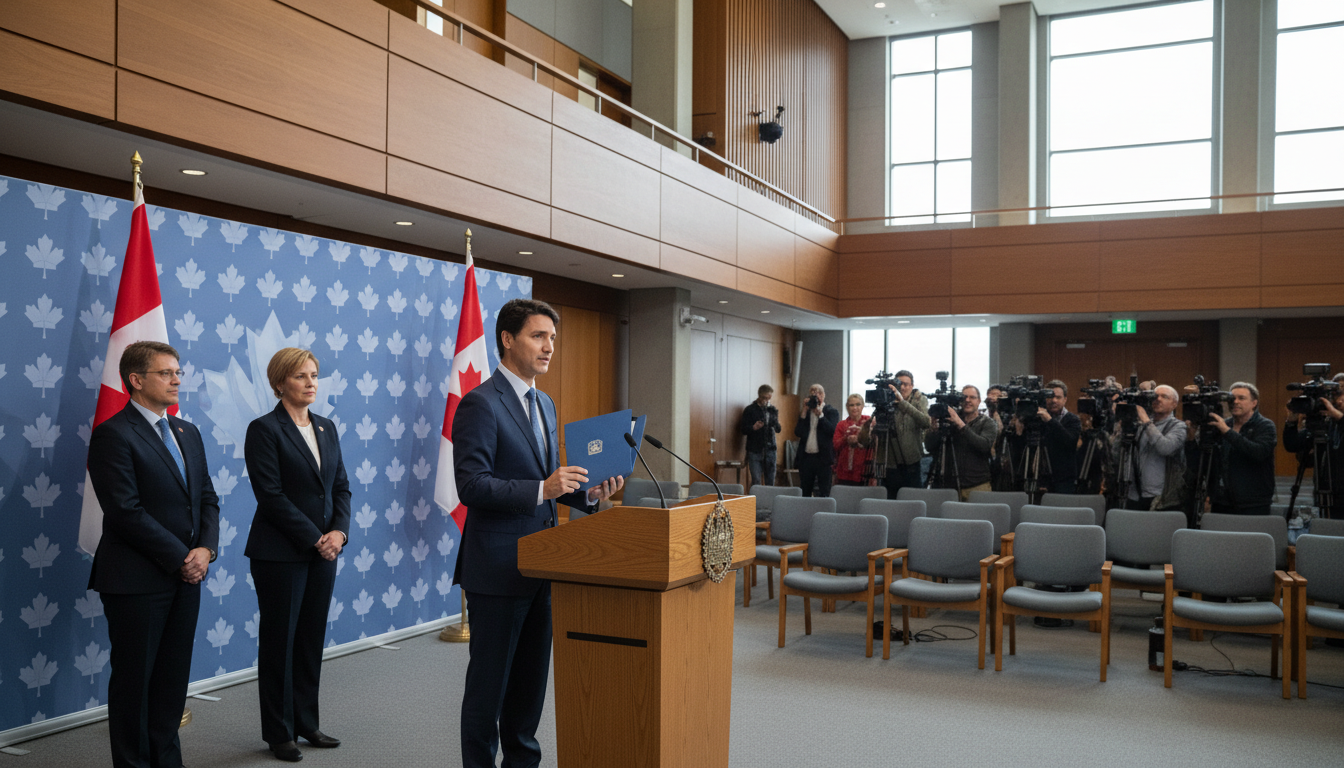
Canada’s federal government announced on April 27, 2026, the creation of the Fonds pour un Canada fort, a new public-private investment vehicle designed to fund large projects of national interest. Prime Minister Mark Carney said the fund aims to bolster Canada’s resilience and reduce strategic dependence, and he indicated Canadians will be able to contribute and receive financial returns. Details on governance, the size of the fund, and projected returns were not released, and the government scheduled press briefings for the morning of April 27, 2026. Officials also signalled that an economic update due the following day will show a narrower deficit outlook than set out in last year’s budget.
Ottawa announces a public-private investment vehicle
The federal announcement frames the Fonds pour un Canada fort as a mechanism to leverage private capital alongside public funds for infrastructure, defence, housing and other nationally significant projects. Government officials say the vehicle will be structured to attract institutional investors and retail participants alike, though the final investment model has yet to be disclosed. Prime Minister Mark Carney described the fund as a tool to “make Canada stronger, more resilient and more independent,” language that underscores strategic and economic priorities. The timing of the announcement, ahead of an economic update, suggests Ottawa intends to pair fiscal signals with a new financing instrument.
How Canadians will be invited to invest
Ottawa has said individual Canadians will be permitted to invest in the fund and can expect a return on their contributions, with officials indicating entry thresholds could be low enough to accommodate small savers. The government has not published prospectus-level information or risk disclosures, and no timeline for retail subscription windows was provided at the briefing. Financial analysts caution that retail access to large-scale project financing typically involves trade-offs between liquidity, return and transparency, and that clear terms will be needed to attract broad public participation. Consumer protection and independent oversight are likely to be focal points as the fund’s design is finalized.
Economic update expected to show smaller deficits
Finance Minister François-Philippe Champagne is scheduled to present an economic update that officials say will show deficits smaller than those projected in the November budget. The budget documents had forecast a deficit of $78.3 billion for 2025–26 and $65.4 billion for the current fiscal year. Government sources indicate the fiscal shortfall for 2026–27 will be revised downward modestly, while the timetable for returning to an operational balance in 2028–29 will remain intact. Economists in the private sector have pointed to stronger-than-expected revenue collections as a key factor contributing to the improved outlook.
Shifts in spending priorities and strategic aims
The fund announcement accompanies a stated shift in Ottawa’s spending priorities, with an emphasis on increasing defence, infrastructure and housing investments while trimming some current expenditures. Officials said these reallocations are part of a broader plan to reduce reliance on foreign supply chains and to strengthen domestic capacity. Observers note that pairing direct spending with a dedicated investment vehicle is intended to multiply financing options and accelerate delivery of capital-intensive projects. How new commitments will interact with existing programs and provincial responsibilities will be closely watched by stakeholders.
Unanswered questions on governance and project selection
Significant questions remain about how the Fonds pour un Canada fort will be governed, how projects will be chosen, and what safeguards will be in place to manage political and financial risks. Key considerations include the composition of any independent board, procurement and competitive-bidding rules, transparency standards, and mechanisms for auditing performance. Experts say clear conflict-of-interest rules and public reporting will be essential if the federal government expects both institutional and retail investors to commit meaningful capital. The absence of immediate detail on expected returns or loss-sharing arrangements leaves investors and policy analysts seeking rapid clarity.
Next steps, timelines and scrutiny ahead
Officials said the immediate next steps include publishing a framework for the fund and releasing technical details in the weeks ahead, following consultations with provincial governments and private-sector partners. The Prime Minister’s and Finance Minister’s morning briefings on April 27, 2026, were intended to outline high-level goals, with a fuller economic update scheduled for April 28, 2026. Parliamentary committees, provincial premiers and municipal leaders are likely to press for specifics about how projects will be prioritized and how regional needs will be balanced. Financial markets and credit-rating observers will monitor whether the fund reduces pressure on public borrowing or introduces contingent liabilities.
The federal initiative represents a notable pivot toward harnessing private capital for public priorities while offering Canadians a chance to participate directly in major projects. As Ottawa moves to publish the fund’s structure and the economic update, the debate will centre on balancing speed of delivery with governance, risk management and equitable access across regions.
