
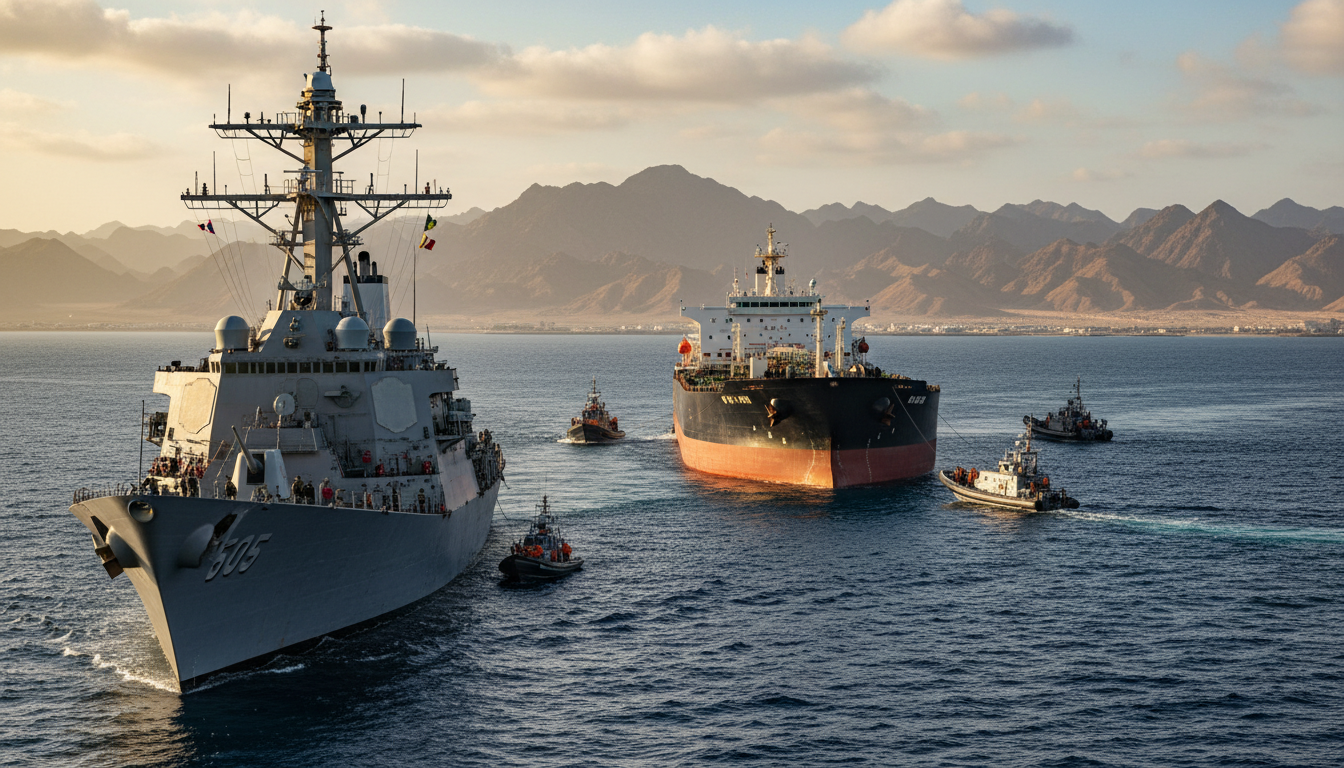
U.S.-Iran Standoff Deepens in the Strait of Hormuz After U.S. Inspection of Sanctioned Tanker
U.S.-Iran standoff in the Strait of Hormuz deepens as Washington inspects a sanctioned tanker; shipping traffic collapses and talks in Islamabad remain stalled.
The United States and Iran intensified a maritime standoff Thursday in the Strait of Hormuz, with Tehran refusing to reopen the chokepoint while U.S. forces continue to block Iranian ports and interdict shipping. The dispute centers on recent U.S. inspections of vessels carrying Iranian crude and Tehran’s unilateral restrictions on transits, a combination that has sharply reduced commercial traffic through the Strait of Hormuz. Diplomats and defence officials warn that the impasse risks prolonging regional instability and undermining plans to resume negotiations in Islamabad.
U.S. Boarding of M/T Majestic X Reported
U.S. defence officials said American forces intercepted and conducted a right-of-visit inspection overnight of the stateless tanker M/T Majestic X, which was carrying oil alleged to originate from Iran. The operation, carried out in the Indian Ocean, follows a separate interdiction earlier in the week and reflects a pattern of stepped-up maritime enforcement by Washington. CENTCOM described the action as consistent with measures to enforce sanctions and to prevent sanctioned cargoes from reaching markets.
Tehran Rejects Reopening While Ports Remain Blocked
Iran’s leadership has made clear it will not allow a free flow through the Strait of Hormuz while it perceives the ceasefire and maritime access to be violated, according to statements circulated by Tehran. Iranian parliamentarians and officials have reiterated that vessels require explicit authorization to transit the strait, and they have taken unilateral steps to control passage. Tehran also reports having collected revenue from newly imposed transit fees, which some financial outlets say can amount to multimillion-dollar payments per ship.
Commercial Traffic Plummets; Data Shows Sharp Decline
Commercial transits through the Strait of Hormuz have plunged since restrictions tightened, with just 18 passages recorded between Sunday and Wednesday, averaging roughly 4.5 ships per day, according to compiled shipping data cited by international news agencies. That contrasts with an average of about nine daily transits between March 1 and April 17 and with roughly 120 daily transits in peacetime as tracked by maritime industry sources. Shipping analysts warn that sustained disruption to this artery, a principal conduit for global hydrocarbon shipments, will continue to pressure energy markets and logistics chains.
Naval Confrontations and Seizures Escalate Tensions
The past week has seen a string of maritime incidents: Iran reported seizing two vessels in the Strait, and another ship came under fire off the coast of Oman. Washington, for its part, has ordered dozens of tankers—31 vessels according to U.S. military statements—to return to port as part of measures intended to enforce sanctions and protect navigational safety. Military analysts say these tit-for-tat actions increase the risk of miscalculation at sea and complicate any near-term effort to de-escalate the confrontation.
Markets and Defence Assessments Respond to Disruption
The immediate market reaction was visible: oil prices jumped more than 4 percent in early Asian trading on Thursday before stabilizing, reflecting investors’ concern about supply risk. U.S. defence briefings to lawmakers, some of which have been described in media reports, suggest that even if an agreement were reached, clearing ordnance and hazards from the Strait of Hormuz could take months and would pose logistical challenges for global energy flows. The Pentagon has publicly disputed portions of some classified briefings that have been leaked, describing the dissemination as inaccurate or misleading.
Diplomatic Talks in Islamabad Stalled as Security Tightens
Planned negotiations between U.S. and Iranian delegations, originally expected to resume in Islamabad after an initial session on April 11, remain in suspense despite optimistic public remarks by U.S. political leaders. Pakistan has placed the capital under heightened security, and local authorities have kept key zones locked down while awaiting possible arrivals of diplomatic teams. Islamabad’s government has expressed hope that talks could lead to a formal agreement to halt hostilities, but officials acknowledge that the maritime standoff complicates any rapid return to sustained diplomacy.
Surges of violence on other fronts of the wider conflict have compounded diplomatic difficulties and humanitarian concerns, with fresh casualties reported in Lebanon even amid localized ceasefires. International mediators are warning that without tangible progress at sea and on the negotiating table, civilian suffering and market volatility are likely to continue.
