
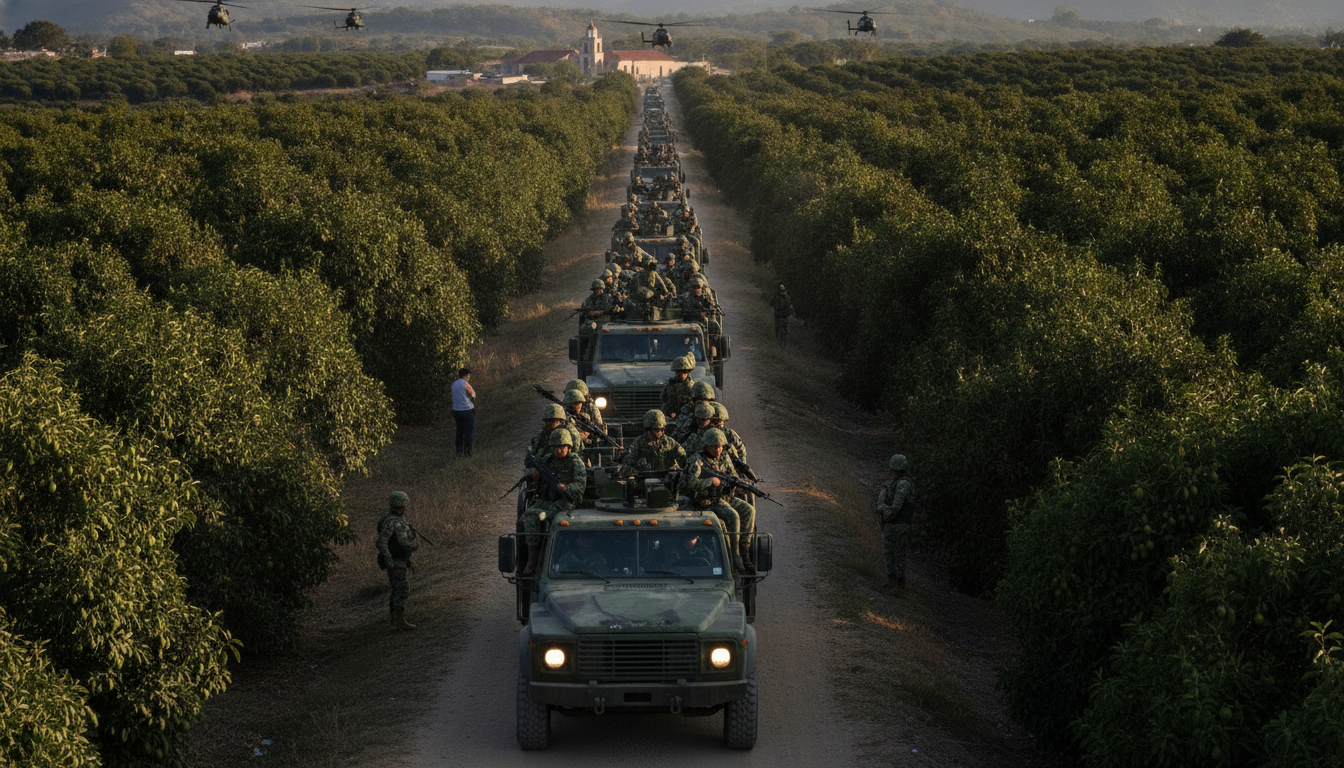
Avocado exports frozen after U.S. suspends inspections; Mexico deploys more than 1,500 troops
Mexico deployed over 1,500 troops after the U.S. suspended avocado export inspections, freezing shipments to the U.S. market and risking thousands of jobs.
The deployment came after U.S. authorities halted export inspections of Mexican avocados on security grounds, immediately interrupting flows to the country’s largest market and placing pressure on a multibillion-dollar sector dependent on cross-border trade.
Troop deployment in principal producing region
Mexico announced the deployment of more than 1,500 soldiers to its main avocado-producing state amid the inspection suspension announced by U.S. officials on August 7, 2026.
The government framed the move as a security measure intended to restore safe access for inspection teams and to protect exporters, workers and transportation corridors serving the export sector.
U.S. halt on export inspections and reasoning
U.S. regulators suspended export inspections, citing unresolved security concerns that they said threatened the safety of inspection personnel and the integrity of shipments bound for U.S. buyers.
The suspension immediately stopped the official inspection process required for fresh produce moving into the United States, leaving exporters unable to clear shipments and creating a bottleneck at collection and packing facilities.
Immediate economic impact on growers and workers
The freeze in avocado exports threatens thousands of jobs across orchards, packing houses and logistics chains that rely on steady shipments to the U.S. market.
Industry analysts estimate the avocado sector represents a multibillion-dollar slice of export revenues, with disruptions reverberating through rural economies and ancillary services such as trucking, cold storage and customs brokerage.
Supply chain disruptions and market ripple effects
With inspections suspended, exporters face halted containers, full warehouses and the prospect of fruit spoiling before it can be rerouted or sold domestically.
Retailers and wholesalers in the United States may encounter shortages if the suspension persists, potentially pushing up retail prices and prompting buyers to seek alternate sourcing, while smaller producers may be hardest hit by the sudden cash-flow interruption.
Government and industry actions under way
Mexican authorities have deployed troops to protect inspection routes and packing facilities and to demonstrate a commitment to resolving the security issues cited by U.S. officials.
Industry groups are urging expedited talks with U.S. regulators and are exploring contingency plans, including enhanced private security measures, additional documentation and temporary diversion to other export markets where possible.
Diplomatic and regulatory stakes
The suspension places diplomatic pressure on both governments to negotiate a swift and verifiable path for inspectors to return to the field without risk, balancing security with the economic imperative of reopening trade.
Restoration of inspections will likely require concrete security guarantees and joint protocols that allow U.S. teams to operate safely, while Mexican authorities weigh the economic cost of prolonged interruption against the resources needed to secure the infrastructure.
The coming days will be critical for growers, exporters and workers who depend on avocado exports for income and for businesses in the United States that rely on steady supply.
