
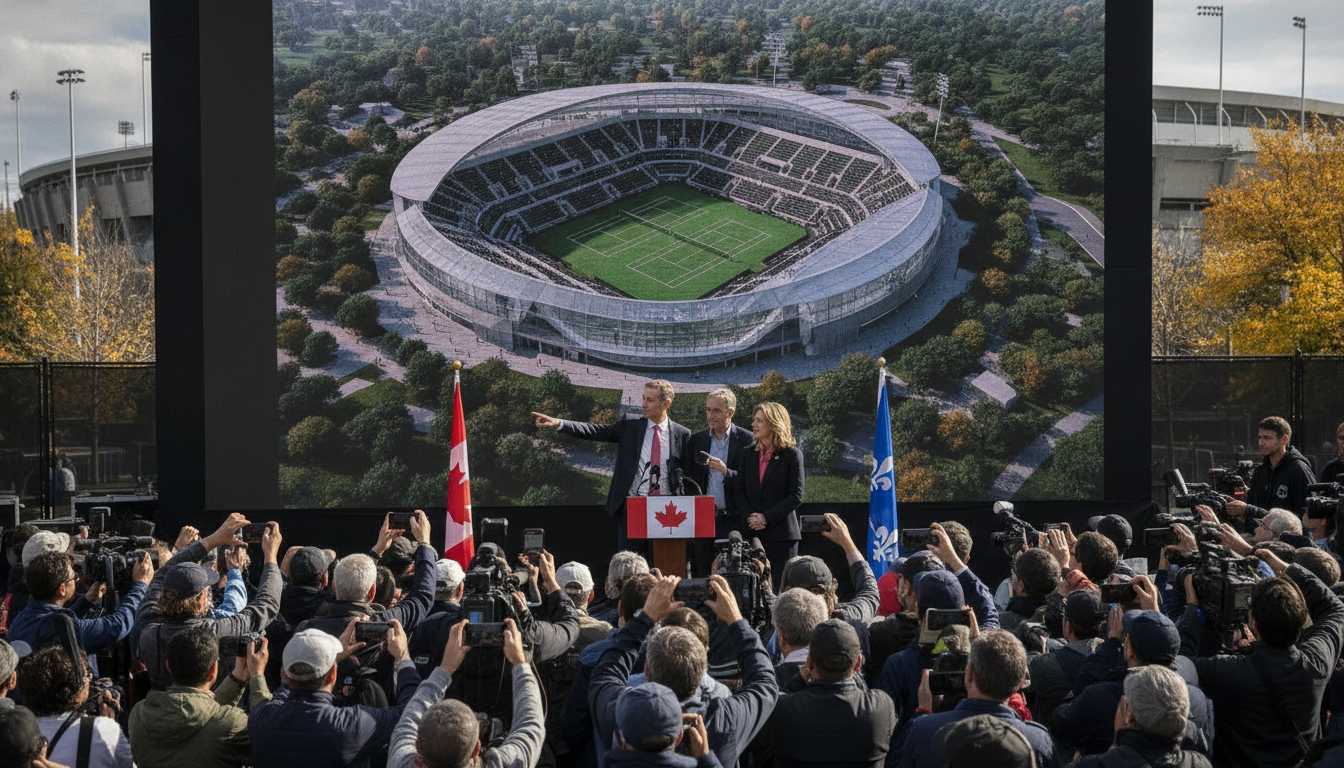
Tennis Canada reveals Parc Jarry renovation plan for 15,000 seat stadium and sparks neighbourhood opposition
Tennis Canada proposes a Parc Jarry renovation featuring a 15,000 seat retractable roof stadium, a $400 million price tag and a fight over park space and community access
The city of Montreal is facing a heated debate after Tennis Canada unveiled concept designs for a major Parc Jarry renovation that would replace the existing central court with a new retractable roof stadium seating 15,000 people. Tennis Canada says the plans are architectural concepts intended to bring the tournament up to Masters 1000 standards, but local residents and park advocates warn the expansion would alter public space and increase the built footprint. The proposal comes as the tournament moves to a longer 12 day format and seeks to accommodate more players and spectators.
New stadium proposal revealed
Tennis Canada’s concepts call for a new central stadium with a retractable roof and a capacity roughly 25 percent larger than the present court. The organization frames the work as a complete redevelopment of its historic site at Parc Jarry intended to modernize facilities for a Masters 1000 event. Tournament director Valérie Tétreault has said the current site has reached the limits of what can be done without a major rebuild.
Park footprint and access changes
Under the concept layouts the tournament’s occupation of Parc Jarry would grow from 22 percent of the park to about 27 percent during the event. The proposed stadium would sit on an adjacent baseball diamond and close to the park’s only western entrance, altering how local residents access green space in that sector. Opponents argue the shift would effectively place a stadium façade facing neighbourhood streets and reduce the park’s seasonal openness.
Community concerns and local opposition
A growing civic mobilization has formed around concerns for Parc Jarry and surrounding neighbourhoods, especially Parc Extension which borders the park. Coalition leader Michel Lafleur cautions that the park serves many residents who lack private outdoor space and that an oversized stadium risks turning the park into an arena perimeter rather than a welcoming public garden. Some neighbours have expressed distrust of the project’s scale and its implications for long term park governance, and one resident has put his house on the market citing unease.
Design, capacity and cost estimates
The concept package envisions a 15,000 seat central stadium, a secondary court expanded from 4,000 to 7,000 seats and a reconfigured central area converted into an esplanade with a smaller 2,000 seat court that would preserve sightlines to Mount Royal. Tennis Canada has offered a preliminary cost estimate of about 400 million dollars for the overall program, with roughly half allocated to the new stadium and supporting structures. Officials stress that the designs are initial concepts and that further technical studies and cost refinement will follow.
Funding model and government response
Tennis Montreal, the nonprofit organizing body, intends to fund about 10 percent of the project through its own capital and private investment and seeks the remainder from higher levels of government. The proposed split would see Quebec and Ottawa each contribute about 40 percent and the City of Montreal cover roughly 10 percent. Municipal and federal representatives have signaled conditional support while stressing scrutiny, and provincial and federal offices have said they will review formal proposals. Montreal’s mayoral representative has endorsed the ambition to keep major sporting events in the city but warned that support is not unconditional.
Site alternatives and operational questions
Tennis Canada says it has reviewed other site options, including discussions with the Olympic Park team, but has flagged technical limitations such as the non retractable roof at the Stade olympique that would prevent it from hosting tournament matches. Organizers also noted that relocating the event could be more expensive than expanding at Parc Jarry, though business leaders see potential benefits in better shared infrastructure near the Olympic precinct. The organization has cited a feasibility study but has not released its full findings to the public.
The plan’s backers argue modernized facilities would help Montreal compete with other Masters 1000 venues, and point to the tournament’s sustained popularity despite the 2026 edition not breaking attendance records. They also say the proposed three season stadium could offer community access outside the tournament window and create new public green space in parts of the park that would be redesigned.
Local groups remain skeptical that promises of greater year round access will materialize once the capital is committed. Critics warn that large stadium infrastructure tends to lock in future decisions and change how parks are managed, leaving neighbourhoods with limited leverage over subsequent developments. As the debate continues, officials say further consultations and technical work will determine whether and how the Parc Jarry renovation proceeds.
