
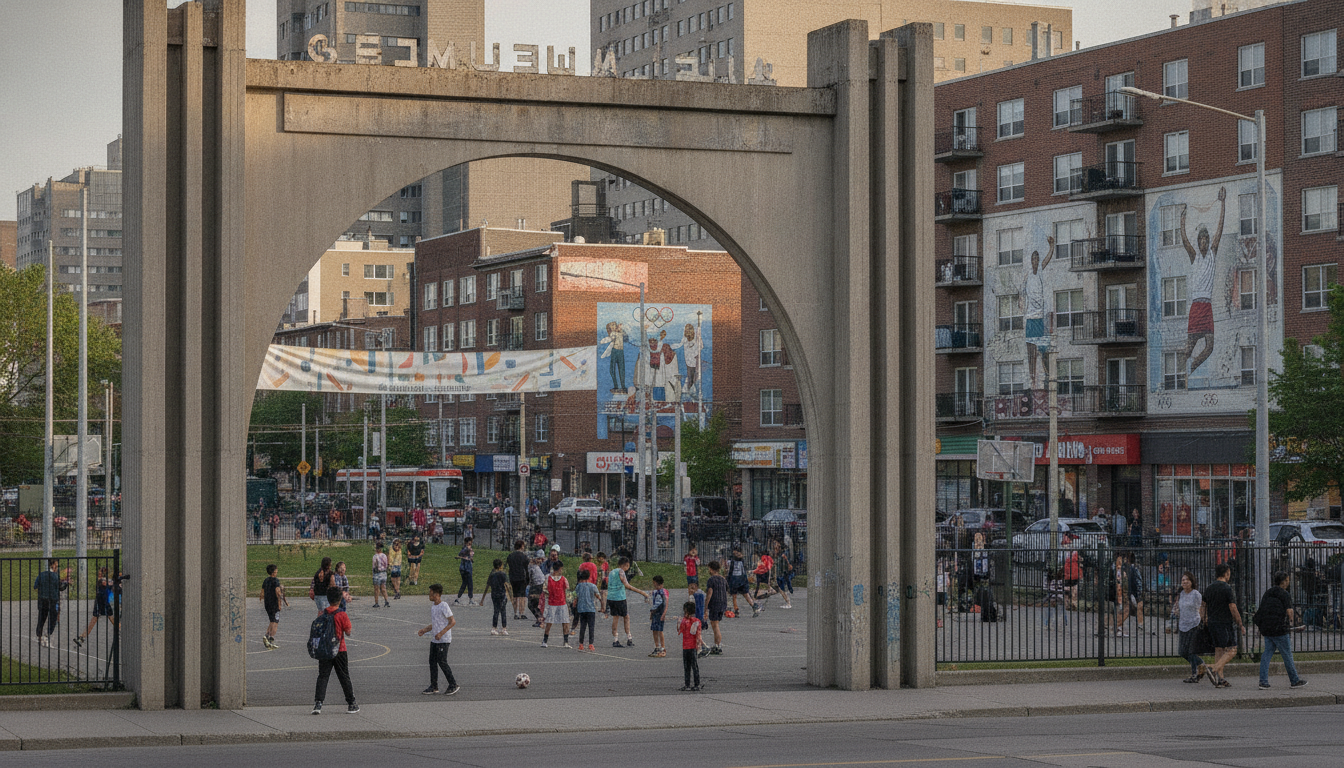
Claude-Robillard complex: How Montreal’s 1976 Olympic venue became a neighbourhood sports hub
Claude-Robillard complex remains central to Montreal’s 1976 Olympic legacy — welcoming millions and serving as a versatile, community-focused sports hub.
Fifty years after the closing ceremonies of the 1976 Montreal Olympics, the Claude-Robillard complex stands as one of the city’s most enduring sporting legacies. The Claude-Robillard complex, built for Olympic handball and water polo, has been absorbed into daily life and now anchors community sport in Ahuntsic–Cartierville. What began as competition infrastructure has become a neighbourhood centre used by clubs, summer camps and high-performance athletes alike.
Facilities built for competition, repurposed for community use
The complex was designed to host Olympic events but its layout lent itself to a wider set of uses. It includes an Olympic-size pool, an arena, tennis courts, indoor athletics tracks and multiple gymnasiums, allowing a mix of recreation and elite training under one roof. City planners and users point to that variety as the key reason many disciplines continue to operate there decades after 1976.
A centre of daily life in Montreal neighbourhoods
Local sports associations and summer programs now occupy the complex year-round, offering activities from judo and fencing to track and field and aquatics. Before the pandemic and the start of staged renovations, the City of Montreal reported roughly 2.7 million visits to the site in 2019, underscoring the facility’s heavy community use. For residents, the building is less a relic and more a familiar civic resource that shapes daily routines.
Design choices that extended usefulness
Architectural and operational decisions made during construction helped keep the complex adaptable. Rather than locking spaces into a single, competition-only configuration, designers incorporated smaller halls and flexible courts that can host many sports. Urban planning professor Gérard Beaudet notes that preserving polyvalence — the ability to accommodate diverse activities — is what allowed the complex to remain relevant beyond the Olympic schedule.
Heritage recognition and modest physical change
Montreal’s urban heritage statement has cited the complex for its patrimonial interest, highlighting its authenticity and relatively unaltered appearance since the 1970s. Heritage advocates say that while the building shows its era, careful maintenance has preserved key features and the “1970s feeling” many visitors still sense. That intact character has supported arguments for both preservation and selective upgrading rather than wholesale replacement.
Ongoing renovations and future timelines
The facility entered a phased renovation program that is scheduled to continue through 2029, according to municipal renovation plans. These works are intended to modernize systems and improve accessibility while maintaining the complex’s multi-use character. City officials have framed the upgrades as necessary investments to sustain daily operations and support both community programs and high-performance sport into the next decade.
Other 1976 sites still in active use across Montreal
Claude-Robillard is one of several Olympic-era installations that remain part of Montreal’s urban fabric. The Jean-Drapeau pool on Île Sainte-Hélène continues to host swimmers, and the Parc olympique still houses the stadium, pool and velodrome that defined the Games’ profile. The Étienne-Desmarteau sports centre likewise sits embedded within a residential neighbourhood, illustrating how Olympic facilities have been stitched into everyday city life.
Local heritage groups and officials emphasize that the Olympic legacy is most visible in facilities that people use regularly rather than in monuments visited only on special occasions. Taïka Baillargeon of Héritage Montréal has described the Claude-Robillard complex as “extremely popular” and noted its authenticity is a strength, since the site has been “kept in fairly good condition” with only limited transformation over time.
Lessons from Claude-Robillard for future sports planning
Urban planners point to the complex as a case study in how legacy facilities can succeed: build for flexibility, integrate into community programming immediately after the event and plan periodic upgrades that respect the original structure. Montréal’s experience suggests that the most durable Olympic assets are those designed to be used by neighbours, clubs and recreational athletes long after the international spotlight has moved on. Maintaining that dual purpose requires ongoing funding, thoughtful governance and community engagement.
As Montreal marks the 50th anniversary of the 1976 Games, reflections on the city’s Olympic inheritance tend to focus less on grand symbolism than on everyday use. In neighborhoods across the city, Claude-Robillard and other venues are valued for the programs and opportunities they provide, a quiet but tangible reminder that Olympic infrastructure can become lasting civic infrastructure when adaptability and community needs guide planning and preservation.
