
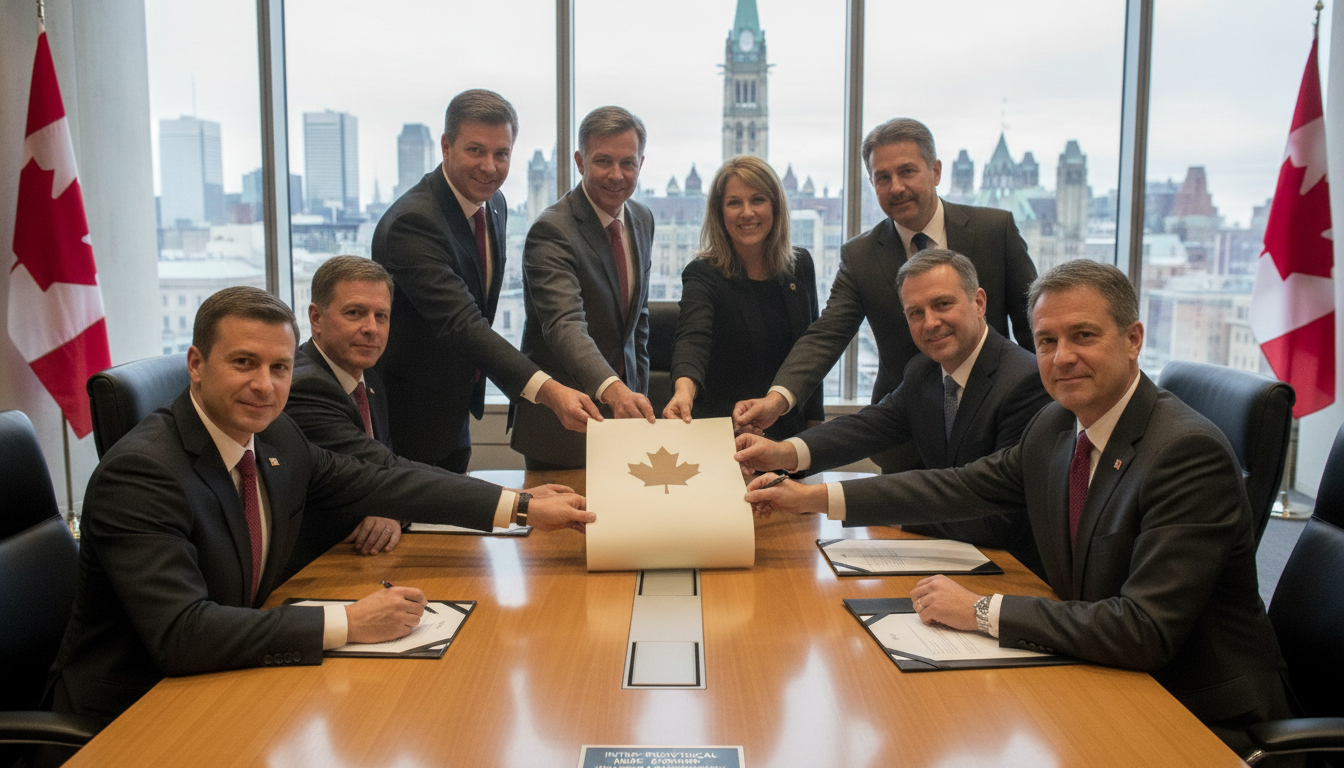
Direct-to-Consumer Alcohol Sales Expand After Premiers Sign Interprovincial MOU
Direct-to-consumer alcohol sales are set to grow across Canada after a majority of provincial premiers signed a memorandum of understanding this week to ease interprovincial barriers, opening new retail channels for small brewers, distillers and winemakers. The agreement lets consumers order spirits, beer and wine directly from producers in other provinces, using verified shipping methods such as Canada Post. Producers say the change will give them more access to domestic customers at a time when international trade tensions and tariffs have disrupted traditional export markets.
Alberta distillers pivot after U.S. tariff threats
Just south of Edmonton, a small Leduc County distillery that once targeted the U.S. market has shifted strategy amid tariff uncertainty. Founder Geoff Stewart said threats of steep U.S. tariffs led his company to deepen partnerships in Japan rather than risk unpredictability south of the border. That pivot underscores how external trade measures pushed some Canadian producers to accelerate diversification of sales channels.
The new interprovincial agreement offers a domestic lifeline by making it easier for producers to sell directly to consumers across provincial lines. For businesses that depend on local tasting-room sales and tourism, being able to ship a bottle to a customer in another province changes immediate revenue prospects. Distillers and breweries that have long navigated provincial liquor board rules say the MOU reduces at least one layer of complexity in reaching Canadian buyers.
Premiers sign MOU to allow cross province direct sales
A majority of premiers signed the memorandum of understanding this week, committing provincial governments to steps that will permit direct-to-consumer alcohol sales between provinces. Under the MOU, producers can use Canada Post and other verified carriers to deliver alcoholic beverages to adult consumers in other provinces provided age verification is secured. Several premiers framed the move as a way to modernize long-standing restrictions and stimulate small business growth.
Not every province has fully committed: Quebec and the Yukon signalled they are working toward participation but have not yet signed on. Provincial participation remains a key variable because liquor regulation and retail systems remain largely under provincial control. Officials say the memorandum is a framework rather than a single law, so work remains to align procedures, identify permitted carriers and confirm tax and regulatory responsibilities.
Small producers welcome new routes but want broader market access
Local producers say being able to ship a few bottles by post is meaningful, but they want the opportunity to scale sales to restaurants, bars and retail outlets beyond their home province. Geoff Stewart described the difference between sending a single bottle to a consumer and shipping a pallet to an Ontario liquor store, calling the latter a transformational business opportunity. Smaller producers view expanded business-to-business access as the logical next step after direct consumer shipments are established.
Many craft breweries and boutique wineries argue that getting on-shelf in another province’s stores would create sustained, scalable demand rather than one-off sales. Producers also note practical concerns about logistics, insurance and returns, which are more complicated for bulk shipments than for single-bottle orders. Industry representatives say they will press provincial governments to move quickly from permitting individual shipments to facilitating wholesale arrangements that support larger volumes.
Economists say reduced barriers will sharpen competition
Economists watching the change say reducing interprovincial barriers will introduce more competition into provincial liquor markets, with potential benefits for consumers. Moshe Lander, who has tracked the policy debate, said promises made last year — including targets set around Canada Day 2025 — have not been fully realized, but the recent MOU represents progress. Lander argues that a more competitive marketplace should push prices down and expand product choice as producers can access new domestic buyers without relying on intermediaries.
At the same time, analysts caution that competition gains will depend on how deeply provinces harmonize rules on taxation, labelling and distribution. If provinces only permit limited direct-to-consumer shipping while maintaining protected retail monopolies for large-scale wholesale and store sales, consumer benefits may be muted. Observers add that regulatory fragmentation could create new opportunities for arbitrage but also additional compliance costs that smaller producers will need to manage.
Regulatory work remains as provinces align rules and distribution
The memorandum creates a pathway but not an instant fix; provinces must still translate the agreement into operational rules and integrate verification systems. Age verification procedures, excise tax remittance, labelling standards and returns policies are among the technical matters provincial governments must sort out. Canada Post’s existing age-verification delivery model has been cited by producers as a workable mechanism for single-bottle shipments, but coordinating that system with differing provincial requirements remains a task.
Tax treatment will be a focal point in negotiations because provincial taxes and markups have long been tied to local retail systems. Provinces will need to agree on how to collect and remit sales taxes and any liquor-specific levies when a purchase crosses a provincial boundary. Officials also face the practical job of ensuring that carriers, producers and enforcement agencies can reliably confirm legal drinking age at the point of delivery and track compliance.
Market implications for consumers and tourism
For consumers, the most immediate change should be greater access to small-batch products previously limited to regional markets. Shoppers who once relied on travel or chance discovery to buy a boutique gin or limited-release beer will be able to order directly from the producer, expanding selection. That could boost product discovery and niche brands’ market reach while encouraging craft tourism as consumers seek out producers they discover online.
The shift could also influence the hospitality sector, depending on whether provinces open wholesale sale channels that let restaurants, bars and liquor stores purchase directly from out-of-province producers. If wholesale access follows, menus and store shelves could diversify faster, adding regional specialties that were previously difficult to source. Hospitality operators have signalled interest in more flexible supply arrangements, which could help local producers reach consistent, repeat buyers.
Business strategies shift as exports face headwinds
Trade tensions and tariff threats have already changed how some Canadian producers plan growth, prompting a re-evaluation of export markets and domestic strategies. In addition to pursuing new international partners, several producers told reporters they are doubling down on building direct relationships with Canadian consumers. For some firms, that means investing in e-commerce platforms, digital marketing and logistics partnerships to handle age-verified shipping across provinces.
Direct-to-consumer sales also give producers more control over branding, pricing and customer data than traditional wholesale channels. Small companies that once relied on distributors to move product now see an opportunity to own the customer relationship from order to delivery. That control can help firms collect feedback, build loyalty and respond more rapidly to demand trends while retaining a higher share of revenue per sale.
Challenges ahead for scaling shipments and wholesale trade
Despite the optimism, industry stakeholders acknowledge substantial hurdles remain before the MOU translates into consistent nationwide access. Interprovincial taxation, differing definitions of permitted retail activity and legacy retail monopolies will complicate efforts to scale. Producers wanting to sell thousands of bottles to a retailer in another province face regulatory and logistical steps that are more burdensome than a single consumer delivery.
Insurance, liability and returns policies also vary and are areas where producers must find workable, cost-effective solutions. Some provinces may require producer licensing or registration to permit wholesale shipments, adding administrative overhead that could disadvantage the smallest firms. Advocates argue that streamlined, harmonized registration and reporting systems would reduce barriers and lower compliance costs for companies across the country.
What governments say and what comes next
Provincial leaders have framed the MOU as a commitment to modernize commerce and support small businesses, but officials emphasize that detailed rules will follow. With Quebec and the Yukon not yet signed, governments stressed the need for careful legal and administrative work before broad implementation. Officials say they will engage with industry groups, carriers and consumer advocates to hammer out the operational steps needed to make interprovincial direct sales routine.
Observers expect phased implementation that starts with individual direct-to-consumer shipments and later addresses wholesale pathways and integrated tax remittances. Policy timelines will vary by province and could depend on legislative or regulatory changes in some jurisdictions. The pace of change will ultimately hinge on provincial capacity to align systems and on producer readiness to scale compliance and logistics for cross-border sales.
The recent memorandum opens a new chapter for Canada’s alcohol sector by formalizing a path to interprovincial direct sales, but delivering full benefits will require continued cooperation and concrete regulatory work. Producers welcome the new channels but press for clearer rules that allow them to move beyond single-bottle shipments to wholesale relationships. Economists say increased competition should lift consumer choice and pressure prices, but the outcome will depend on how provinces translate the MOU into functioning, harmonized systems.
