
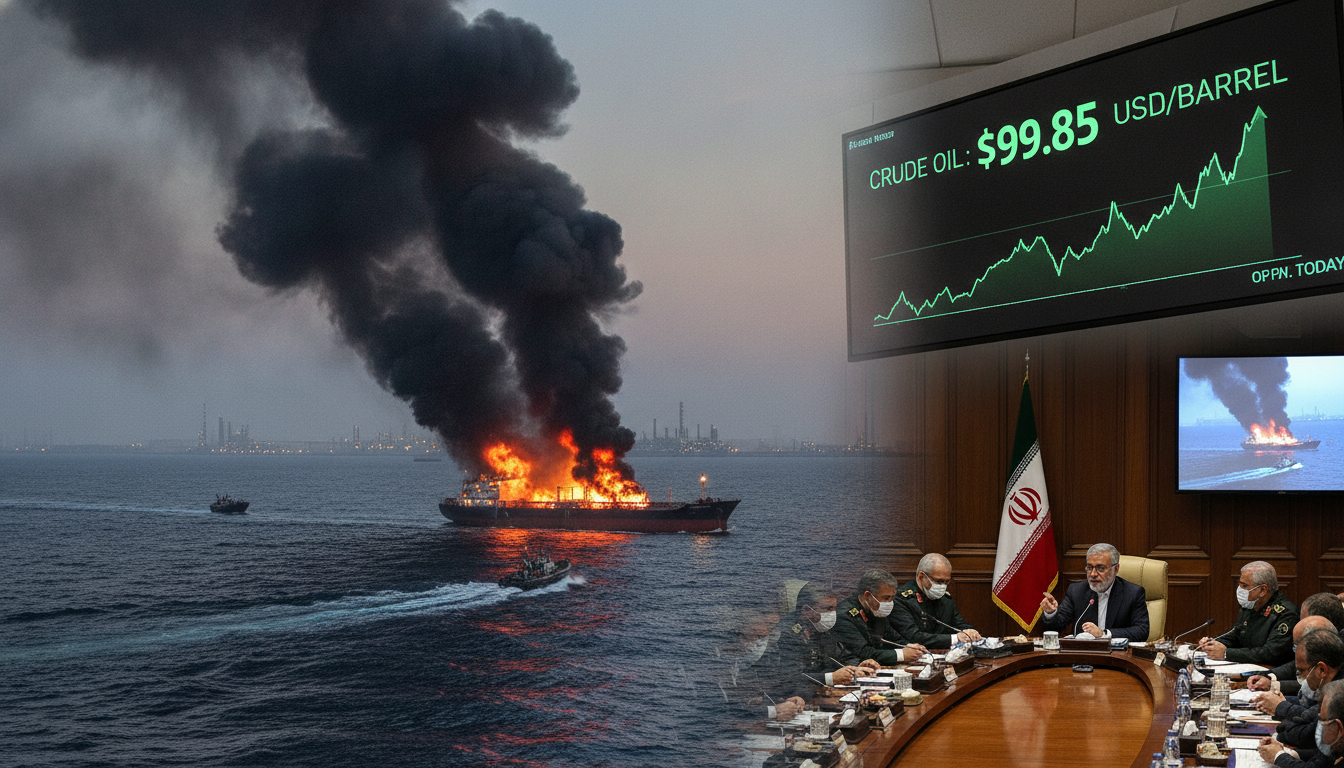
Iran-U.S. clashes escalate as Tehran vows ongoing retaliation and Houthis strike Saudi tankers
Iran-U.S. clashes intensify as Tehran vows ongoing retaliation and Houthi strikes hit Saudi tankers in the Red Sea, disrupting trade and pushing oil prices higher.
The Iranian government vowed to continue reprisals against the United States as long as U.S. attacks persist, while Houthi rebels in Yemen claimed a new campaign in the Red Sea targeting two Saudi-owned oil tankers. The latest round of Iran-U.S. clashes, which resumed on July 7, has severely disrupted shipping through the Strait of Hormuz and the Red Sea, prompting military manoeuvres and a sharp reaction in energy markets. Global benchmark Brent crude climbed toward the mid‑$90s per barrel amid fears of a prolonged blockade of key export routes.
Iran vows continued retaliation
Iranian military officials said they would sustain strikes against U.S. targets and infrastructure until attacks on Iranian coastal areas and facilities stop. Iranian statements described multiple strikes over successive nights and claimed hits on foreign-based systems and storage sites as part of a broader campaign. The Islamic Revolutionary Guard Corps also reported intercepting vessels in the Strait of Hormuz, reinforcing Tehran’s intent to control passage through the waterway.
Iranian accounts included claims of strikes on depots in Kuwait and missile and radar targets in Jordan, and Iranian state media reported explosions near the country’s nuclear facilities and border regions. Tehran has signalled it intends to collect what it calls a heavy price from any adversary that continues offensive action, framing the campaign as a defensive necessity. U.S. officials have disputed parts of those accounts while acknowledging a sustained exchange of strikes and counter‑strikes across multiple fronts.
Houthis open a Red Sea front against Saudi tankers
Houthi forces in Yemen announced they struck two Saudi tankers identified as the Encelia and the Layla after Riyadh moved to maintain shipments. The rebels said the attacks were intended to enforce a maritime blockade they declared against Saudi shipping, escalating the conflict beyond the Gulf and into the Red Sea. Saudi authorities confirmed at least one of the tankers was targeted and reported an on‑board fire after the strike, according to official statements.
The Houthi campaign has forced numerous commercial vessels to alter course, with shipping data showing several ships turning back near the Bab el‑Mandeb strait. That secondary front increases the complexity of the maritime security picture for commercial traffic linking the Arabian Sea, Red Sea and Suez Canal. Industry sources warn that continued Houthi operations could keep insurers’ war‑risk premiums elevated and push carriers to seek longer, costlier routes.
Shipping chokepoints and oil market effects
The dispute over the Strait of Hormuz — a corridor that once handled about one‑fifth of the world’s oil trade — and the new Red Sea attacks together threaten a major portion of global seaborne energy supplies. Traders reacted quickly: Brent crude rose toward US$96 per barrel during early trading as markets priced in the potential for sustained supply disruptions. Analysts say the combination of restricted passage through Hormuz and a Red Sea blockade would raise shipping costs and create longer lead times for deliveries to Europe and Asia.
CENTCOM and other Western navies have stepped up patrols, and commercial operators are adjusting routes and schedules to avoid contested waters. Shipping firms face higher operating expenses and the prospect of delayed cargoes, which could translate into broader inflationary pressures if the confrontation continues. Energy markets will remain sensitive to daily developments, keeping prices volatile until a credible de‑escalation takes hold.
Military strikes and international maritime actions
U.S. forces have conducted strikes aimed at degrading Iran’s capacity to threaten merchant shipping, saying the operations are intended to protect civilian mariners and commercial vessels transiting strategic chokepoints. CENTCOM reported rerouting nine commercial ships and detaining one vessel to prevent movements that could increase risk to crews or violate maritime security measures. Washington has also imposed a form of maritime containment around Iran in response to Tehran’s attempts to control passage.
Regional militaries reported incoming missiles and drones in neighbouring countries, with Jordan and Kuwait noting intercepts and attempted strikes in their airspace. Iran’s reported strikes on sites in and near neighbouring states have prompted concern about broader escalation, and analysts warn that miscalculations at sea or in the air could trigger wider confrontation. Naval commanders say they are balancing stepped‑up defenses with efforts to keep vital sea lanes open for commerce.
Diplomatic efforts and budgetary implications
Diplomatic channels remain active even as hostilities persist, with the Pakistan government and the sultanate of Oman among states urging restraint and offering to mediate de‑escalation talks. Islamabad and Muscat have signalled cautious optimism about preserving a path to negotiations, while international partners press for measures to limit spillover. U.S. officials, meanwhile, have underscored that Tehran is not prepared to return to a negotiated settlement, according to comments by senior diplomats at regional forums.
On the fiscal side, U.S. lawmakers approved a $95‑billion budget framework that includes funding for the Pentagon to sustain operations tied to the conflict, while U.S. defence estimates put the immediate costs to date in the tens of billions of dollars. The financial burden and the geopolitical uncertainty are prompting governments and private sector actors to review contingency plans and supply‑chain exposures, particularly in energy‑dependent economies.
The course of the Iran‑U.S. clashes and the parallel Houthi operations in the Red Sea will shape regional stability and the near‑term outlook for global trade and energy prices. Until a credible halt to attacks is negotiated or achieved, shipping companies, governments and markets are likely to operate under heightened alert and elevated costs.
