
City confirms elm tree disease cases; removals and testing underway with provincial and CFIA support
City parks officials say elm tree disease detected in multiple neighbourhoods, prompting intensified surveillance, removals and coordinated testing with provincial authorities and the Canadian Food Inspection Agency.
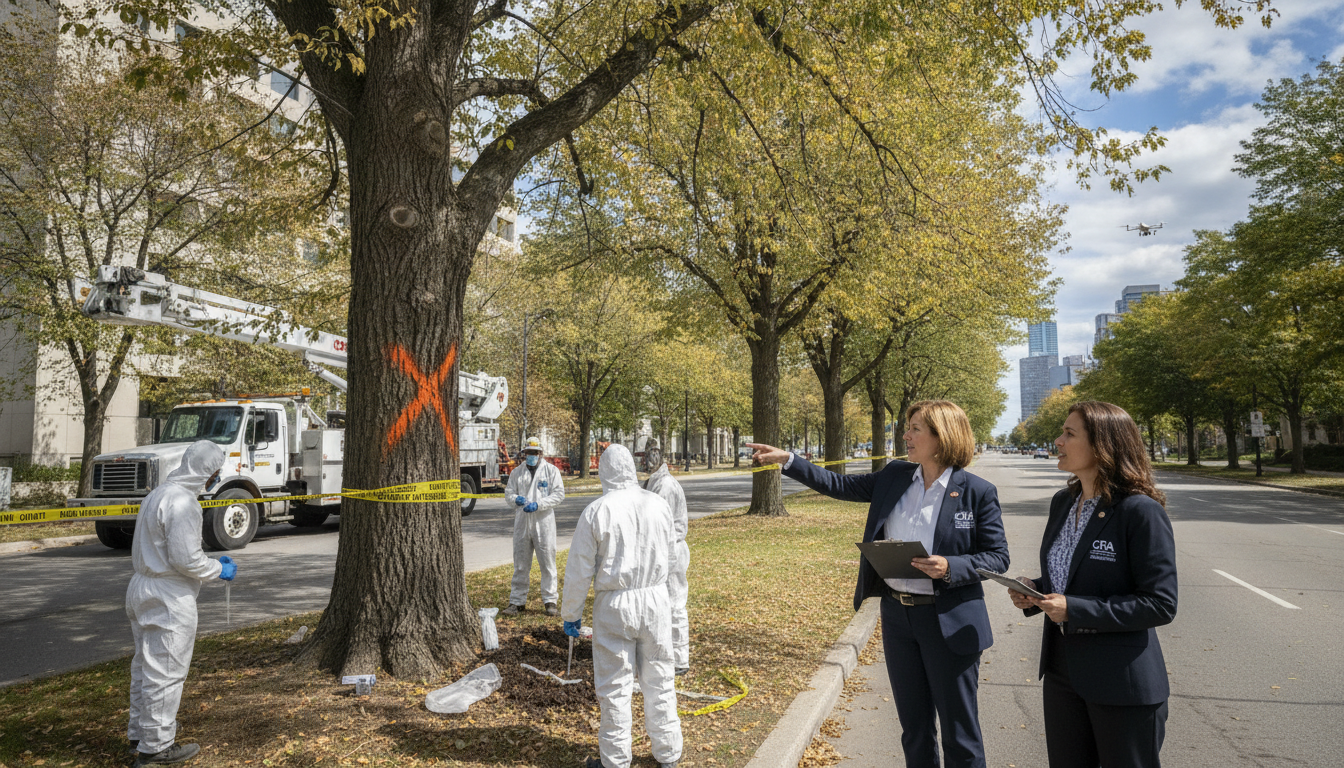
The city’s parks and urban forestry department has identified cases of elm tree disease following an intensified round of surveillance across municipal lands, the department confirmed on Thursday. Nicole Fraser, acting director of parks and urban forestry, said an integrated team of arborists, urban foresters and pest-management biologists carried out the detections and the city has begun targeted removals and daily assessments. Officials said testing is ongoing in coordination with the provincial plant-health authorities and the Canadian Food Inspection Agency to determine the extent and cause of the infections.
How the cases were detected
The department ramped up monitoring this season after routine inspections flagged several elm trees showing signs of decline. Trained crews applied diagnostic protocols, combining visual inspection with sample collection for laboratory testing. Fraser said the integrated approach—bringing together arboriculture, urban forestry and pest specialists—helped confirm the presence of disease indicators that warranted removal and further testing.
The detection process included mapping affected sites and tagging trees for follow-up. Field teams documented symptoms such as branch dieback, wilting and canopy thinning to prioritize removals that reduce the risk of spread. Samples from suspect trees were dispatched to provincial and federal labs to identify pathogens or insect vectors.
Scope of affected areas and tree removals
City officials declined to specify exact neighbourhoods pending laboratory confirmation, but said the cases are spread across multiple municipal wards. Removals have begun in locations where trees presented clear, advanced symptoms and posed public-safety risks. Crews are focusing first on high-traffic streets, parks and other areas where falling limbs could endanger residents or infrastructure.
The parks department emphasized that removal decisions are based on severity and the likelihood of preventing further spread. Trees slated for removal are being documented, and officials said staff will re-plant where feasible, following best practices for species selection to diversify the urban canopy.
Testing, surveillance and daily assessments
Daily field assessments are now part of the response, with teams re-inspecting surrounding trees for early signs of infection. Laboratory testing aims to identify whether a fungal pathogen, insect pest or another factor is responsible. Results from diagnostic labs will guide containment measures and inform whether additional treatments or quarantines are necessary.
Fraser noted that surveillance intensity will remain elevated until test results provide clarity. The municipality is also increasing public reporting channels, asking residents to notify the parks department if they observe elms with wilting, yellowing foliage, or other unusual symptoms.
Public guidance for residents and property owners
Officials urged property owners to avoid moving elm wood, firewood or green waste from affected areas to other locations, as transport can facilitate the spread of disease and pests. Residents are asked to report suspect trees through the city’s tree-reporting hotline and to refrain from attempting removals themselves due to safety and biosecurity concerns.
The parks department advised homeowners with elm trees to monitor them closely and to consult certified arborists for assessment and maintenance. Where treatment options exist, such as targeted pruning or injections for certain pests and pathogens, licensed professionals can advise on feasibility and timing.
Coordination with provincial and federal agencies
The city confirmed it is working closely with the province’s plant-health branch and the Canadian Food Inspection Agency to ensure a coordinated response. Those agencies can assist with diagnostic testing, epidemiological tracing and guidance on regulatory measures like quarantines or movement restrictions. The CFIA’s involvement signals the department’s commitment to follow federal plant-protection protocols where required.
Officials said joint meetings are ongoing to align containment strategy, public communication and next steps depending on laboratory findings. That collaboration will also influence funding and technical resources available for long-term management and canopy restoration.
Potential impact on the urban canopy and next steps
Large-scale loss of elm trees could affect canopy cover, shade, biodiversity and streetscape character, especially in older neighbourhoods where elms are prominent. City foresters said they will review replanting plans that favour diverse species mixes to reduce future vulnerability. The parks department is preparing a multi-year recovery plan that may include strategic replanting, community engagement and funding proposals for restoration.
Once lab results are returned, officials expect to release a detailed update outlining the pathogen or pest involved, the number of confirmed cases, and any recommended quarantines or control measures. In the meantime, surveillance and removals will continue and the city is urging public cooperation to limit movement of elm material.
The parks department says it will provide regular updates as test results become available and as crews complete scheduled removals and assessments.
