
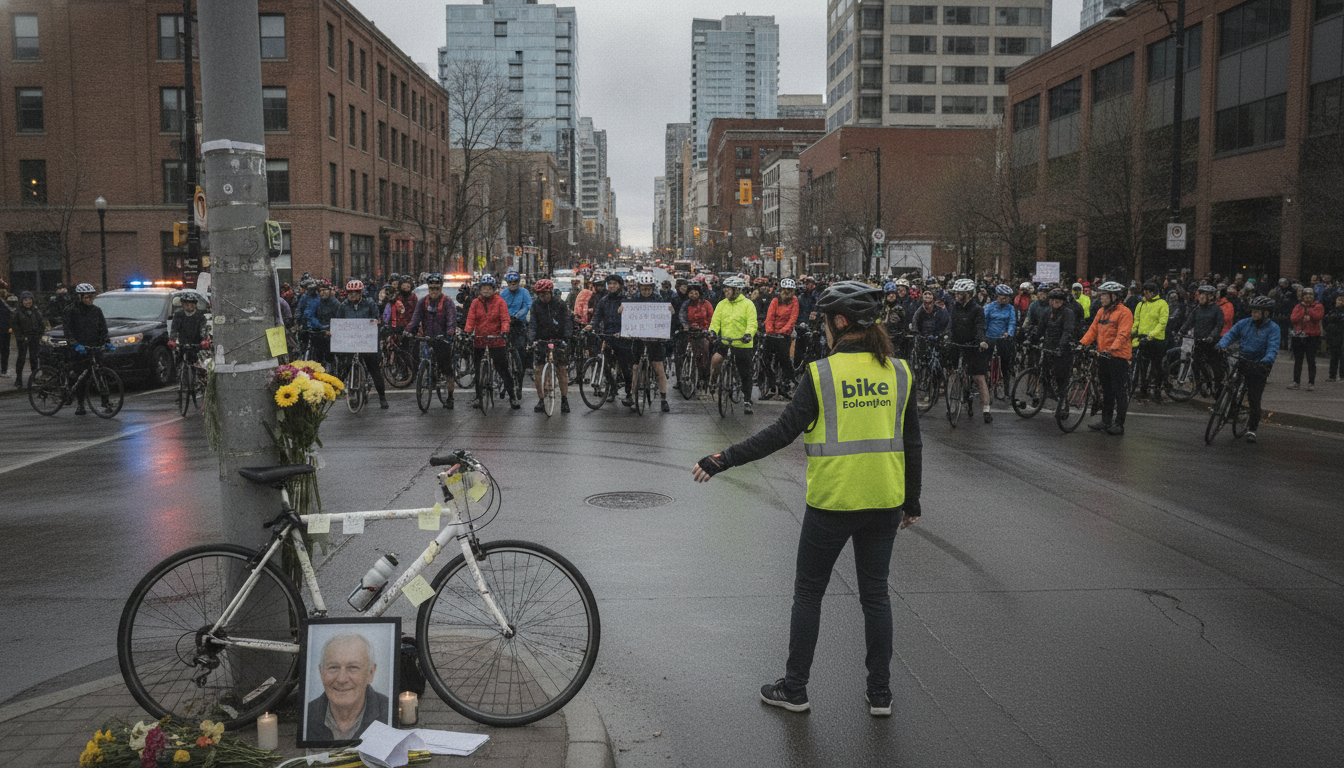
Edmonton cycling group mourns Alfred Reisdorf after fatal collision, urges safer streets
Bike Edmonton mourns the death of Alfred Reisdorf and calls for safer cycling infrastructure following the tragic collision that claimed his life, the group said. Alfred Reisdorf’s name was included in a statement from Bike Edmonton as the organization extended condolences and urged action to prevent further losses. The statement highlighted the basic right of all road users to arrive at their destination safely, regardless of transportation mode.
Bike Edmonton issues public condolence
Coreen Shewfelt, community workshop co-director at Bike Edmonton, spoke on behalf of the organization, offering sympathy to Reisdorf’s family and friends. Shewfelt said the group sends "our deepest condolences" to those mourning his untimely death and emphasized the human cost of collisions involving cyclists. The statement framed Reisdorf’s death as part of a broader safety concern for people who travel by bike, foot, transit or vehicle.
Bike Edmonton used the statement to reiterate its mission of supporting cyclists through education and community workshops. The organization positioned the remarks as both an expression of grief and a reminder of the everyday risks encountered on local streets. The message underlined that travel safety is a shared responsibility involving policymakers, road designers and the public.
Statement did not detail collision circumstances
The news release from Bike Edmonton did not include specific details about the collision that killed Alfred Reisdorf. It focused on condolences and a call for safety, rather than describing the timing, location or contributing factors of the incident. That absence leaves basic questions unanswered for the public about what happened and who is investigating.
Local authorities or traffic investigators were not cited in the Bike Edmonton statement, and the organization did not offer updates on any ongoing inquiries. Journalistic standards require caution where information is incomplete, so a full account of the circumstances will depend on official statements or police releases. Community members and advocates are likely to seek further specifics as any investigation proceeds.
Advocates renew calls for safer streets
The statement from Bike Edmonton frames Reisdorf’s death as a reminder of the need for safer transportation infrastructure. Advocates typically point to protected bike lanes, reduced speed limits and improved intersection design as measures that lower crash risk for cyclists. In statements like Bike Edmonton’s, those general solutions are often presented as urgent policy priorities to prevent future tragedies.
Bike-focused organizations frequently couple expressions of condolence with policy appeals, arguing that human loss should spur tangible change. The messaging in this instance follows that pattern by stressing that "everyone deserves to make it to their destination safely," a phrase that links moral urgency to practical reforms. Local civic leaders and planning officials may face renewed pressure to review road-safety strategies in response.
Community reaction and local support
Expressions of sympathy and solidarity are common after fatal collisions involving community members, and organizations that run local programs often lead those responses. Bike Edmonton’s public acknowledgement of Alfred Reisdorf’s death is likely to prompt messages of support from participants in its workshops and from other community groups. Such responses help families and neighbors process grief while keeping attention on broader safety concerns.
Support can take the form of vigils, social media tributes, donation drives or calls for municipal engagement; however, those actions were not reported in the statement itself. Community-based organizations commonly offer resources to bereaved families and to volunteers who work on cycling programs. The immediate focus remains on respecting the family’s privacy while the wider community considers next steps.
Policy conversations expected to follow
When a cycling fatality occurs, municipal and provincial officials often face questions about whether existing policies are adequate. Bike Edmonton’s remarks are likely to be cited in debates about road design, enforcement and public education. Policymakers may be urged to examine data, prioritize projects and accelerate safety measures on streets where vulnerable road users travel.
Advocates typically advance a mix of infrastructure, enforcement and community-engagement strategies as part of comprehensive road-safety planning. The conversation spurred by statements like Bike Edmonton’s can influence municipal council agendas and planning priorities in the weeks ahead. How authorities respond may shape both short-term interventions and longer-term transportation investments.
Alfred Reisdorf’s death stands as a solemn reminder of the risks people face while traveling by bicycle, and Bike Edmonton’s message foregrounds a community’s grief alongside a call to action. The organization’s expression of condolence underscores the human stakes involved and the persistent demand for safer streets for everyone.
