
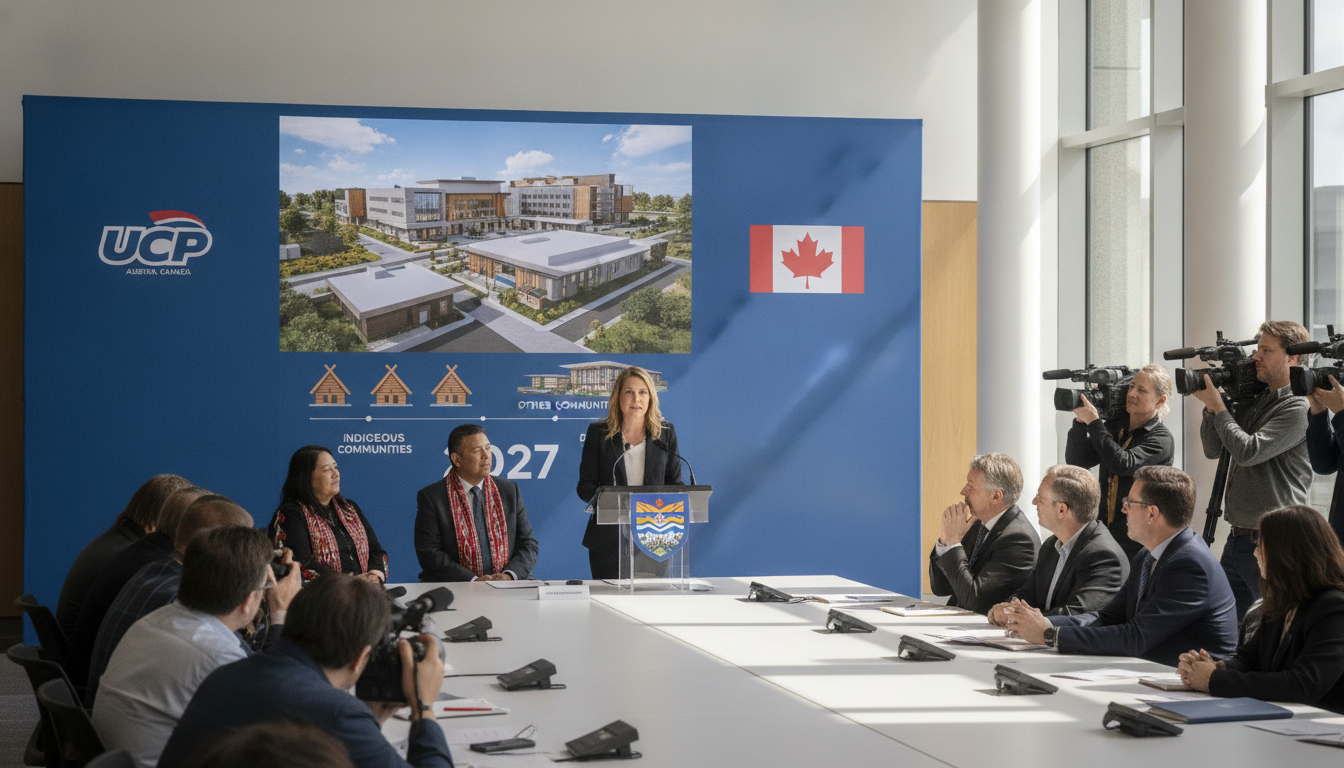
UCP to open 11 long-term addiction treatment facilities in Alberta by early 2027
UCP to open 11 long-term addiction treatment facilities in Alberta by early 2027, including five in Indigenous communities; one Calgary site already operating.
The United Conservative Party government plans to establish 11 long-term, live-in addiction treatment facilities across Alberta by early 2027, including five sited within Indigenous communities. The announcement follows the opening last summer of a pilot facility in Calgary’s Southview neighbourhood, which is operated by the Last Door Recovery Society and offers 74 beds with annual capacity for up to 300 patients. The move signals a focused provincial effort to expand residential options for people with substance-use disorders.
Provincial rollout and timeline
The UCP government has set a target of completing the network of facilities by early 2027, with planning and procurement underway for multiple sites across the province. Officials say the program will include both new builds and conversions of existing buildings to accommodate long-term, live-in treatment. The government’s timeline frames the initiative as a near-term expansion of capacity for residential addiction care.
Five facilities planned for Indigenous communities
Five of the planned 11 sites are designated for Indigenous communities, reflecting a stated priority to increase culturally appropriate and locally accessible services. Locating treatment centres within or near Indigenous communities is intended to reduce travel barriers and enable culturally grounded programming. Details on which specific communities will host sites and how Indigenous leadership will be involved were not specified in the initial outline.
Calgary Southview site and Last Door Recovery Society
One of the new model facilities opened in Calgary’s Southview neighbourhood last summer and is operated by Last Door Recovery Society. That facility provides 74 beds and is structured to treat up to 300 patients annually, according to provincial materials. Last Door’s involvement places an established non-profit operator at the centre of the pilot, with the site serving as an early example of the live-in, long-term approach the government plans to scale.
Capacity, treatment model and patient throughput
The long-term, live-in model focuses on extended residential stays rather than short-term detoxification, aiming to offer continuity of care for people with chronic or complex substance-use disorders. Facilities like the Southview site combine residential supports with therapeutic programming designed to address underlying factors that contribute to addiction. The projected throughput — for example, up to 300 patients per year at the Calgary site — reflects turnover through structured treatment pathways and aftercare planning.
Roles for operators and service partners
The government has signalled it will partner with community organizations and treatment providers to operate the facilities, as demonstrated by Last Door Recovery Society’s role in Calgary. These partnerships typically involve contracting non-profit or private operators to manage day-to-day clinical services while the province provides capital or operational funding. Exact arrangements for staffing, clinical oversight and integration with community health services will be determined as sites are finalized.
Questions on funding, locations and supports
Key questions remain about capital costs, recurring operational funding, and the specific geographic distribution of the remaining sites. Stakeholders will be watching for details on how Indigenous communities will be consulted and compensated, and how the provincial plan will align with municipal supports and local health authorities. Advocates and service providers have generally called for transparency on budgets, staffing models and culturally appropriate programming as the rollout proceeds.
The expansion to 11 long-term, live-in addiction treatment facilities marks a significant provincial commitment to residential addiction services, with a notable emphasis on Indigenous-accessible sites and an early operational example in Calgary. The government’s stated deadline of early 2027 sets the timeline for community consultations, site selection and operator agreements to move from planning into operation.
