
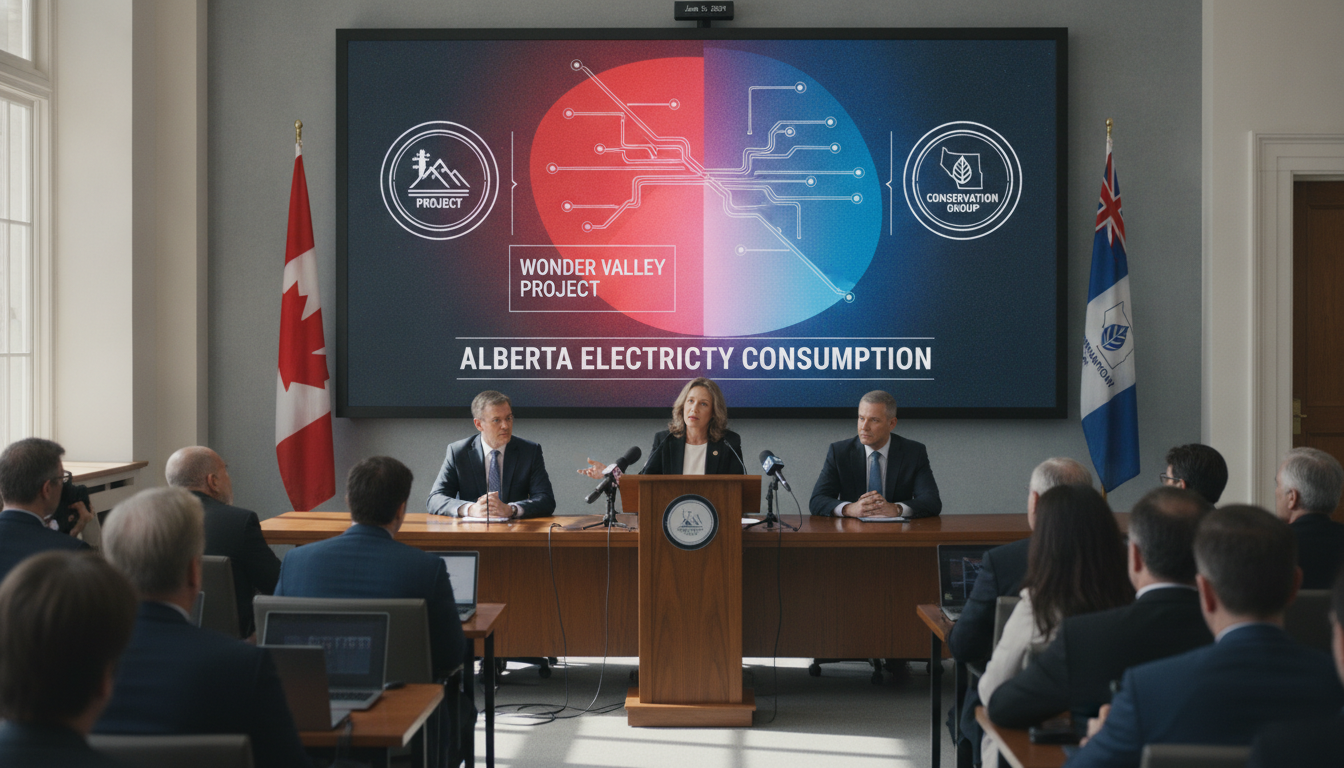
Conservationists say Wonder Valley proposal could consume three-quarters of Alberta’s power
Alberta Wilderness Association warns the Wonder Valley proposal could use up to 75% of the province’s 10 GW capacity, raising concerns over grid strain and environmental review.
The Alberta Wilderness Association has raised alarm after a conservation specialist said the Wonder Valley proposal could require as much as three quarters of the province’s total generating capacity. Kennedy Halvorson, a conservation specialist with the association, cited Alberta’s rough baseline of about 10 gigawatts of generation and consumption to frame the scale of the proposal. The warning has focused attention on how a single project might interact with the provincial electricity system and with local communities near the proposed site.
Alberta’s electricity baseline
The province’s estimated generation and consumption of about 10 gigawatts, or 10,000 megawatts, provides the context for the concern. Using that baseline, Halvorson calculated the Wonder Valley proposal may demand roughly 7,500 megawatts if it consumes three quarters of provincial capacity. That proportion, if accurate, would make the project one of the largest single energy draws proposed in the province in recent memory.
Scale and technical implications of the proposal
Project proponents have described Wonder Valley as a large-scale development, though specifics released to date are limited in the public record. At the scale suggested by the conservation association, the proposal would require substantial on-site infrastructure and likely major transmission connections to the broader grid. Such infrastructure needs would carry both technical and regulatory implications, including permitting, interconnection studies and potential upgrades to transmission corridors.
Conservation group concerns
The Alberta Wilderness Association framed their concern primarily around scale and resource allocation rather than a single environmental impact. Halvorson said the proposal’s energy appetite could displace other uses of provincial electricity or necessitate additional generation to meet existing demand. Conservation groups warn that very large projects can also extend footprints on land and water, affecting habitats and Indigenous territories, and they are calling for careful scrutiny of environmental and social impacts.
Potential grid and market effects
A development requiring a substantial share of provincial power could alter grid operations and market dynamics. Grid operators may need to re-evaluate reserve margins, dispatch priorities and transmission planning to accommodate a large, concentrated load. Markets could see price and scheduling effects if existing generation is redirected or if new supply is procured specifically for the project’s needs.
Calls for independent review and public transparency
The scale of the numbers cited prompted immediate calls from advocacy groups for transparent, independent review processes. Observers are urging provincial regulators to make detailed technical studies public and to allow time for meaningful consultation with affected communities. Local residents, Indigenous groups and environmental organizations say they should have access to the data and assumptions underlying any calculation of the project’s energy use.
Regulatory pathway and next steps
Provincial energy regulators and planning authorities will be central to determining whether and how the Wonder Valley proposal progresses. Typical steps would include detailed project filings, interconnection impact assessments, environmental screenings and public engagement rounds. Officials will need to balance economic, environmental and reliability considerations as filings and studies are completed.
Public records remain limited, and the conservation association’s statement has focused debate on the project’s scale rather than its specific design details. The numbers cited by Kennedy Halvorson have prompted questions that will require technical documents and regulatory filings to answer fully.
The coming weeks are likely to bring submissions from the project proponent, responses from regulators and potentially further analysis from independent experts. Until those documents are filed and reviewed, the precise demands of the Wonder Valley proposal on Alberta’s power system will remain subject to verification and debate.
