
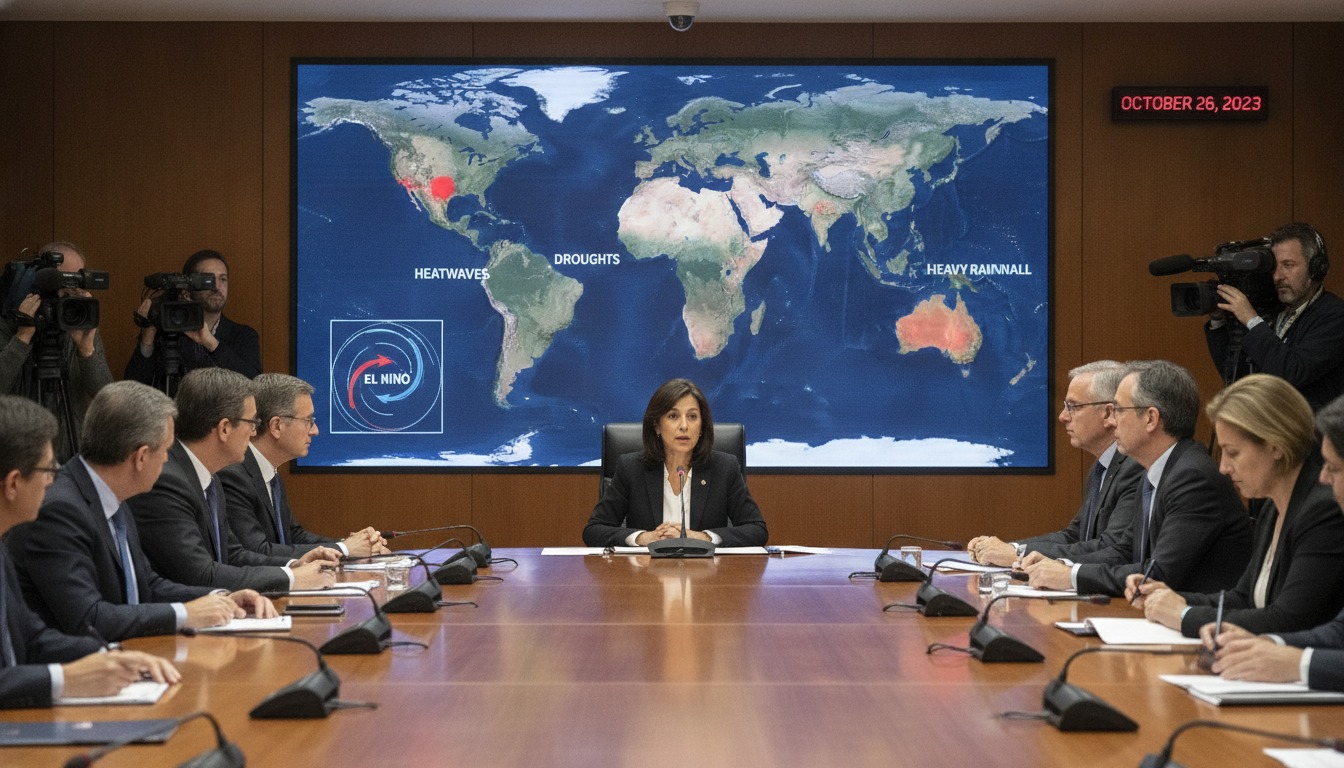
WMO warns El Niño will strengthen, raising global risks of heatwaves, drought and heavy rain
WMO warns a strengthening El Niño will raise risks of heatwaves, drought and heavy rainfall worldwide; governments urged to activate early-warning systems.
El Niño has now been declared present by the United Nations weather agency, which warned on Friday that the phenomenon is expected to intensify quickly and increase the likelihood of extreme weather events worldwide. The World Meteorological Organization said the developing El Niño will elevate risks of heatwaves, drought and intense rainfall, prompting calls for governments and aid agencies to step up preparedness.
WMO declares El Niño underway and likely to strengthen
The World Meteorological Organization reported that El Niño conditions are currently established and are projected to grow stronger through the late summer months. WMO officials said the pattern is unfolding faster than some seasonal averages and poses heightened risks for several regions.
WMO Secretary‑General Celeste Saulo emphasized the importance of using seasonal forecasts to reduce harm, noting that timely climate information can help authorities protect lives and livelihoods. The agency has framed the current outlook as a rapidly developing event that requires coordinated response measures.
Forecast window: rapid strengthening between July and September, peak later in the year
WMO forecasters expect the El Niño event to strengthen rapidly between July and September, with the highest impacts typically occurring in the November–February period. That seasonal peak tends to coincide with major shifts in global rainfall and temperature patterns.
El Niño is part of the El Niño–Southern Oscillation cycle and alternates with La Niña and neutral phases every few years. Not every region will experience the same effects, but the global reach of the event means multiple climate hazards may emerge simultaneously.
Anticipated impacts: heatwaves, drought and heavy rainfall across regions
The agency highlighted an increased chance of land and marine heatwaves, prolonged dry spells in some areas and heavier-than-usual rainfall in others. Those combinations raise the probability of wildfire risk, crop failures and flash floods depending on local conditions.
Communities dependent on rainfed agriculture, coastal fisheries and strained water systems are among the most vulnerable, experts said. The intersecting threats could cause cascading socio-economic effects, particularly in low‑income regions and for displaced populations.
Early warnings and climate services activated to aid preparations
In response to the outlook, WMO has activated climate information services and urged national meteorological services to issue tailored early warnings. Humanitarian organisations are being notified so contingency plans for food, water and heat relief can be refined ahead of worsening conditions.
The agency is encouraging governments to use seasonal forecasts to inform agricultural planning, water storage management and emergency-response staging. Advance warning aims to reduce fatalities, limit economic losses and speed up targeted assistance where it is needed most.
Ocean temperatures set new highs and recent events raise concerns
WMO reporting shows global ocean temperatures reached record levels in June, a trend partly attributed to the budding El Niño. Elevated sea surface temperatures can amplify marine heatwaves and intensify atmospheric moisture, which in turn affects storm behaviour and rainfall extremes.
The previous El Niño was a significant factor in making 2023 one of the warmest years on record and contributed to a new global temperature high in 2024, with the planet reported at roughly 1.55°C above pre‑industrial averages. Scientists warn that successive warm years increase pressure on ecosystems and infrastructure already strained by climate change.
Preparations now centre on integrating seasonal projections into national disaster risk frameworks and ensuring that early-warning messages reach rural and hard‑to‑reach communities. Investment in monitoring, local response capacity and international cooperation will be crucial to limit the human and economic toll.
WMO and partner agencies are calling for immediate action by governments, humanitarian bodies and the private sector to translate forecasts into on-the-ground measures for agriculture, water management and public health. The agency stressed that while El Niño does not determine every local outcome, its presence substantially raises the odds of extreme weather that could affect millions.
The coming months will test the effectiveness of early-warning systems and preparedness planning as forecasts evolve; monitoring and rapid information-sharing remain essential to reduce harm from heatwaves, droughts and heavy rainfall linked to this El Niño.
