
Americans’ knowledge of Canada tested as Canada turns 159 and U.S. marks 250
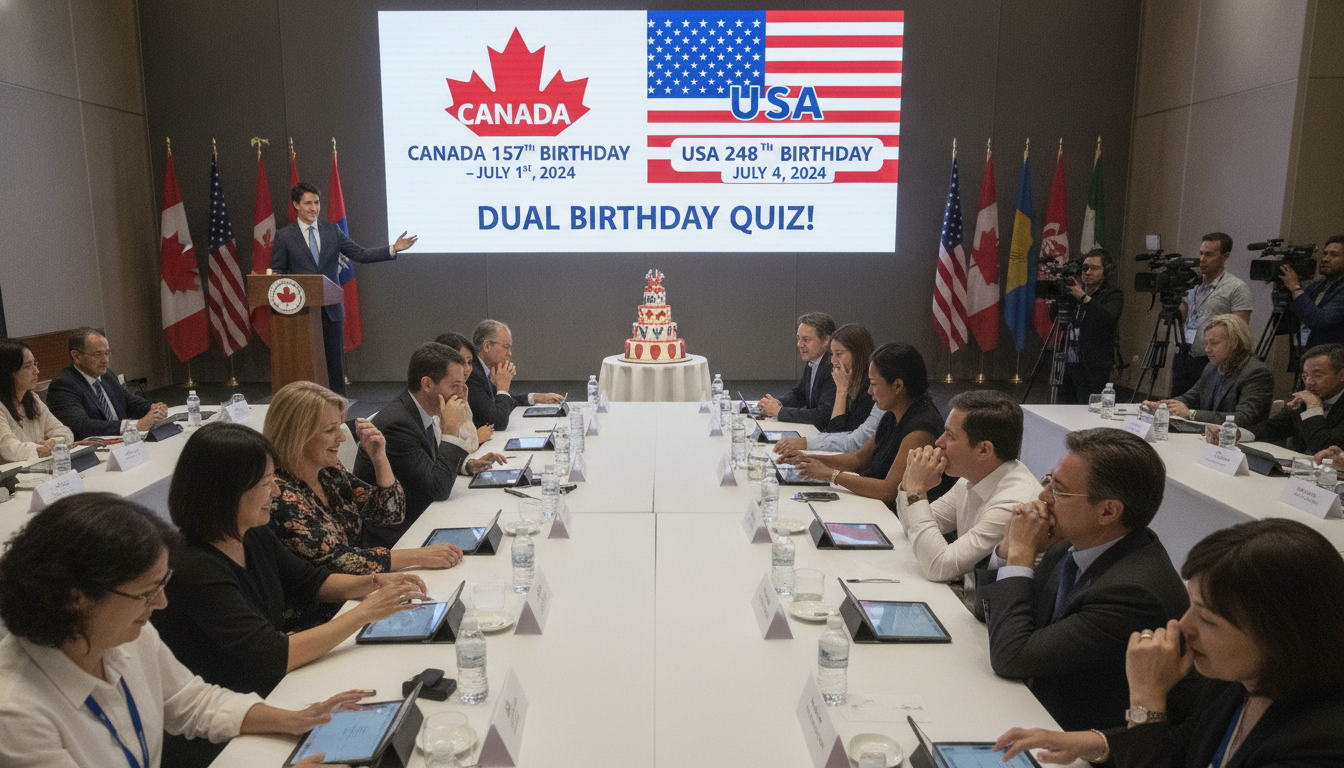
As Canada celebrates its 159th anniversary on July 1, 2026 and the United States marks its 250th on July 4, 2026, Americans’ knowledge of Canada is in the spotlight. A light-hearted cross-border quiz shared this week aims to gauge what U.S. readers know about their northern neighbour while tying the questions to both countries’ milestone birthdays. The exercise highlights moments of shared history, occasional confusion between the two nations, and why basic familiarity matters for policy and public discourse.
Canada marks 159 on July 1, 2026
Canada’s Confederation anniversary on July 1, 2026 — its 159th birthday — brought nationwide ceremonies, small public gatherings and reflections on the country’s evolution since 1867. The day prompted renewed discussion about Canadian identity, symbols and provincial contributions to the federation. For many Canadians the holiday is a mix of celebration and sober conversation about reconciliation and the nation’s future.
United States marks 250 on July 4, 2026
The United States’ semiquincentennial on July 4, 2026 has drawn international attention and cross-border acknowledgements from Canadian officials and cultural institutions. In the United States the milestone has spurred commemorations of the country’s founding documents, public events and programmes exploring two and a half centuries of U.S. history. The proximity of both nations’ anniversaries this year has created a natural moment for comparative reflection.
Nation-to-nation familiarity tested with a friendly quiz
Organizers of the quiz framed the exercise as an accessible way to see how much Americans know about Canada — and, for a bit of birthday fun, to include a few questions about the United States as well. The questions ranged from basic geography and flag recognition to more nuanced items about political structures and historical milestones. The goal was not to rank countries but to prompt readers to notice where knowledge is strong and where misconceptions persist.
Many quiz-takers answered easily on surface-level items such as capital cities and major provinces, but struggled with questions about parliamentary procedures and Indigenous governance. Participants also showed uneven awareness of provincial distinctions, such as differences between Quebec’s legal traditions and those in the rest of Canada. The pattern suggests that familiarity is often regional and shaped by media exposure rather than systematic civic study.
Common misconceptions revealed by participants
Responses to the quiz highlighted several recurring myths that appear among U.S. audiences, including the idea that Canada has a centralized, uniform culture identical across provinces. Other misunderstandings involved the roles of the prime minister versus provincial premiers and the scope of federal jurisdiction in areas like health care. These misconceptions are not harmful in isolation, but they can shape public expectations and diplomatic discourse if left unaddressed.
The exercise also surfaced confusion about historical timelines, with some respondents conflating Confederation dates and colonial-era events. That tendency underscores how shared history across the border can be both a bridge and a source of muddled memory. Clearing up basic facts could improve media coverage and civic engagement on issues that cross the Canada–U.S. boundary.
Historical and cultural links behind the friendly test
Despite the gaps identified, the quiz underscored deep cultural, economic and familial ties between the two nations that often surpass trivia. Trade, cross-border travel and family connections mean that many Americans have practical reasons to know Canadian law, currency and provincial policies. Culture — from music and television to sport and academic exchanges — continues to knit communities together in ways that simple questions do not fully capture.
Officials from both countries have used this milestone week to emphasize shared values and cooperative priorities, including defence, trade and environmental stewardship. Those official gestures complement grassroots recognition of intertwined histories and daily interactions that make accurate knowledge of each other’s systems valuable.
Why basic knowledge matters for policy and public conversation
Understanding the basics of Canada–U.S. neighbours’ institutions, geography and history matters for lawmakers, businesses and ordinary citizens alike. Accurate knowledge helps in negotiating trade deals, coordinating cross-border public health responses and addressing shared environmental challenges. It also reduces the likelihood that stereotypes or errors will shape media narratives and policy debates.
The quiz’s authors said the intent was constructive: to nudge readers toward learning rather than to score or shame. For policymakers, educators and media outlets, the results are a reminder that simple public-information efforts can raise awareness and strengthen the practical underpinnings of bilateral relations.
The birthday-week quiz is a light, timely prompt to reflect on how two closely linked countries understand one another, and to encourage more informed exchange in the years ahead.
