
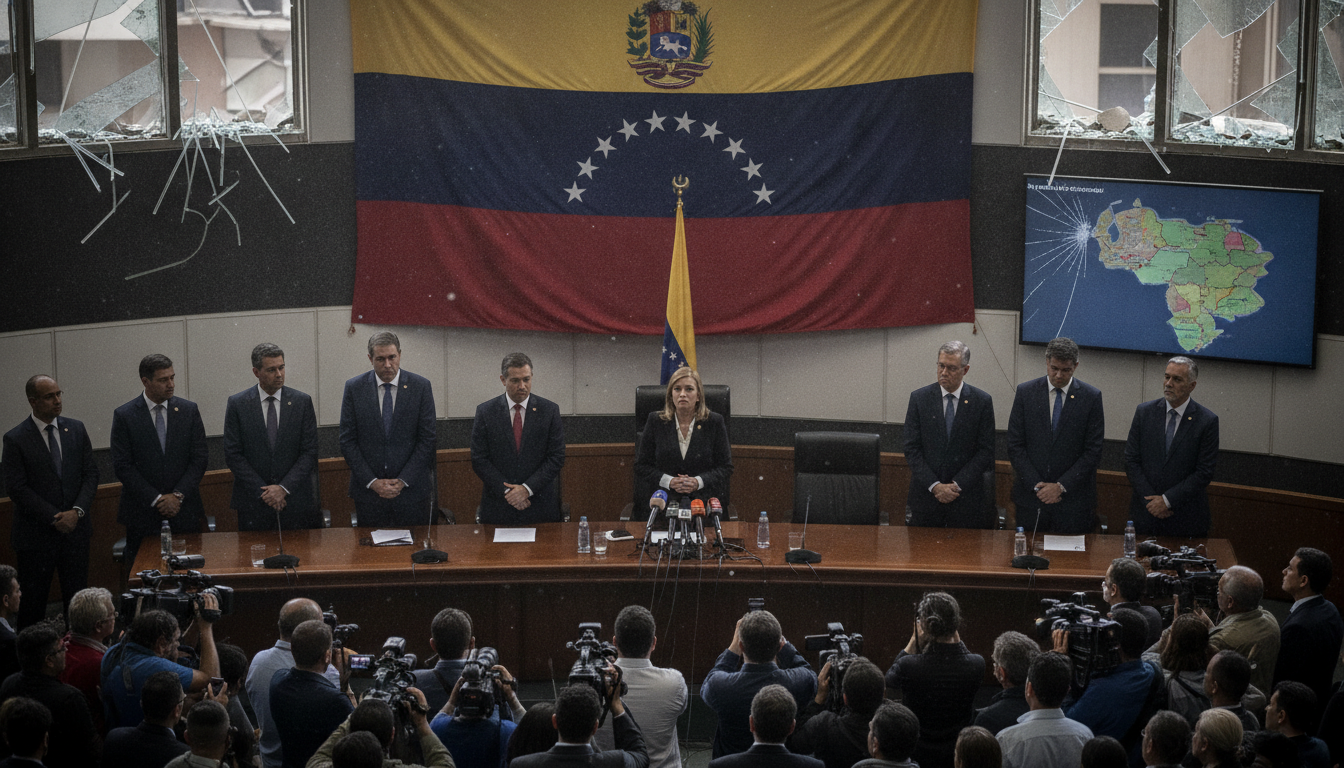
Venezuela elections miss August deadline as interim president Delcy Rodríguez remains in power
Venezuela elections have been delayed as interim president Delcy Rodríguez extends her rule after a deadly double earthquake on June 24, 2026; U.S.-backed talks aim to set a transition.
Venezuela’s planned vote did not take place by the constitutionally stipulated date of August 5, 2026, leaving the country under the continued interim authority of Delcy Rodríguez amid a deepening humanitarian crisis. The government says it is focusing on recovery from the June 24 earthquakes that caused widespread destruction, while opposition leaders and international mediators seek a political pathway to credible elections. The diplomatic process, led in part by U.S. officials, is framed as addressing quake relief and laying groundwork for a democratic transition, but timelines remain uncertain.
Election deadline missed as interim rule continues
Delcy Rodríguez, who assumed the interim presidency under a temporary constitutional clause, remains in office after the six‑month interim period lapsed without a national vote. Under the constitution, a permanent vacancy would have triggered elections within 30 days, a deadline that fell on August 5, 2026, but authorities have not announced a date. Analysts warn the executive has tools and allies to delay or sidestep the timetable, raising doubts about when or whether Venezuela elections will occur.
Devastating earthquakes stall transition
A double earthquake on June 24, 2026, inflicted massive damage across Venezuela, complicating plans for a swift political transition and diverting resources to emergency response. Authorities estimate material losses at about US$19.6 billion and report nearly 5,400 fatalities, figures that have strained hospital capacity and local governance. Relief operations and rebuilding needs are being cited by Rodriguez’s government and external actors as reasons to postpone immediate electoral logistics, with officials arguing that security and infrastructure must be restored first.
U.S.-led talks aim to coordinate relief and political steps
Recent talks involving U.S. officials, including statements from U.S. Secretary of State Marco Rubio, have been presented as efforts to coordinate earthquake relief and set benchmarks for a democratic transition. Washington’s role has been highlighted by both supporters and critics, with proponents saying international mediation is needed and opponents seeing outside influence as a factor that entrenches the interim administration. Marcos Rubio has urged patience, saying progress should happen “over months, not years,” but he and other mediators face skepticism about how quickly consensus can be reached.
Constitutional timeline and possible legal maneuvers
The legal framework governing interim rule allowed for a 90‑day extension and a possible six‑month maximum before a vacancy was considered permanent and elections called. Political scientists note that governments under stress often use legislative and administrative measures to postpone contests, and some observers fear the Rodríguez administration could employ legal maneuvers to extend its authority. Jean Daudelin, a Latin America specialist at Carleton University in Ottawa, cautions that the government may exploit constitutional ambiguities or pass ad hoc laws to avoid an immediate transfer of power.
Fragmented opposition complicates electoral prospects
The opposition remains divided, weakening prospects for a unified challenge at the ballot box should elections be scheduled. Maria Corina Machado, a prominent opposition figure and Nobel Peace Prize laureate, has declined to participate in some negotiations, reflecting broader fractures among leaders about strategy and engagement with interim authorities. Public demonstrations and counter‑demonstrations in recent months have underscored social fissures, and analysts say internal disagreements will make it harder for the opposition to mobilize and claim quick electoral legitimacy.
Oil sector reform and the limits of foreign investment
Caracas approved a legislative reform aimed at opening the oil sector to private and foreign investment as a way to attract capital for dilapidated infrastructure. But the earthquake damage, years of underinvestment, and ongoing political uncertainty have dampened expectations for a rapid influx of funds to revive production. Experts argue that large energy investors will likely wait for clearer political stability and legal guarantees before committing significant resources, making short‑term economic recovery from oil revenues unlikely.
The confluence of a major natural disaster, a contested interim presidency and fragmented political forces has left Venezuela at a precarious crossroads. While international actors press for a timetable and technical steps toward elections, the reality on the ground—heavy reconstruction needs, institutional weakness and competing agendas—means the path to credible Venezuela elections will be slow and contentious. Observers say sustained diplomatic engagement, transparent electoral guarantees and coordinated humanitarian assistance will be essential for any prospective vote to be accepted at home and abroad.
