
Venezuela earthquake: Twin 7.2 and 7.5 shocks kill at least 920, over 50,000 reported missing
Venezuela earthquake: Twin 7.2 and 7.5 quakes killed at least 920 and left more than 50,000 missing as rescue teams and volunteers race to find survivors.
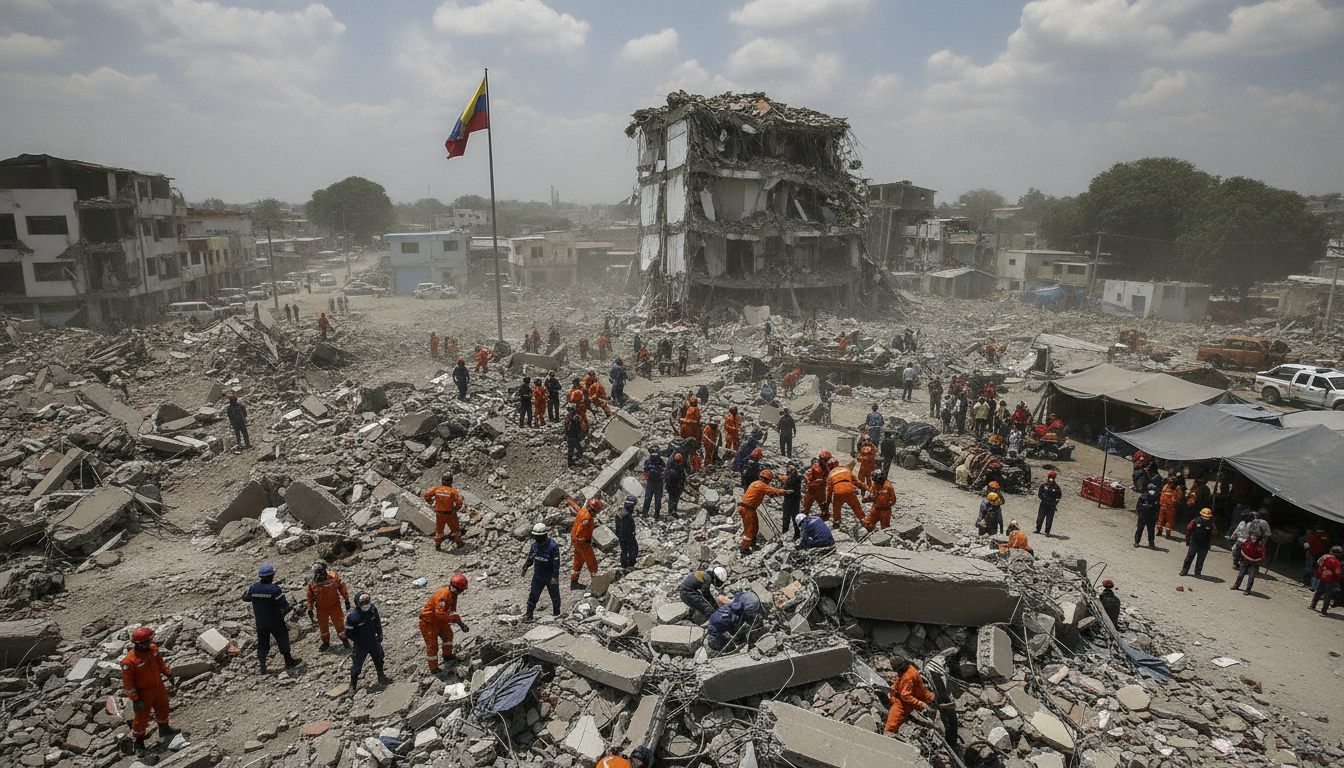
The Venezuela earthquake that struck the country’s northern coast late Wednesday left a trail of collapsed buildings, shattered communities and a rapidly rising death toll. Authorities and aid officials say at least 920 people are confirmed dead while United Nations humanitarian officials warned that more than 50,000 people have been reported missing. Survivors in hard-hit La Guaira and surrounding areas described slow and insufficient rescue operations as volunteers and international teams combed rubble for signs of life.
Death toll tops 920 as missing exceed 50,000
President of the National Assembly Jorge Rodriguez announced the official death toll at 920 on Friday, reflecting the mounting human cost of the twin disasters. In Geneva, UN humanitarian chief Tom Fletcher told reporters that citizen reports indicate over 50,000 people remain unaccounted for, and that the final toll could rise substantially.
Rescue teams and civil registries are still trying to reconcile duplicate reports and identify victims, a process complicated by damaged infrastructure and restricted access to some neighbourhoods. Officials cautioned that the figures are provisional and likely to change as search efforts continue.
Twin 7.2 and 7.5 quakes flattened coastal districts
Seismic authorities recorded two major tremors — magnitudes 7.2 and 7.5 — that struck the northern Venezuelan coastline, producing violent shaking and widespread structural failure. La Guaira, a coastal municipality near the capital, saw entire residential blocks reduced to mounds of concrete and twisted rebar, leaving streets choked with rubble.
Engineers and emergency responders said many buildings that collapsed showed severe structural damage, and hundreds more sustained major defects that render them unsafe. The scale of building failures has intensified concerns about construction standards and the difficulty of conducting large-scale urban rescues.
Citizens and volunteers lead early rescue attempts
With heavy equipment in short supply, neighbours, families and volunteers have organised immediate search-and-rescue operations using hand tools and improvised methods. A citizen-run online registry known as Desaparecidos Terremoto Venezuela has collected thousands of missing-person reports and helped channel local search efforts.
Community responders repeatedly asked for specialized machinery and cutters to reach people trapped under concrete and steel, saying manual efforts are slow and dangerous. Survivors’ testimonies described frantic days of digging by hand and the anguish of not knowing whether loved ones remained alive beneath the debris.
International teams and foreign nationals among victims
International rescue contingents from at least 17 countries began arriving within 48 hours of the quakes, bringing search dogs, heavy-lift equipment and experienced technical teams. The United States announced deployment of around 250 personnel alongside naval assets, transport aircraft and helicopters to support relief operations.
Several foreign nationals were reported among the dead, including dozens of people of Portuguese descent, as well as citizens from Spain, Brazil, Italy and China. Chilean rescuers on site said in some areas the likelihood of finding survivors was low and that their teams were focusing on recovering bodies.
Public anger and restricted access in La Guaira
Anger at the pace of official response boiled over in parts of La Guaira, where residents accused authorities of failing to provide machinery and coordination for rescue work. Witnesses at collapsed sites described scenes of grieving relatives digging with their bare hands while pleading for equipment and support.
The interim government declared the state of La Guaira a disaster zone and said security forces would limit access to certain areas to prevent looting and maintain order. Those measures were met with mixed reactions as critics warned that restrictions could slow independent rescue efforts and hinder the flow of humanitarian aid.
Aftershocks, regional effects and national vigil
Seismologists reported more than 300 aftershocks in the days following the initial tremors, keeping communities on edge and complicating recovery work due to falling debris and unstable structures. The quakes were felt as far away as Colombia and Brazil, amplifying regional concern and prompting cross-border offers of assistance.
Across the country and internationally, sporting events and memorials observed moments of silence to honour the victims, while aid organisations warned that urgent needs include medical care, shelter, water and heavy equipment for debris removal. Humanitarian agencies stressed that the damaged health system and limited logistics capacity will make rapid, large-scale relief a major challenge.
Relatives and rescue workers say the immediate priority is to reach pockets of survivors still believed to be trapped, while authorities and international partners begin planning longer-term recovery and shelter for displaced families. The coming days will be critical in determining how many lives can still be saved and how the hardest-hit communities will be rebuilt.
