
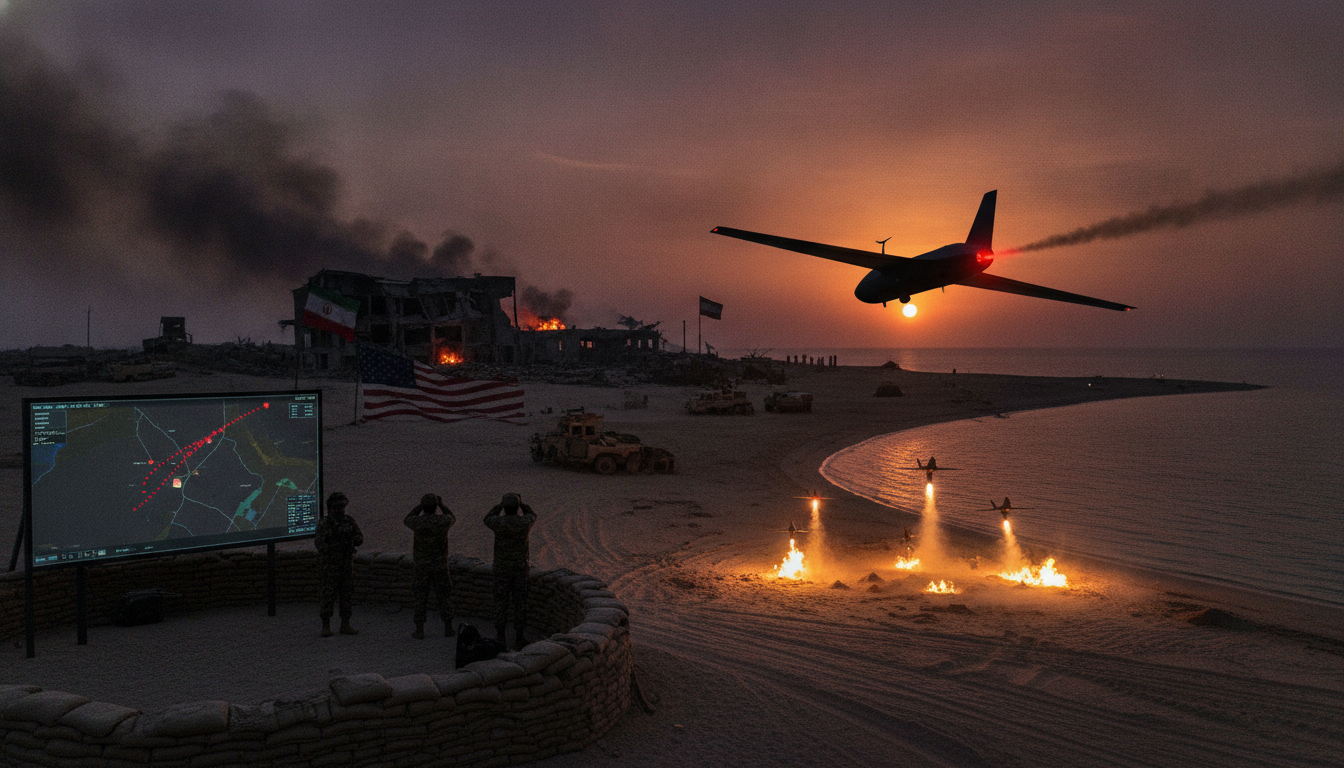
US strikes in Iran kill four near Ahvaz as Tehran launches drone attacks across Gulf
U.S. strikes in Iran killed four people near the oil city of Ahvaz, Iranian authorities said, as Tehran responded with drone attacks on American facilities in Bahrain, Jordan and Kuwait amid rising regional tensions.
Four killed near Ahvaz after overnight US strikes
Iranian provincial officials reported that four people were killed and five wounded after overnight strikes by U.S. forces struck sites in southwest Iran near Ahvaz. The provincial spokesman Valiollah Hayati, cited by state media, described the dead as “martyrs” and said the strikes caused civilian casualties in the affected area.
The U.S. military said it had completed another round of strikes against military targets in Iran overnight, describing the operations as a continuation of recent bombardments. American officials characterized the actions as strikes on facilities linked to threats against U.S. forces and regional shipping.
Explosions reported on Qeshm and in southern Iran
State-run Iranian outlets reported explosions across the south of the country and on Qeshm island, close to the Strait of Hormuz. Residents and local media described loud blasts and emergency responses in coastal areas, though details remained unclear and independent verification was limited.
The reported incidents heightened concerns about the safety of maritime traffic in one of the world’s busiest shipping chokepoints. Officials and maritime watchers warned that continued strikes and counter-strikes could further disrupt commercial navigation.
Iranian drone strikes target Bahraini, Jordanian and Kuwaiti bases
In a direct response, Iran said it launched drone attacks on installations used by U.S. forces in Bahrain and Jordan. Tehran’s military released a statement saying kamikaze drones targeted fuel tanks, large supply depots, aircraft hangars and barracks at Isa Air Base in Bahrain and at the Al-Azraq base in Jordan.
An AFP journalist in Bahrain reported hearing an explosion and experiencing air-raid sirens early on Friday, though it was not immediately clear if those events were linked to the Iranian drone claims. Iranian state television and the Islamic Revolutionary Guard Corps published images and statements asserting the strikes hit multiple facilities.
Claims of strikes on U.S. logistics hubs in Kuwait and damage to naval watchtower
Iranian authorities also claimed attacks on U.S. supply depots and bases in Kuwait, naming Camp Udairi and Camp Arifjan among the targets. Tehran’s military and the IRGC said they struck depots and other military infrastructure they identified as supporting U.S. operations in the region.
The IRGC further asserted it had inflicted “significant damage” on a watchtower associated with the U.S. Fifth Fleet in Bahrain. Kuwaiti and Bahraini authorities have not publicly confirmed the full extent of the damage, and the U.S. military had not immediately provided an independent assessment early Friday.
Diplomatic denouncements and warning from Tehran at Shanghai Cooperation meeting
Iran’s foreign minister, Abbas Araghchi, criticized a U.S. proposal to use frozen Iranian funds in the United States to compensate for damage to ships in the Gulf. Posting on X, Araghchi called the move a “dangerous precedent” and warned that any country “participating, cooperating or aiding” U.S. actions would be held responsible by Tehran.
Araghchi delivered the warning during remarks at a meeting of the Shanghai Cooperation Organisation in Kyrgyzstan, signaling Tehran’s intent to escalate diplomatic pressure alongside military responses. Iranian officials framed their strikes as retaliation and insisted installations in the Middle East used by U.S. forces to strike Iran were legitimate targets.
Maritime risks and regional security implications
The exchanges have compounded anxieties about the safety of commercial shipping and oil transit through the Gulf and the Strait of Hormuz. Maritime operators and insurers typically react to such escalations with route changes, higher premiums and temporary port or transit suspensions, increasing costs and uncertainty for global trade.
Analysts say sustained tit-for-tat strikes risk drawing additional regional players into a wider confrontation if allied states are directly affected or choose to respond. For now, each side has issued statements framing its actions as defensive and targeted, while independent verification of damage and casualties remains incomplete.
The situation remains fluid as international observers seek confirmation of strike locations, damage assessments and the status of military installations in the affected countries. Both Tehran and Washington continue to issue strong statements, leaving regional governments and commercial operators to weigh the risks of further escalation.
