
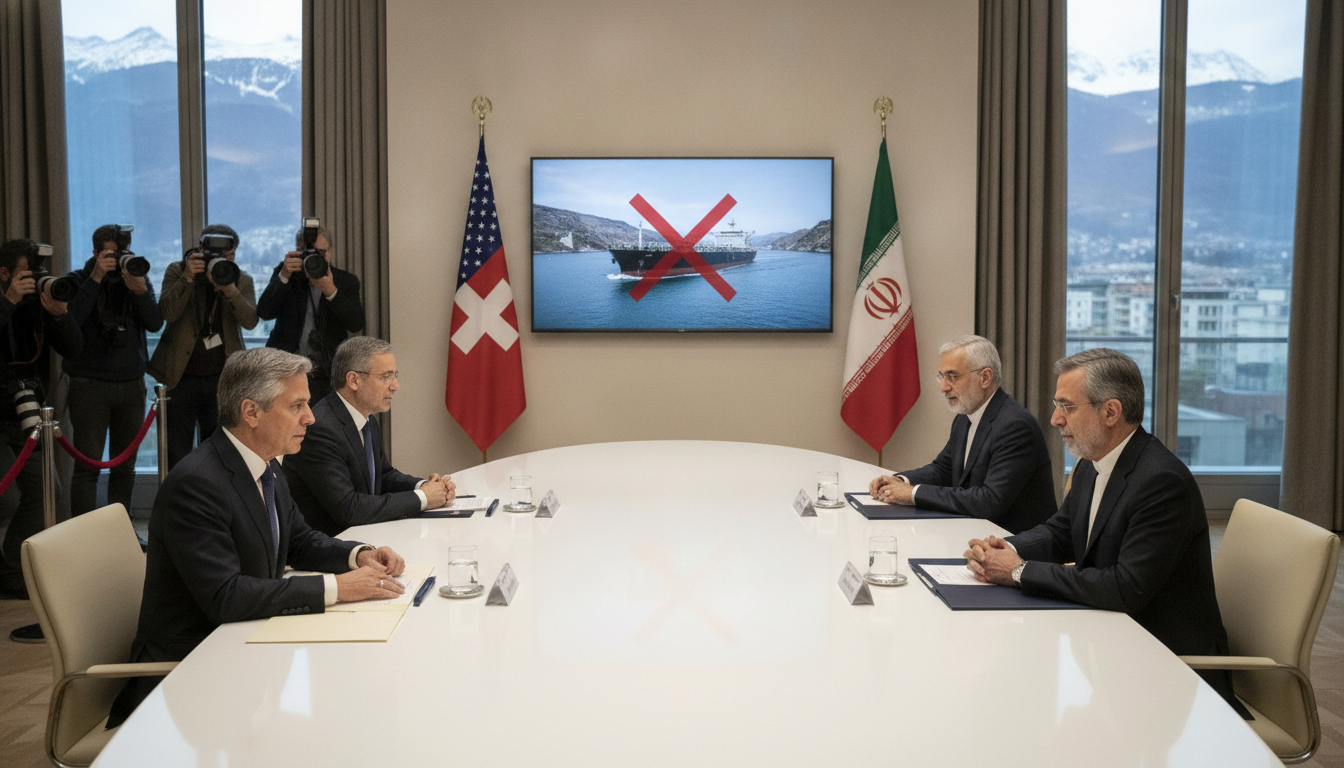
US-Iran talks to begin in Switzerland as Tehran re-closes Strait of Hormuz
US-Iran talks set to start in Switzerland as Tehran re-closes the Strait of Hormuz amid Israeli strikes in Lebanon; mediators to join negotiations. Now.
The United States and Iran are due to begin technical-level negotiations in Switzerland on Sunday, June 21, 2026, after an interim memorandum of understanding aimed at halting military operations on all fronts. The US-Iran talks will open in the Swiss resort of Burgenstock with delegations from both capitals and regional mediators present, according to statements from Pakistani officials and Iranian spokespeople. The negotiations are intended to translate a recent memorandum into a final, binding agreement within a set timetable.
Swiss meeting to start after postponement
The session was delayed after Iran did not send its delegation to an earlier, planned meeting on Friday, citing continued Israeli strikes in southern Lebanon. Pakistani officials said the talks were rescheduled for Sunday and would include Pakistani and Qatari mediators alongside US and Iranian teams. Washington confirmed senior US negotiators were already in Switzerland to handle technical arrangements ahead of the opening.
Who is on the Iranian and US delegations
Iran has dispatched a high-level delegation that Islamabad says includes Parliament Speaker Mohammad Bagher Ghalibaf and Foreign Minister Abbas Araghchi, among other senior figures. US sources indicated top negotiators were present in Switzerland to prepare for the talks, and Vice-President J.D. Vance said he expected to travel there within days to join proceedings. The composition of both teams underscores the political sensitivity of the talks and the need for close coordination among multiple actors.
Memorandum of understanding sets 60-day framework
Both sides signed a memorandum of understanding earlier in the week that declared a permanent end to “military operations on all fronts” and set a 60-day target to conclude a final deal, with the option to extend by mutual consent. The upcoming sessions are described by officials as technical negotiations intended to work through detailed obligations and verification steps required to formalize the MoU. Iranian spokespeople have stressed they will press for concrete steps to be implemented before advancing further.
Iran re-closes Strait of Hormuz in response to Lebanon strikes
Iran’s Islamic Revolutionary Guard Corps announced renewed restrictions on the Strait of Hormuz, citing continued Israeli attacks in Lebanon and what Tehran described as US failures to fully implement the interim agreement. The IRGC warned commercial vessel crews to avoid the strategic waterway, saying approaching ships could face security risks. An adviser to Iran’s supreme leader additionally warned that the region’s energy flows could be disrupted if the interim agreement remained merely a paper commitment.
Escalation in Lebanon complicates diplomacy
Israeli bombardment of southern Lebanon has continued despite a ceasefire framework agreed in the MoU, with Lebanese authorities reporting dozens of casualties over the past two days. Officials in Beirut put cumulative tolls into the dozens after renewed strikes, a development Tehran cited as a breach of the ceasefire terms. Iranian officials and allied groups have signalled that military developments in Lebanon are directly linked to Tehran’s willingness to engage fully in the diplomatic process.
Military presence and commercial passage under watch
The US military said its forces remained present and vigilant in the general area of the Strait of Hormuz to ensure agreed aspects of the interim deal are respected, and reported that commercial transit continued over the weekend. US statements noted dozens of commercial vessels had transited the strait, asserting that safe passage had been maintained despite Tehran’s closure announcement. At the same time, Iran’s directive and public warnings to mariners have raised commercial and security concerns for shipping companies and regional energy markets.
Behind the scenes, there has been intense shuttle diplomacy: Qatar’s prime minister and Pakistani officials held talks with regional actors in recent days, and Pakistani ministers travelled between capitals to help secure participation in the Swiss talks. Al Jazeera reporting from Burgenstock described a flurry of activity ahead of the formal opening, and Iranian spokespeople publicly reiterated the need for the United States to demonstrate compliance with interim measures before progress can accelerate.
The coming days will test whether the technical negotiations can bridge gaps left by the MoU and whether external developments, particularly violence in Lebanon, can be contained to allow a final agreement to be reached within the established 60-day timeframe. Observers say the success of the US-Iran talks will depend on verifiable steps on the ground and continuing engagement from mediators who have been working to de-escalate regional flashpoints.
Diplomats and military officials will monitor compliance closely as negotiators meet in Switzerland, where both the content of written commitments and the pace of implementation are likely to determine whether the process advances to a binding accord or stalls under renewed tensions.
