
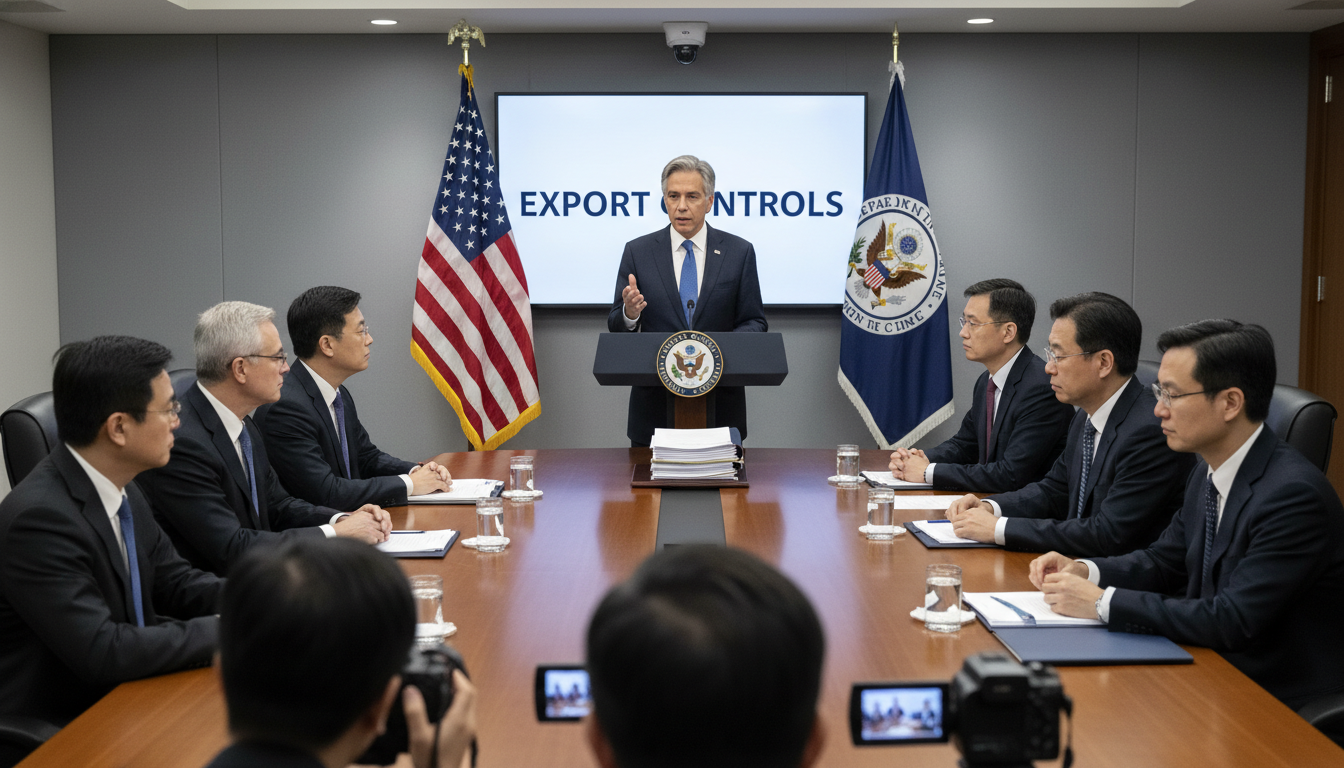
Hua Hong Export Restrictions: US Orders Suppliers to Halt Shipments to China’s No. 2 Chipmaker
U.S. export restrictions on Hua Hong have prompted suppliers to stop certain deliveries, raising concerns about production and global supply chains for semiconductors.
The U.S. government last week instructed multiple suppliers to suspend specific shipments to Hua Hong, China’s second-largest chipmaker, according to people familiar with the matter. The move, carried out through Commerce Department channels, represents a targeted effort to curb transfers of technology that could advance Chinese semiconductor capabilities. Officials have framed the measure as part of broader export-control policies aimed at critical technologies.
U.S. Orders Suppliers to Halt Shipments
Officials notified several equipment and parts vendors that they must pause designated exports to Hua Hong pending further guidance. The instruction affected a range of suppliers, though the exact list and the categories of goods were not publicly disclosed.
Sources said the step was implemented rapidly and involved formal communications from the Commerce Department to companies that ship sensitive semiconductor tools and components. Suppliers are reportedly reviewing contractual and compliance obligations in light of the instruction.
Scope of the Export Restrictions
The restrictions target export flows that U.S. authorities consider capable of enabling advanced chip manufacturing, but regulators have kept the technical scope deliberately broad. This approach allows the government to limit transfers without immediately publishing a narrow list of banned items.
Industry participants said the ambiguity around affected product lines has compounded uncertainty for suppliers and customers alike. Companies now face complex judgments about what goods require license applications or temporary suspension of outbound shipments.
Immediate Market and Supply Chain Impact
The suspension of shipments to Hua Hong has the potential to slow production schedules and prompt short-term bottlenecks within the company’s fabs. Hua Hong serves both domestic and international customers, and any reduction in output could ripple through supply chains that rely on its wafers.
Market participants are closely monitoring inventory levels at foundries and at electronics manufacturers that depend on Hua Hong’s capacity. Even brief interruptions can shift order fulfillment and prompt buyers to seek alternative sources, boosting demand pressure elsewhere in the industry.
Hua Hong’s Position and Possible Responses
Hua Hong, as China’s No. 2 chipmaker, has significant fabrication capacity across mature and specialty nodes, and it may pursue a range of responses to mitigate disruption. Potential steps include sourcing components from non-U.S. vendors, accelerating local procurement, or adjusting production plans to rely on already-stocked tools.
The company could also seek technical or financial assistance from domestic partners or state-backed programs aimed at bolstering national semiconductor self-sufficiency. Any pivot toward non-U.S. suppliers, however, faces practical limits when it comes to highly specialized tools and components.
Legal and Diplomatic Stakes
Implementation of export restrictions introduces legal questions for manufacturers and distributors required to balance contract commitments against compliance obligations. Suppliers told to halt shipments may seek clarification or challenge the scope of orders through administrative or judicial channels.
Diplomatically, the measure is likely to add strain to U.S.–China technology tensions, with Beijing expected to register concerns about actions that affect major Chinese industrial players. The move follows a pattern of targeted export controls intended to shape the global flow of advanced semiconductor equipment.
Industry Reaction and Analyst Views
Analysts said the action underscores growing fragmentation in the global semiconductor ecosystem as governments tighten controls on strategically sensitive technologies. Many industry observers see this as part of a broader trend toward diversification of supply and increased onshoring of critical capabilities.
Supplier companies are navigating an uncertain compliance environment, balancing legal risk with commercial relationships. Analysts note that prolonged restrictions could accelerate investment in domestic alternatives in multiple countries, while short-term shocks may influence pricing and lead times across the chip sector.
The situation remains fluid as regulators, suppliers and Hua Hong assess next steps and operational consequences. Observers say the pace and clarity of subsequent guidance from U.S. authorities — and any formal responses from Chinese counterparts — will determine whether the action produces transient disruptions or longer-term shifts in semiconductor sourcing and production.
